Custom stand up pouches for food are specified in a fixed order: fill weight and volume come first, the bottom gusset follows from that, the film build follows the product’s sensitivities, and the closure is chosen last. Working in that order is what separates a pouch that stands square on a shelf from one that bulges, leans or splits along the bottom seam. Reverse it and most of the cost overruns in a first print run can be traced back to the same decision.
This applies to premade pouches and to roll-fed formats run on a form-fill-seal line, and the sequence holds for a 100 g snack pack and for a 2 kg dry good.
What Actually Decides the Structure of a Custom Stand Up Pouch?
Four variables decide the structure, and they are interdependent. Fill weight and fill volume set the base area. The base area sets how deep the bottom gusset has to be. The gusset depth and the load together set the film thickness and stiffness the pouch needs. Only then does the closure make sense, because a heavy pouch with a light-duty zipper will fail at the zipper rather than at the film.
In practice, the argument that consumes the most time in a project is not the film grade but the format. A brand asks for a stand-up pouch, and the answer that actually fits may be a flat bottom pouch once the fill weight and the pallet pattern are on the table. Requesting a sample of each before committing to artwork is cheaper than discovering the problem after the print cylinders are ordered.
How Much Weight Can a Stand-Up Pouch Carry Before It Bulges?
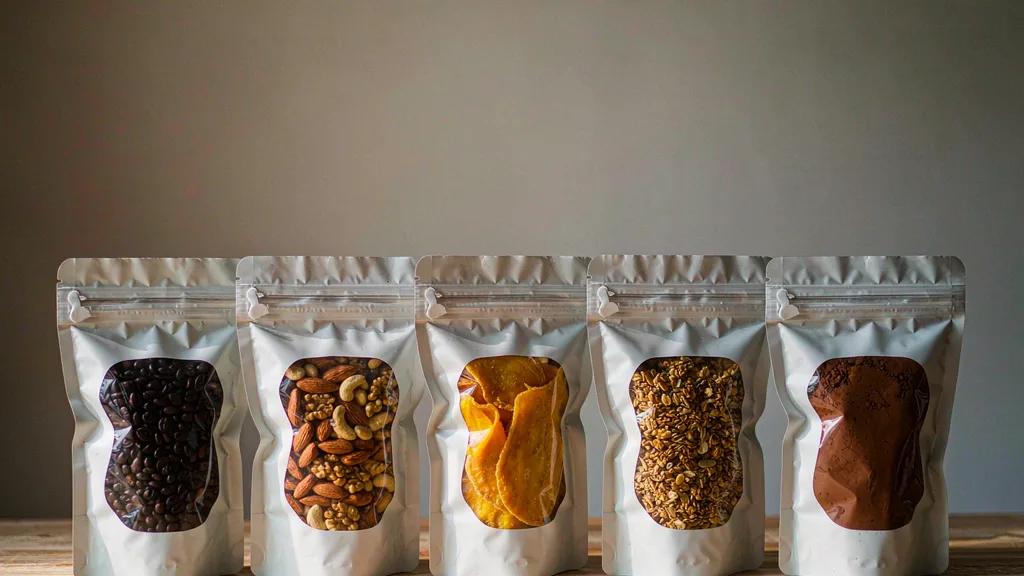
A stand-up pouch carries its load on a folded gusset that opens into an oval base. As the fill weight rises, the base has to widen, and the pouch starts to resemble a bag with a flat bottom rather than a classic stand-up pack. In many structures the practical changeover sits somewhere in the mid-hundred-gram range, but that range is a working assumption rather than a rule: film stiffness, gusset geometry and how squarely the pouch is filled all move it.
Bulging is usually a fill-and-seal problem before it is a film problem. Powder that settles unevenly, a product that traps air, or a seal jaw that closes before the pouch has been allowed to settle will all produce a pouch that leans. Recording the fill weight, the settled height and the standing angle from a small trial batch gives a supplier far more to work with than a single target weight on a specification sheet.
Which Film Build Does the Product Actually Need?
The film build answers a short list of questions about the product: is it sensitive to oxygen, to moisture, to light, or to fat and oil migration. A dry, low-fat product in a short distribution chain rarely needs an aluminium layer. A product that goes rancid, cakes or loses aroma needs the barrier that matches its specific sensitivity, and overspecifying it adds cost without adding shelf life.
Where the destination market has recycling obligations, a mono-material structure is worth discussing early, because the choice constrains the barrier options and therefore the pack format. The material itself also has to satisfy food contact requirements in the market of sale; the European Food Safety Authority publishes the current framework for food contact materials, which is a reasonable starting point when a specification crosses borders.
Structure and format are easier to compare side by side once the material families are clear, and the site’s packaging materials overview walks through the common laminate combinations.
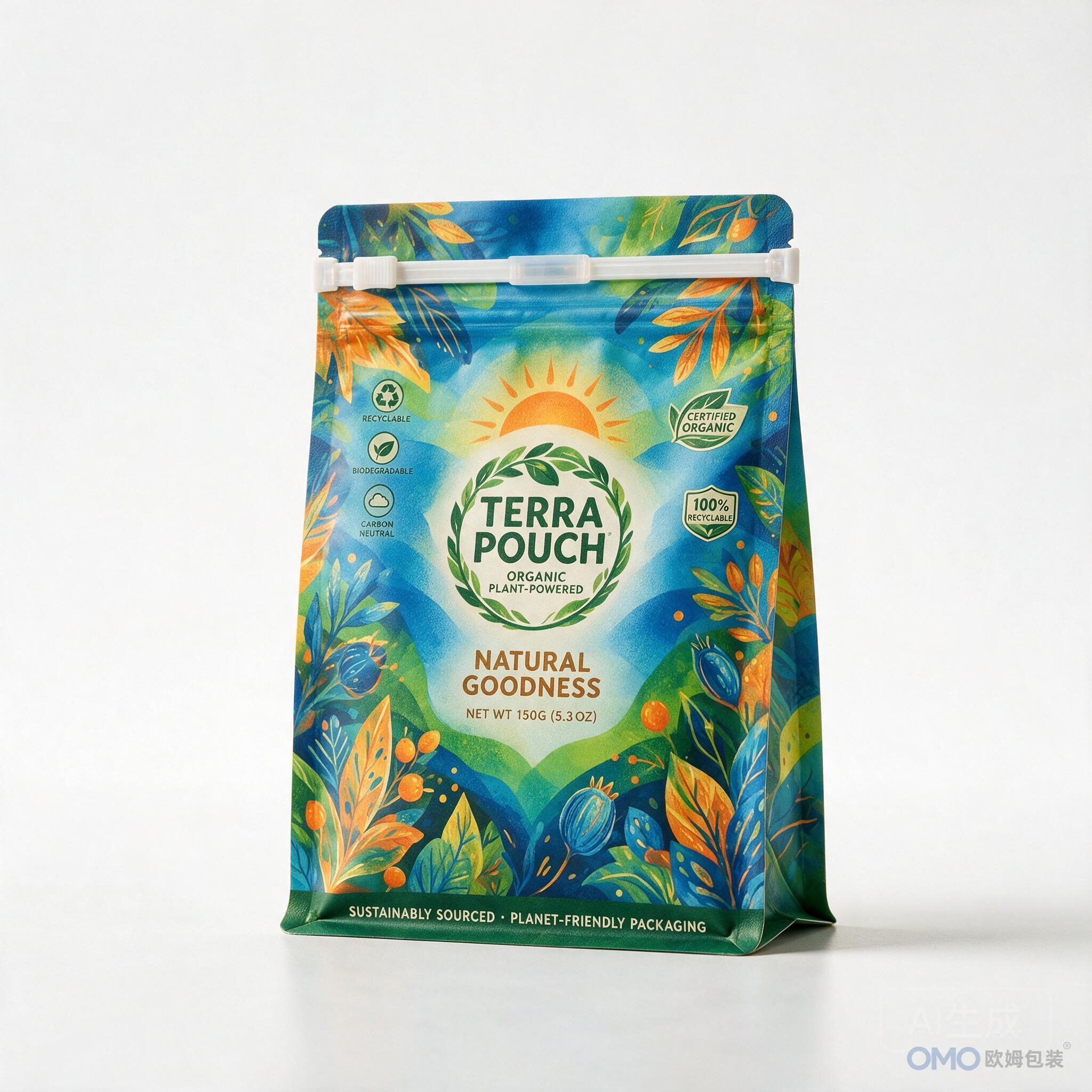
Where Do Stand-Up Pouches Fail in Transit?
Most transport failures show up at the bottom seal and at the corners where the gusset folds meet the side seal, because those are the points where film is folded on itself and the seal has to bridge several layers. Drop, compression and vibration all load those areas rather than the flat panels.
Testing the pack rather than the film is what settles these questions. ASTM D4169 sets out a distribution cycle for shipping containers and systems, and its drop and compression schedules give a repeatable way to compare two candidate structures before a launch. Running that test on the actual filled pouch, at the actual target weight, is the only way to know if the base holds its geometry.
Which Closure and Fitment Belongs on the Pouch?
Reclosability is a use-case decision. A large dry-food pack that a household opens repeatedly needs a zipper that survives the life of the pack, not the cheapest available strip. A liquid product needs a spout whose bore matches the product’s viscosity, because a fitment that is too narrow turns pouring into squeezing. Coffee that degasses needs a one-way valve, and a valve is not a substitute for barrier film; it manages pressure, not oxygen.
Each added element introduces another seal interface to control. A pouch with a zipper, a valve and a spout has three places where a seal can leak, so adding features casually raises the inspection burden on the packing line.
The fitment geometry and the pouch format have to be designed together, which is the argument set out in the site’s stand-up pouch overview and in the range of stand-up pouch formats used across food categories.
Where a Stand-Up Pouch Is the Wrong Format
A stand-up pouch stops being the right answer in three situations. The first is heavy fills that have to survive pallet stacking without leaning; a flat bottom pouch or a rigid base carries that load better. The second is a product that needs a genuinely long shelf life at high barrier, where the base geometry and the film budget start to conflict. The third is a retail environment that hangs rather than shelves, where a euro slot or a side gusset pack works better.
Choosing the format on the basis of the shelf it will sit on, the weight it will hold and the distribution route it will travel is more reliable than choosing it on the basis of what a competitor uses.
Key Takeaways
- Specify in order: fill weight and volume, then base and gusset, then film build, then closure. Skipping ahead is what creates reprints.
- Bulging at the shelf is usually a filling or settling problem rather than a film grade problem.
- Barrier should match the product’s actual sensitivity; an aluminium layer that solves nothing still costs money.
- Transport failures concentrate at the bottom seal and gusset corners, so test the filled pouch, not the film sample.
What to Confirm Before the First Production Run
- Confirm the settled fill volume as well as the net weight, and confirm how much headspace the product needs.
- Check the pouch standing square after filling at line speed, not by hand.
- Confirm the seal window for the actual film and the actual product residue on the seal area.
- Decide which tests will be run on the filled pouch, and at what weight and drop height.
- Confirm the artwork bleeds and the seal area stays free of ink, because ink in the seal is a common cause of weak seals.
Pouch dimensions are easiest to settle on paper before sampling, and the calculation from product weight to pouch size is covered in the stand-up pouch sizing guide.
Conclusion
Custom stand up pouches work well when the structure follows the product. Start from the fill weight and the settled volume, size the base from those, choose a film build that matches the specific sensitivities of the contents, and treat the closure as the last decision rather than the first. Where the pack will travel far or sit on a pallet, run a filled-pouch distribution test before committing to print. Where the fill is heavy or the stacking load is high, compare the format against a flat bottom pouch before assuming a stand-up structure will hold.
Frequently Asked Questions
Do custom stand up pouches need a different film from flat pouches?
Not necessarily. The barrier requirement comes from the product, not from the format, so custom stand up pouches and flat pouches holding the same product will often use the same laminate. What changes is the mechanical demand: the base of a stand-up pouch folds on itself and carries the load, so stiffness and seal strength matter more. It is common to keep the barrier layers and adjust thickness or the sealant layer instead.
Can a stand-up pouch be filled on an existing form-fill-seal line?
Only if the line is set up for premade pouches or for the specific format. A vertical form-fill-seal line that runs pillow packs cannot simply be switched to a stand-up pouch without different forming hardware and a different fill sequence. Before sampling, confirm the machine type, the jaw width and the fill station, because the pouch dimensions have to fit the tooling that already exists.
Is a zipper always worth adding to a food pouch?
No. A zipper earns its cost when the pack will be opened more than once and the product needs protection after opening. For a single-serve sachet or a product consumed in one sitting, a zipper adds an interface that can leak and does nothing for the user. Judge it by how many times the pack is opened, not by how premium the category is.
How should recyclability requirements affect the pouch structure?
They constrain the material choice before the format is fixed. A mono-material structure limits which barrier layers are available, which can push a project toward a shorter shelf life or a different pack format. Establishing the recycling rules of the destination market early keeps the barrier discussion honest, rather than discovering the conflict later, after the structure has already been approved.