
Key Takeaways
- Rollstock film pays off when one format repeats for long runs. Frequent format changes give back the handling it saves.
- The barrier layer, not the total thickness, decides moisture and oxygen protection.
- The seal layer usually sets the usable temperature window and the practical line speed.
- Web width, roll diameter, core size and unwind direction come from the machine specification, not from the artwork.
- Film that behaved on a lab bench can still fail on a real line. Only a trial on your own machine settles it.
Rollstock Film in Food Packaging: Where It Fits
Rollstock film is laminated flexible material supplied in continuous rolls for automatic packaging. The machine unwinds the web, forms it around a tube or around the product, fills it, and closes it with longitudinal and cross seals. Nothing is pre-made, so the same roll can produce thousands of identical packs without an operator opening a single bag.
Food applications cluster around products with a stable format and a long production run: biscuits, candy, nuts, dried fruit, puffed snacks, chocolate, powdered drink mixes and single-serve seasoning sachets. Similar structures also cover wet wipes, refill packs, hardware components and disposable cutlery. Different film structures can be compared as a group on the rollstock film product category page before a specific structure is quoted. Where the product is a powder dosed into small sachets, the same logic runs through seasoning packaging, which deals with dust at the seal and portion control.
What Decides the Film Structure You Need?
Start from what the product is most sensitive to. A dry biscuit that mainly needs moisture protection usually tolerates a two-layer structure such as PET/PE or BOPP/CPP. A product that loses aroma or oxidises, such as ground coffee, nut-based snacks or meal-replacement powder, generally needs a metallised or foil-containing layer. Light-sensitive products push towards an opaque or foil structure rather than a clear one. These are candidate directions, not fixed recipes.
Thickness is often treated as a proxy for quality, and that misleads. Adding microns raises stiffness and puncture resistance, and it also shifts the seal window and the winding tension the machine has to manage. Moisture and oxygen performance is driven by which barrier layer sits in the middle. When water-vapour transmission rates are compared between two candidate structures, the number only means something if both were measured the same way, which is why the ASTM F1249 water-vapour transmission method is usually named in the specification. For food-contact suitability, the material composition has to sit inside the applicable regulation, and the EFSA food-contact materials framework is the reference point for the European market.
How Does Rollstock Film Run on a Form-Fill-Seal Line?
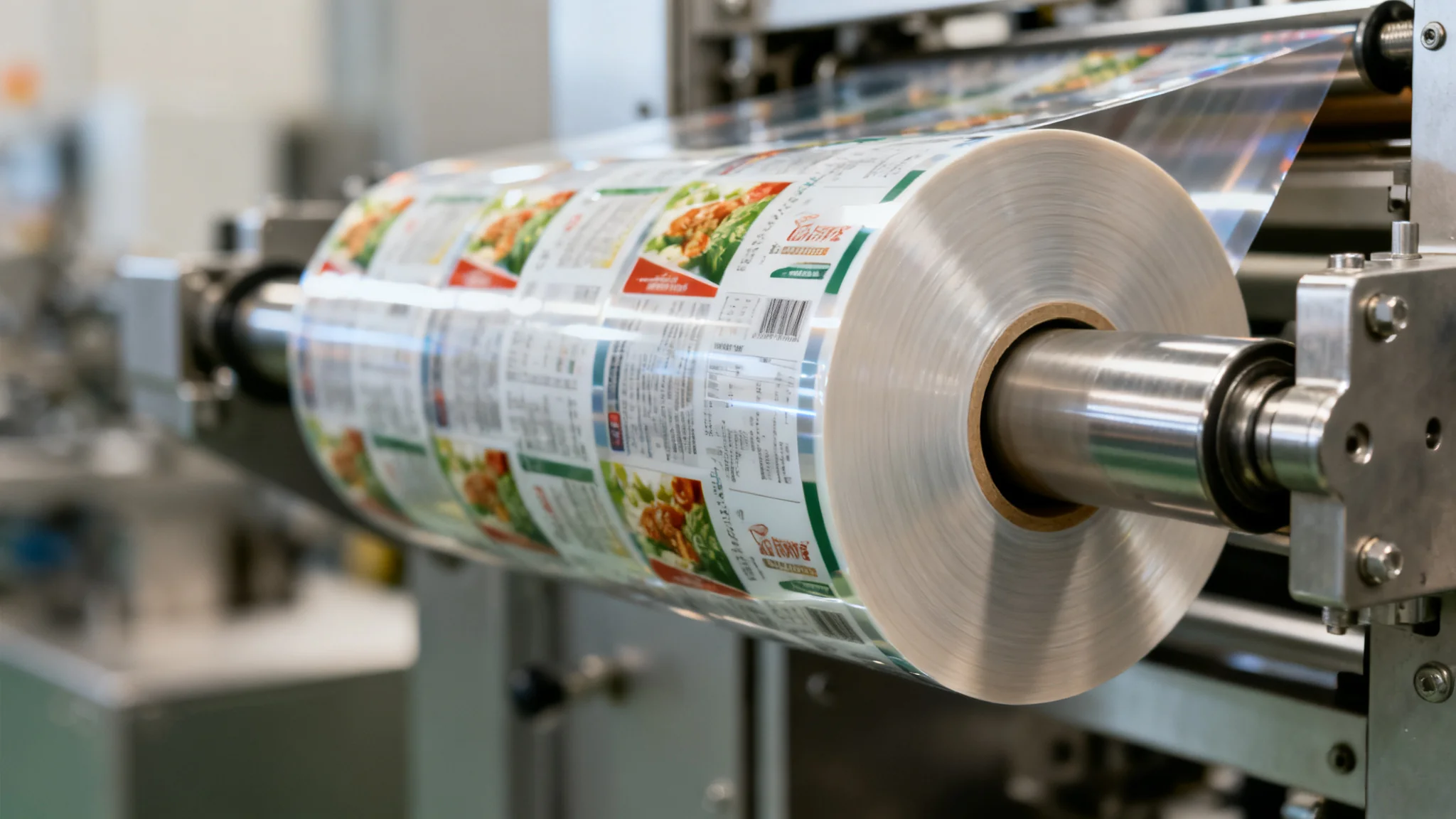
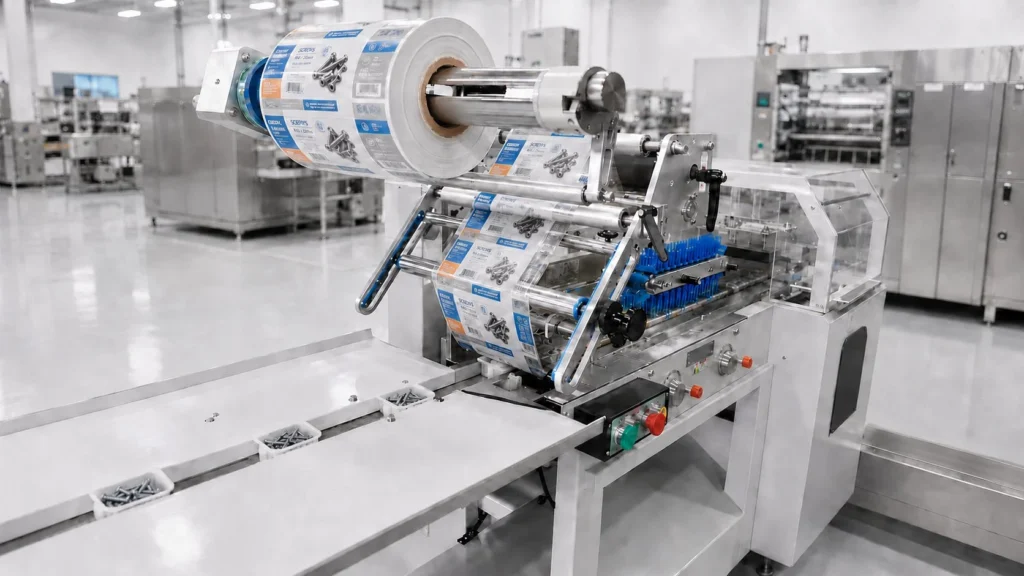
On a vertical or horizontal form-fill-seal machine the web is pulled from the roll, guided through forming shoulders or a tube, and closed by a longitudinal seal before the transverse seals close the pack. A registration sensor reads printed eye marks to hold package length and cut position. On a flow-wrap line the sequence is similar but the film wraps around the product rather than forming a tube. The failure modes differ by machine type, which is why the machine model belongs in the enquiry.
Three properties decide how cleanly that happens. Film stiffness controls how the web tracks through the forming section. Surface friction, often described as the coefficient of friction, decides if the film slides or drags against the guides. Winding tension and roll consistency decide if the web feeds evenly or wanders. When a line runs well on one roll and badly on the next from the same supplier, the difference is usually in these three rather than in the barrier layer.
Which Print and Finish Options Change the Film Spec?
Printing method follows batch size and how often the artwork changes. Gravure gives saturated colour and a low unit cost once the cylinders exist, so it suits long runs of a settled design. Digital printing avoids cylinder cost and suits short runs, seasonal variants and test markets. Colour count, matte or gloss finish, metallised effects and spot varnish all change how the surface behaves as well as how it looks.
Two spots in the artwork have to stay free of ink. The seal area must remain a printable keep-clear zone, because ink under the seal changes how the layers bond. The registration mark must sit where the sensor expects it. Barcodes, ingredient lists and nutrition panels need reserved positions too. All of this is settled before tooling, and the film specification that supports it is described on the custom printed food-grade film page.
When Is Rollstock Film the Wrong Choice?
Rollstock film loses its advantage when the line switches formats often. Every change means stopping, re-threading and re-setting, and a run too short to absorb that time is better served by pre-made pouches. Formats that need a zipper, a spout, a shaped contour or a hanging hole are usually more stable as pre-made bags. Large packs that must stand on a shelf also tend to hold their shape better when they arrive already formed.
This applies to lines that already have compatible forming and sealing equipment. If the machine cannot hold its temperature within a workable band, or its forming and sealing capability is limited, changing the film will not fix it, and the equipment question comes first. The trade-off between the two formats for one product family is worked through in more detail in the comparison of rollstock and pre-made pouches for cookie packaging.
Specifications to Confirm Before Tooling
- Web width, taken from the machine specification and the formed pack width.
- Film thickness and the candidate layer structure.
- Roll diameter and core size, matched to the unwind stand and the shaft diameter.
- Unwind direction and which side faces out on the reel.
- Print repeat length and the position of the registration mark.
- Seal layer and the temperature range the machine can hold.
- Splice or joint method, and how the machine detects and rejects a joint.
- Target pack format: three-side seal, centre seal, pillow, quad seal or stand-up.
What Does a Trial Run on Your Own Line Actually Test?
A trial at close to production speed answers questions a data sheet cannot. It shows how the web tracks at the real tension, how the seals hold at the temperature the machine actually reaches, how close the formed pack comes to the drawing, and which way up the printed artwork lands on the finished pack. It also shows how the film behaves at start-up and after a stop, which is where much of the waste in a real run appears.
A supplier may describe a structure as suitable for a given application, and that is useful as a starting point rather than a guarantee. How far a moisture or oxygen result carries for a particular product still depends on the product, the pack size, the headspace and the storage conditions, and it is normally confirmed by the finished pack rather than by the film alone.
Conclusion
The working order for rollstock film is machine first, product second, artwork last. Confirm the machine type and the roll geometry it can accept, then pick the layer structure from what the product is most sensitive to, and only then settle print method and artwork. Values in a film specification describe the material, not the finished pack, so seal strength, tracking and formed dimensions still have to be confirmed on the line that will run the job. A structure that looks right on paper and fails at start-up costs far more than one extra trial roll.
Frequently Asked Questions
Can rollstock film run on a high-speed packaging line?
Yes, but rollstock film runs cleanly on a high-speed line only when web width, roll diameter, core size and seal layer are all matched to that machine. High-speed lines are less tolerant of tension variation, so uneven gauge or inconsistent winding shows up as tracking drift or weak seals rather than as a small defect. Send the machine model and the intended line speed with the enquiry, and run the trial at a speed close to production so the result means something.
Is thicker rollstock film always stronger?
No. Extra thickness raises stiffness and puncture resistance, and it also moves the seal temperature window and the tension the machine must control, so the settings have to be adjusted with it. For moisture and oxygen protection, the middle barrier layer matters more than total gauge. Decide first if the problem is mechanical damage or barrier performance, then test the candidate structure with the real product.
Does every food product need a foil layer in the film?
No. A foil layer is mainly justified when the product oxidises, loses aroma, or needs protection from light over a long shelf life. Ground coffee, oily nuts and powdered meal replacements often fall into that group. Biscuits, dry snacks and many confectionery items do well with a metallised or two-layer structure. The sensible step is to define what the product is sensitive to and then compare candidate rollstock film structures under the same test conditions.
What has to be fixed before printing plates are ordered?
Four things have to be settled first: film width, print repeat length, registration-mark position and the keep-clear zone over the seal area. Artwork approved before the machine geometry is confirmed is the most common cause of a costly re-engraving. Approve a printed sample as well: it confirms colour and layout, but plate dimensions are decided by the machine, not the design.


Custom Lidding Film Rolls – Meat & Food Sealing Film
了解详情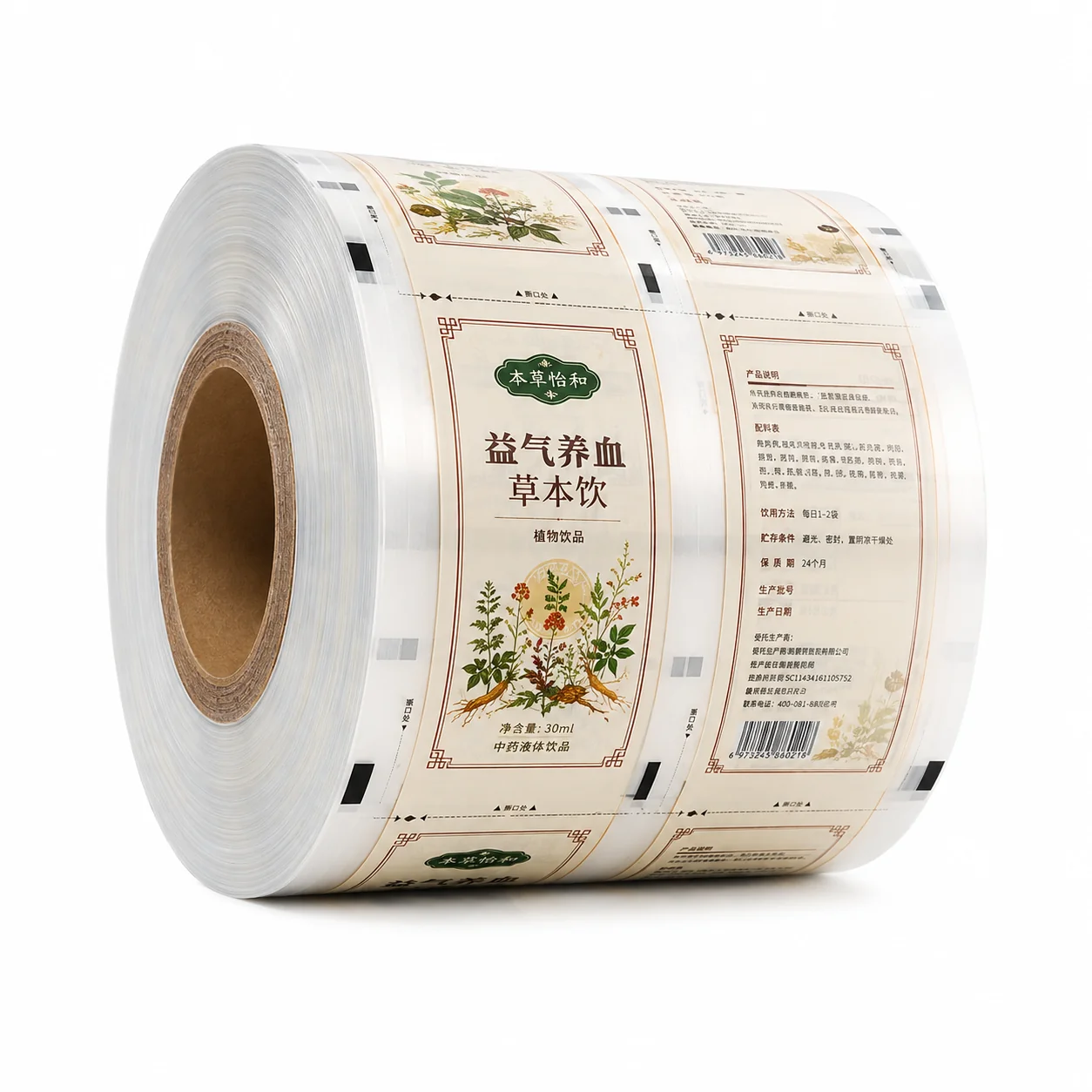
TCM Liquid Roll Film | Custom TCM Liquid Packaging Roll Stock | Laminated Film Roll Manufacturer
了解详情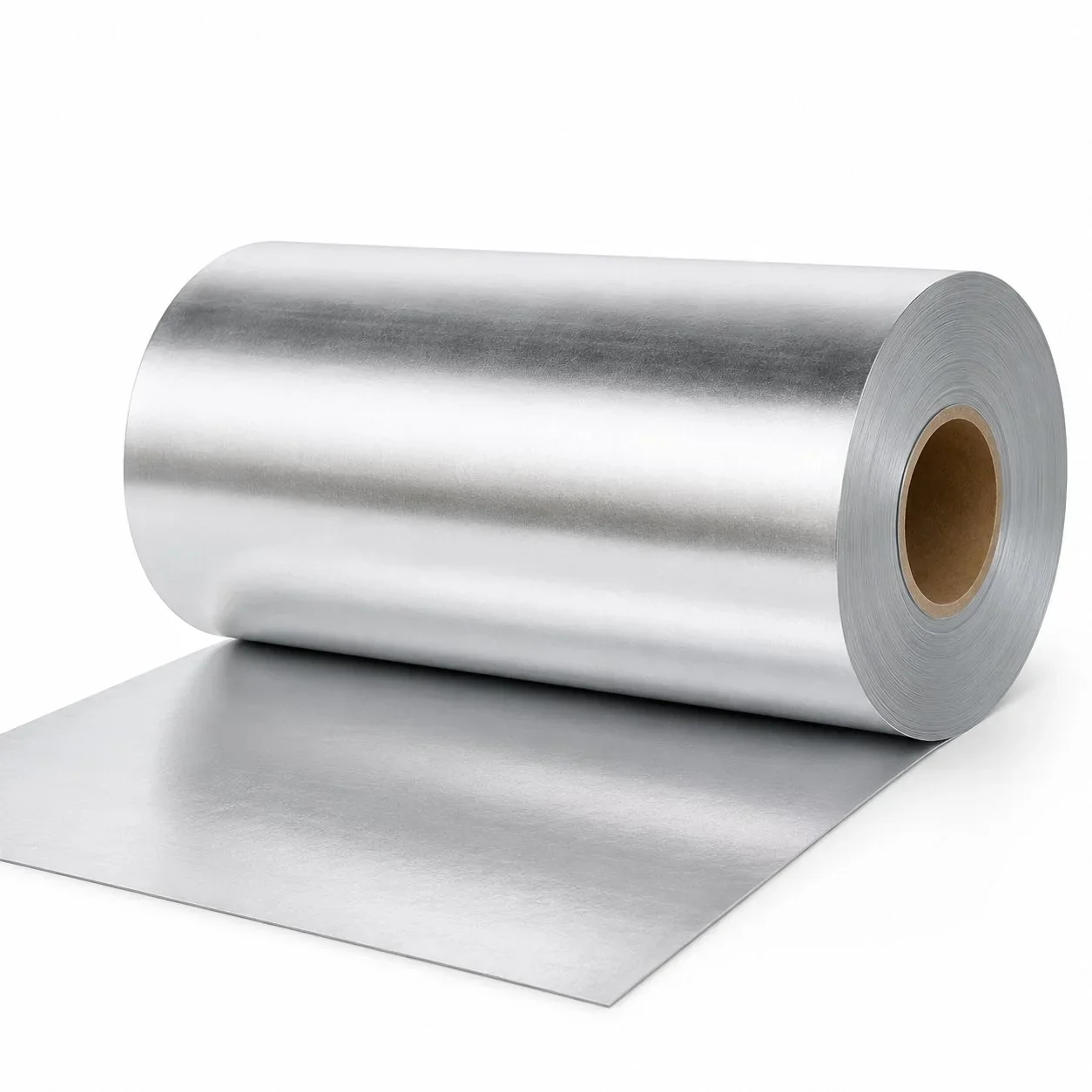
Metallized Moisture-Proof Packaging Roll Film Customization: Food-Grade Laminated Roll Film Manufacturer for Pouch Making and Automatic Packaging
了解详情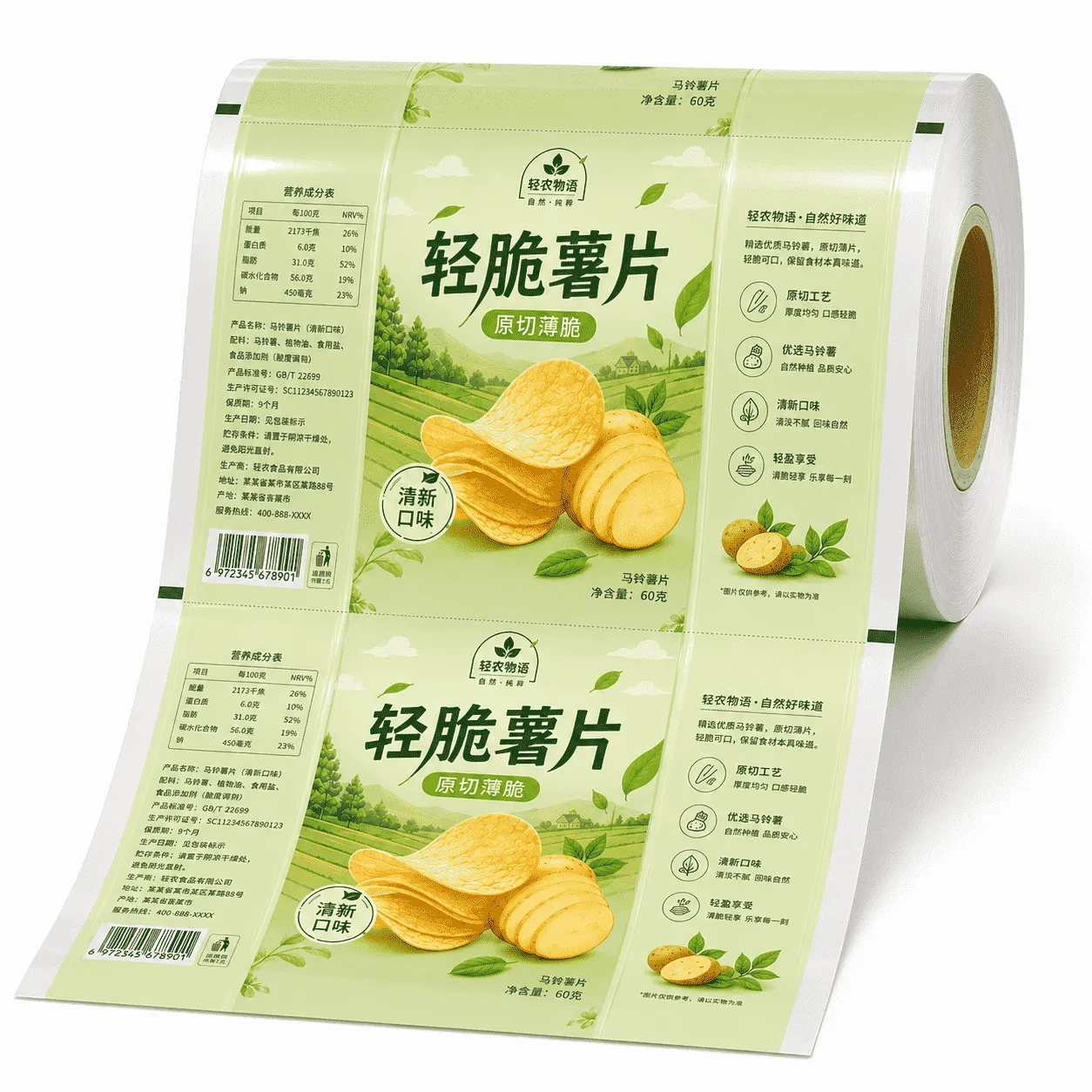
Chips Packaging Roll Film, Laminated Film, Custom-Printed Snack and Tea Pouches
了解详情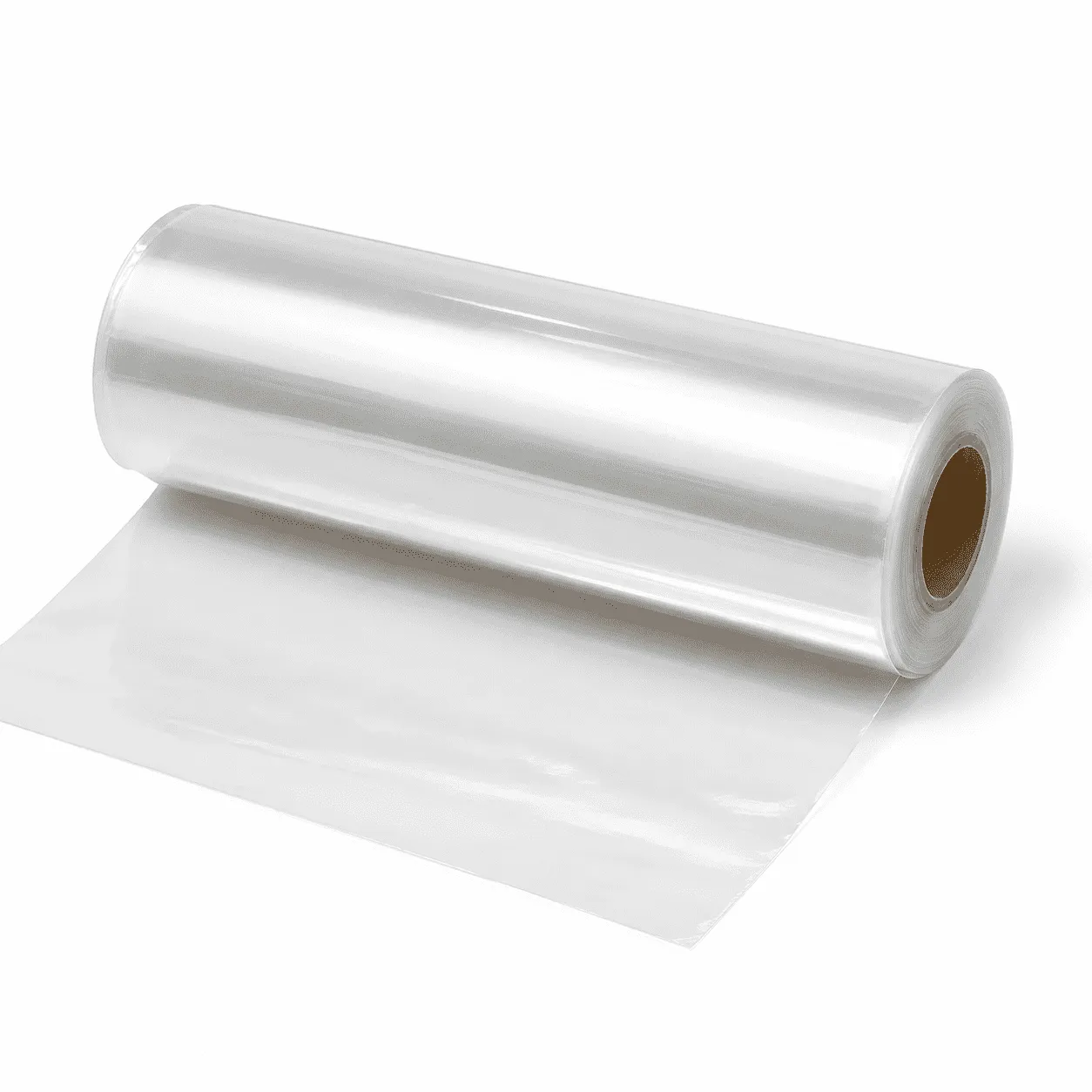
Shrink Film, Eco-Friendly Non-Toxic POF Shrink Film, Manufacturer Custom Sealing Shrink Film for Product Packaging
了解详情