
The vacuum pouch material directly determines freshness performance and service life. Many first-time customers assume any plastic bag works with a vacuum sealer — then suffer leaks or substandard shelf life. As a professional vacuum pouch manufacturer, we want to make one thing clear from the material-structure angle: the core of a vacuum pouch is not the “vacuuming” action but the barrier layer choice. This article breaks down common vacuum pouch material combinations, each layer’s role, and how to choose for different foods.
1. Why do vacuum pouches need laminates? Single-layer film cannot do the job
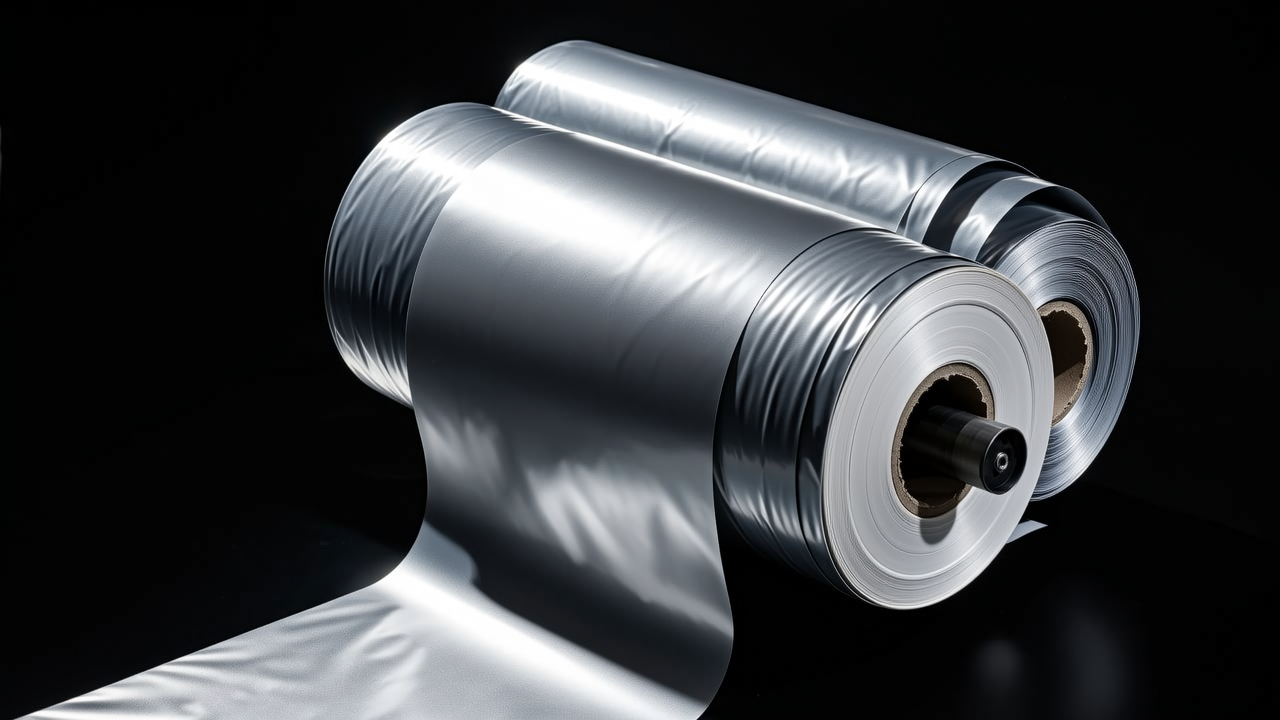
Many wonder why vacuum pouches can’t just be single-layer PE like cling bags. Because vacuum packaging’s mission is blocking oxygen and moisture, and single-layer PE’s barrier is far from enough. Oxygen molecules slowly penetrate the gaps between PE chains — a vacuum fails within days. Industrial vacuum pouches are therefore almost always multi-layer laminates, typically the “surface + barrier + seal” three-layer design. The surface layer provides strength and the printing face; the barrier layer blocks oxygen and moisture; the seal layer ensures closure strength. The barrier layer is the most critical — its choice sets the pouch’s performance ceiling.
2. Common barrier layer materials: choosing between PA, EVOH and foil
Vacuum pouch barrier layers come in three main options, each with its own scenario. First, PA nylon — puncture-resistant and cold-resistant, used in almost every frozen food vacuum pouch, such as those in our earlierPA nylon pouches article — especially suited to bone-in meat and seafood. Second, EVOH — the best oxygen barrier of the three, an order of magnitude below PA, ideal for cooked food and sauces demanding maximum freshness; but EVOH fears moisture and needs to be sandwiched between protective layers. Third, foil — the strongest barrier, blocking light, oxygen and moisture completely, but costly and not microwaveable; suited to premium gift packs and long-term storage. For more on high-barrier materials, see ourHigh-Barrier Packaging Material Guide。
3. Vacuum pouch material combinations for different foods
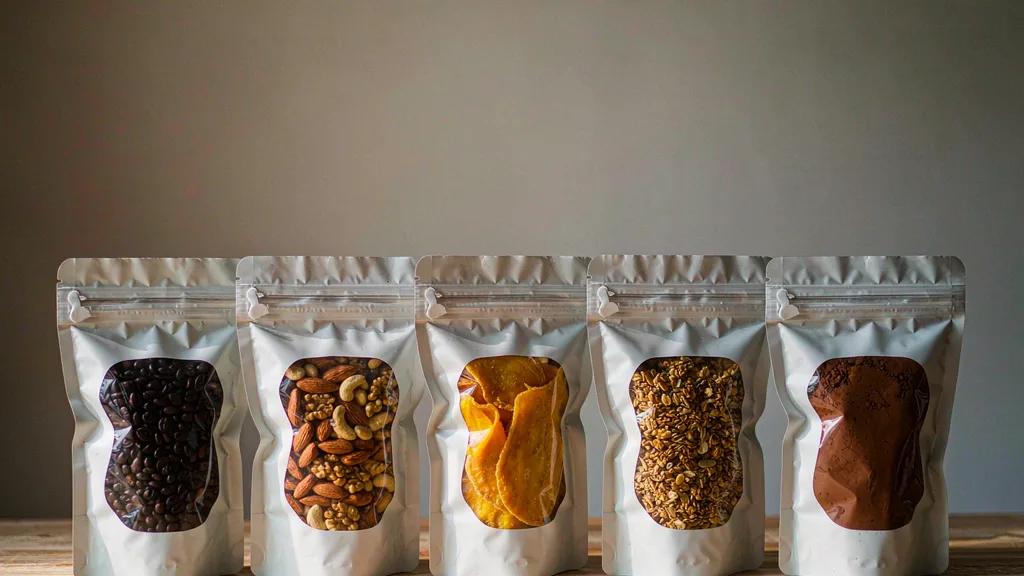
The vacuum pouch material ultimately follows the product. We have summarized four common combinations for buyers. First, frozen meat and seafood: PA+PE — puncture-resistant and freezer-safe, no brittle cracking at -18°C. Second, ambient cooked food and braised products: PA+EVOH+PE or PET+AL+PE — both oxygen barrier and retort tolerance, reaching 6-12 month shelf life. Third, dry goods and nuts: PET+AL+PE or PET+metallized+PE suffices — focusing on moisture and oxidation protection with controlled cost. Fourth, vacuum-pickled products: choose acid- and salt-resistant formulations to avoid inner-layer corrosion. Layer counts and thickness for each category depend on contents, storage temperature and target shelf life — the reason custom vacuum pouches cost a bit more than stock items but are worth it.
4. Don’t overlook the seal layer and thickness details
Beyond the barrier layer, two vacuum pouch details are easily overlooked. One is the seal layer — PE and CPP are most common: PE seals at lower temperatures with good strength, the freezer favorite; CPP tolerates heat better, steadier for retort scenarios. The other is total thickness, commonly 70 to 150 microns: too thin and sharp contents puncture it during evacuation; too thick adds cost and hurts flexibility. We recommend several vacuum tests at the sampling stage, matching evacuation time and sealing temperature, before finalizing production thickness.
5. Summary
What material for vacuum pouches? The answer is “structure follows product”: choose the barrier layer first, then match surface and seal layers. PA for freezing, EVOH for high oxygen barrier, foil for long-term storage — no absolute best material, only the best-matched solution. OMOPACK offers free material selection consulting and sampling; if you are developing vacuum-packaged products, welcome to contact our technical staff for samples and solutions. For vacuum pouch basics and buying points, also refer to ourComplete Guide to Vacuum Pouches. For more international packaging news, welcome to visitOMOPACK English website。