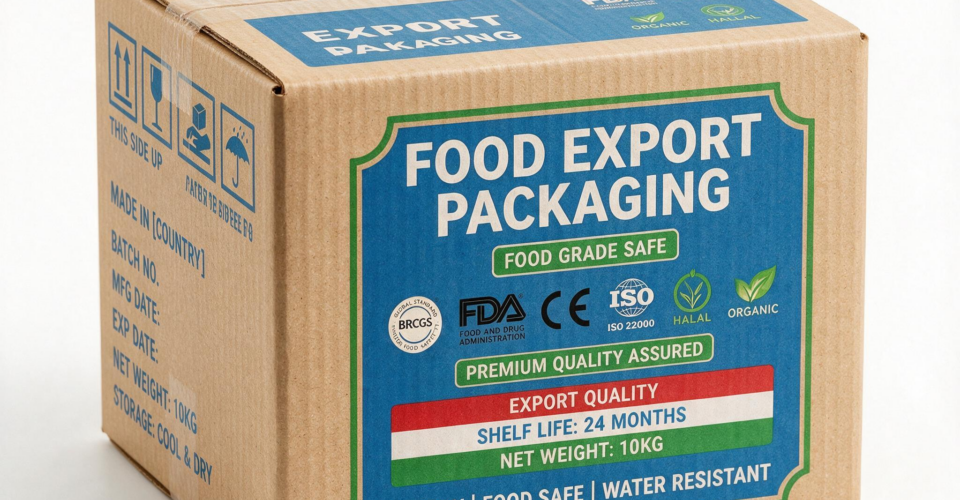
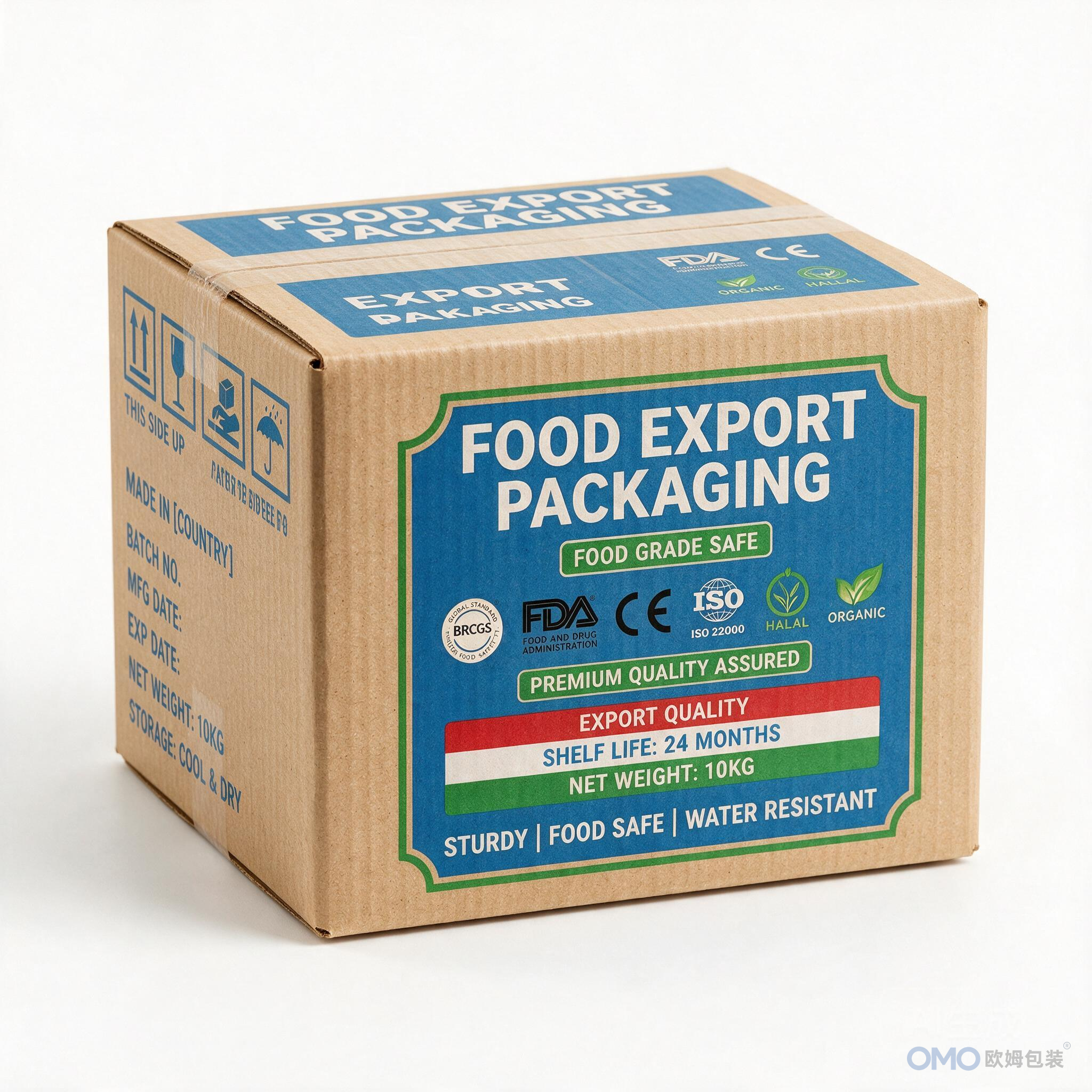
As Chinese food brands expand globally, more and more companies need to export products overseas. As the first line of defense in food safety, packaging compliance directly decides whether products can enter target markets. Requirements vary greatly by country and product — this article lays out a completefood export packaging certification certification checklist to help you avoid detours on the international journey.
1. Exporting to the US: the FDA certification system
The US is the world’s largest food importer, and its food packaging oversight rests with the US Food and Drug Administration (FDA). FDA regulation of food contact materials is the core requirement for US market access.
Core requirements: all packaging materials contacting food must meet FDA 21 CFR (Title 21 of the Code of Federal Regulations). By material type (plastic, paper, rubber, metal, etc.), 21 CFR specifies the permitted substance lists, use conditions (temperature, contact time, food type) and migration limits.
Key certification points:
- FDA 21 CFR 170-199: general requirements for food additives and food contact substances
- FDA 21 CFR 174-178: specific requirements for plastics, paper, adhesives, coatings and other materials
- FDA FCN (Food Contact Substance Notification): FDA notification procedure for new materials
- FDA testing standards: overall migration testing, specific migration testing, sensory testing
Note that the FDA does not issue “FDA certification certificates” — compliance is the manufacturer’s declaration of responsibility. But when exporting to the US, importers usually require FDA compliance test reports from third-party labs. ForFDA registration specifics, you can refer to our earlierFDA Food-Contact Material Registration Guide。
2. Exporting to the EU: EU 10/2011 and the CE mark
The EU’s food contact material regulatory system is among the strictest in the world. Core regulations: EU 10/2011 (Regulation on plastic materials and articles) and Framework Regulation (EC) 1935/2004.
Core requirements:
- EU 10/2011: establishes the positive list for plastic food contact materials (permitted monomers and additives)
- Overall migration limit: ≤10mg/dm² (or 60mg/kg food simulant)
- Specific migration limit (SML): safety limits set for specific substances
- Declaration of Compliance (DoC): every link of the supply chain must provide a written compliance declaration
CE mark: food contact materials sold in the EU market must bear the CE mark, indicating the product meets EU health, safety and environmental requirements. The CE mark itself is not a quality mark but the “passport” for products to enter the EU market. Manufacturers must build a technical file and sign an EC Declaration of Conformity.
EFSA assessment: novel materials must pass the safety assessment of the European Food Safety Authority (EFSA). The EU and China differ greatly onfood-grade certification standards, so exporters must learn the target country’s specific requirements in advance.
3. Exporting to Japan: the Food Sanitation Act
Japan regulates food packaging under the Food Sanitation Act, enforced by the Ministry of Health, Labour and Welfare. Japanese regulations stand out for their fine-grained classification of packaging materials and strict migration testing requirements.
Core requirements:
- Notification standards: notices issued by the Ministry of Health, Labour and Welfare specifying material specifications and manufacturing standards for plastic packaging materials
- Voluntary standards: voluntary standards set by industry associations, in practice usually treated as mandatory requirements
- Migration testing: Japan imposes strict limits on migration into specified simulants (water, 4% acetic acid, 20% ethanol, n-heptane)
- Container and Packaging Recycling Act: Japan has a well-established packaging recycling system; exporters must follow the classification labeling requirements for packaging materials
The Japanese market demands extremely high packaging quality — beyond statutory standards, customers usually also require detailed compliance documents and third-party test reports.
4. Certification requirements for other major export markets
South Korea: South Korean food contact materials are overseen by the MFDS (Ministry of Food and Drug Safety). Core regulations: the Food Sanitation Act and the Standards and Specifications for Food Utensils, Containers and Packaging. South Korea applies SPCI (specific migration) standards to plastics, so exporters need third-party test reports ready.
Southeast Asia (ASEAN): most ASEAN members use their own national standards, with some referencing EU or US FDA regulations. Thailand has TIS standards, Vietnam has TCVN standards, and Indonesia has BPOM requirements. The overall trend is converging toward EU/US standards, but each country has its own specifics.
Australia/New Zealand: regulated by FSANZ (Food Standards Australia New Zealand), with AS 2070 (plastics for contact with food) as the primary basis. The Australia/NZ regulatory system is fairly close to the EU’s and accepts compliance reports from third-party testing bodies.
Middle East/Africa: Middle Eastern countries (Saudi Arabia, UAE, etc.) mostly follow FDA or EU standards, while Africa models on EU standards. When exporting to these regions, confirm the accepted standards and testing bodies with your importer in advance.
OMOPACK has rich export packaging compliance experience, having provided regulation-compliant packaging solutions for food brands in multiple countries. Welcome to contact us for professional export compliance advice.
Contact Us ->5. Common misconceptions and practical advice on food export packaging certification
In practice, exporters easily fall into these misconceptions about packaging certification:
Misconception 1: An SGS report means everything is fine. Third-party test reports like SGS are records of test results, not market access permits. Some countries require official registration or filing — for example, the US FDA FCN notification procedure is mandatory.
Misconception 2: One packaging fits the whole global market. Different countries have very different requirements for food contact materials. The substances the US focuses on differ from the EU’s; test items, migration simulants and test conditions each have their own rules. When exporting to multiple markets, design packaging materials to the strictest standard.
Misconception 3: Only focusing on material certification, ignoring label compliance. Many countries require “for food contact” marks, numbers or producer information on packaging. The label information on food packaging is itself a key focus of compliance checks.
Practical advice:
- Plan ahead: bring target-market compliance review into the packaging design stage, so you don’t discover non-compliance at customs
- Choose an experienced supplier: choosing a packaging company with export experience saves many detours in compliance certification
- Keep complete documentation: from suppliers’ COAs (certificates of analysis) and production records to final third-party test reports, a complete traceability file is your safeguard for customs inspections
- Watch regulatory updates: export packaging regulations keep updating — for example, the EU PPWR (Packaging and Packaging Waste Regulation) imposes new recyclability requirements
OMOPACK has focused on export packaging for 15 years, with compliance certification experience spanning the US, EU, Japan, South Korea, Southeast Asia and other major markets. Contact us now for an export packaging certification plan tailored to your product.
Free Consultation ->food export packaging certification is a systematic project involving regulation research, material selection, testing and validation, documentation and filing, and more. We hope this certification checklist helps your products enter the global market smoothly. For professional export packaging compliance services, feel free to contact the OMOPACK team at any time.