What is PLA? A comprehensive introduction to polylactic acid
PLA (polylactic acid) is a bio-based plastic made from renewable plant resources — corn starch, cassava or sugarcane — by fermenting lactic acid and polymerizing it. As one of the most commercially successful biodegradable materials, PLA shows growing value in food packaging. It offers the processability of traditional plastics plus unique biodegradability, making it a hot solution to plastic pollution.
Core properties and advantages of PLA
PLA has several excellent physical and chemical properties. First, extremely high transparency — close to PET — ideal for packaging that displays the product. Second, good processability: injection molding, extrusion, blow molding, thermoforming and other conventional plastic processes work, meaning existing equipment can handle PLA with minor adjustments.
On barrier, PLA sits at a medium level for water vapor and oxygen — comparable to PS (polystyrene) but below PET and PP. High-barrier food packaging therefore usually laminates PLA with other materials.
Its biggest advantage is biodegradability. Under industrial composting conditions (58°C, relative humidity above 50%, microbial environment), PLA fully degrades into CO2 and water within 45-180 days — making it an important option for tackling ocean and soil plastic pollution.
Typical PLA applications in food packaging
PLA already has broad real-world use in food packaging. In fresh food, PLA transparent boxes are widely used for fruit, vegetables and salads — high clarity lets consumers see freshness directly. In beverages, PLA cold cups and water bottles are commercializing, though PLA’s heat resistance limits hot-drink applications.
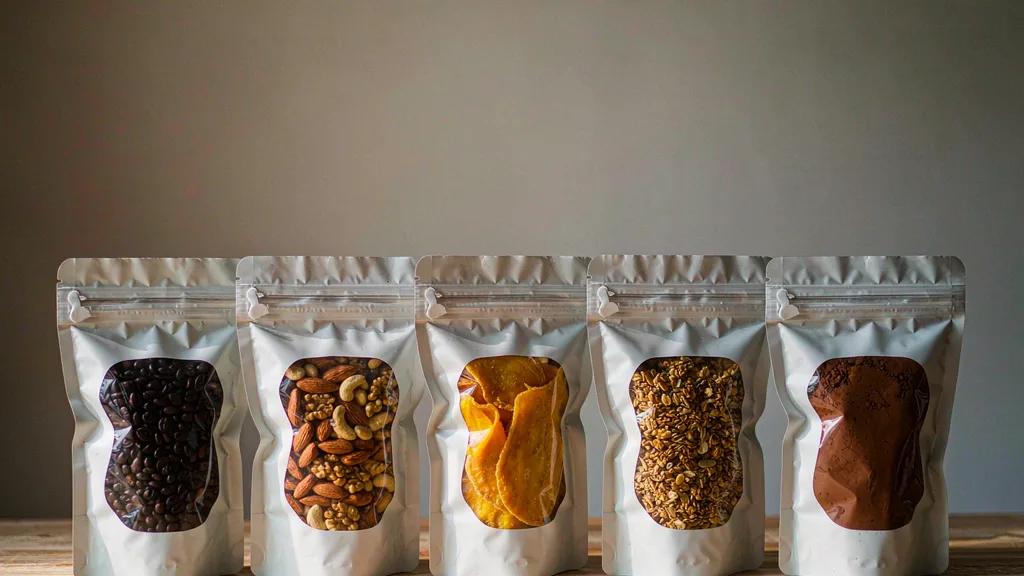
In dry food packaging, PLA film is used for nuts, snacks, tea and more. For high-barrier needs, PLA combines with coatings or metallization. In snacks, PLA laminate packaging is gaining brand favor.
Notably, PLA also sees wide use in medical and hygiene products — absorbable sutures, tissue engineering scaffolds — further validating its biosafety and biocompatibility.
PLA vs. PBAT: a comparison
PLA and PBAT are the two most mainstream biodegradable plastics, but they differ in properties and applications. PLA is hard, transparent and processable, yet brittle with low heat resistance (glass transition about 60°C). PBAT is flexible with better heat resistance, but less transparent and rigid.
In practice, PLA and PBAT are often blended to complement each other. The most common combination is a PLA/PBAT blend: PLA provides rigidity and transparency, PBAT provides flexibility and impact resistance. These blends perform well in shopping bags and garbage bags.
Limitations and challenges of PLA
Despite bright prospects, PLA faces multiple challenges. First, insufficient heat resistance — glass transition (Tg) around 55-65°C means PLA softens and deforms above 60°C, limiting hot-fill and microwave applications. To solve this, researchers developed stereocomplex PLA (SC-PLA) from PDLA (D-polylactic acid) and PLA blends, raising heat tolerance above 130°C.
Second, degradation conditions. PLA degrades extremely slowly in nature — effective degradation needs specific industrial composting (58°C + high humidity + microbes). In natural water or soil, degradation may take years or even decades. Users cannot discard PLA products casually; they must go through industrial composting systems.
Third, cost. PLA’s market price typically runs 20%-50% above traditional petroleum-based plastics, restraining large-scale adoption. But as production scales up and processes improve, the gap is narrowing.
Future development trends of PLA
Looking ahead, PLA development focuses on: continued R&D to raise heat resistance and impact strength; cost reduction and capacity expansion — global PLA capacity is expected to double in 2026-2028; new applications extending from food packaging into electronics and automotive interiors; and building recycling and composting infrastructure for a complete PLA lifecycle management system.
For food brands and packaging buyers, understanding and preparing for PLA early is both a necessary response to environmental policy that lowers brand environmental risk and a strategic opportunity to seize the green consumer market.