Eco-friendly packaging has moved from a niche talking point to a core business decision for brands worldwide. Many procurement managers still view sustainable materials as a pure cost burden, but the commercial picture has changed: consumers reward it, retailers demand it, and the cost gap keeps shrinking. This article breaks down why businesses should choose eco-friendly packaging through three business cases, and how to make the switch without disrupting your supply chain. For a primer on sustainable material options, see our guide to biodegradable packaging myths.
Business Case 1: Consumers Pay More for Sustainability
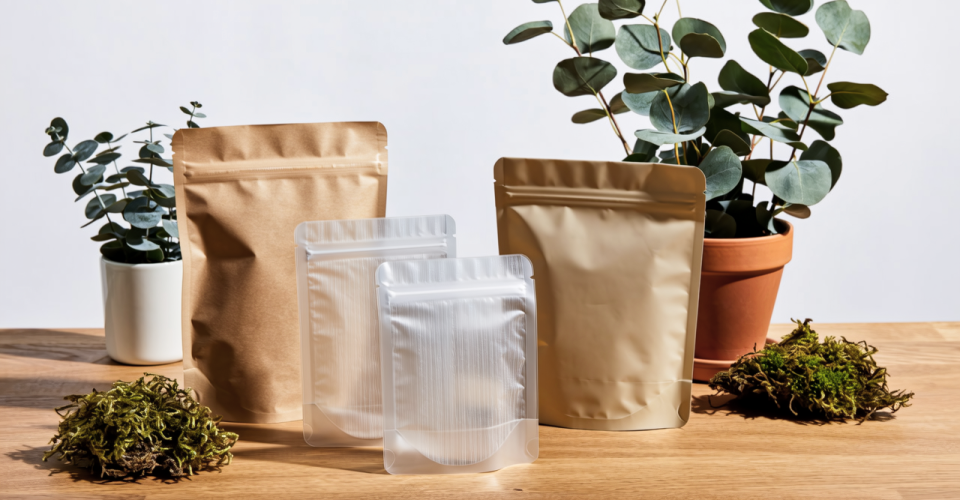
Consumer research over the past decade consistently shows that a significant share of shoppers are willing to pay a premium for recyclable or compostable packaging. The effect is strongest among younger demographics, who actively check packaging claims before buying. In food and beverage, beauty and personal care, packaging sustainability is now a visible decision factor: when two similar products sit side by side, the one with greener packaging tends to win more trial. Just as important is the social sharing effect. Eco-friendly packaging is inherently shareable — consumers like posting photos of compostable pouches or boxes made from recycled material, and that organic word-of-mouth is something traditional advertising cannot buy. For brands, this makes sustainable packaging a low-cost, high-trust asset that supports differentiation in crowded categories. The caveat is that claims must be truthful and verifiable: exaggerated greenwashing that gets exposed will damage trust far more than the packaging ever saved.
Business Case 2: Regulations and Retailers Are Raising the Bar
The second business case is market access. The EU Packaging and Packaging Waste Regulation, national plastic policies around the world, and the sustainable sourcing requirements of major retailers are increasingly shutting the door on packaging that is not recyclable. Food exporters selling into the EU face additional fees or even a ban if their packaging fails recyclability or recycled-content requirements. International retailers such as Walmart and Carrefour have been raising their packaging sustainability scores for suppliers year after year. In this environment, eco-friendly packaging is not a bonus — it is an entry ticket to mainstream channels. Markets in Asia are moving in the same direction, with tighter rules on single-use plastics across e-commerce, food delivery and express logistics. Companies that prepare early avoid the disruption of a forced transition later. To understand where regulations are heading, our PBAT material guide covers one of the key biodegradable options used in compliant packaging today.
Business Case 3: Sustainable Packaging Is Getting Cheaper
The third business case is the one most people overlook: the cost curve of eco-friendly packaging is falling. Mono-material recyclable structures, such as all-PE or all-PP films, remove the complexity of multi-layer lamination and, at scale, now cost close to conventional composite films. PCR post-consumer recycled resin supply has grown steadily, stabilizing prices, and some markets offer incentives that further reduce the effective cost. Lightweighting and source reduction — using less material to deliver the same protection — are simultaneously sustainability wins and direct cost savings, since every tonne of film saved flows straight to the bottom line. When you add the hidden economics, brand premium, channel access, and future plastic taxes, the old assumption that sustainable packaging is always more expensive no longer holds. The overall direction of the industry is clear: recyclable design and mono-material structures are where investment is heading.
How to Make the Switch in Three Steps
Understanding the business logic is only half the job. To implement eco-friendly packaging, start with a packaging audit: identify which SKUs are easiest to convert, beginning with simple pouch formats where mono-material films can replace multi-layer composites. Second, run a small pilot on one or two SKUs and measure shelf performance, consumer feedback and cost change before rolling out wider. Third, co-develop the solution with your supplier — sustainable packaging is not a simple material swap; it involves structure design, printing adjustments and recycling labelling, so an experienced partner saves months of trial and error. Throughout the transition, keep complete test reports and certification documents: they are needed for retailer audits and consumer communication.
Summary and Recommendations
Why should businesses choose eco-friendly packaging? Because it simultaneously leverages consumer preference, channel access and cost structure. Sustainable packaging is no longer a regulatory burden — it is a growth opportunity, and early movers gain advantage in consumer perception, retailer scores and supply-chain economics. OMOpack supports brands with mono-material, recyclable and PCR-based packaging solutions, from structural design to prototyping and volume production. Contact OMOpack to discuss your project. Visit OMOpack.com for more packaging knowledge and industry insights.