A car care pouch is chosen on two tracks at once: the film has to survive the chemistry inside, and the filled carton has to survive the transport rules that apply the moment it leaves your plant. When the formula is solvent-based, a structure tuned for shampoo or wash liquid can swell, haze or lose seal strength within weeks, and a misclassified shipment can be refused at the dock. This guide separates the two risks so you can qualify each one on its own terms.
What Solvent-Based Formulas Do to a Standard Pouch Film
Solvent attack rarely starts with a dramatic leak. Hydrocarbon and oxygenated solvents migrate into the polymer layers of the film, and depending on the chemistry the first visible symptom is usually swelling or softening of the inner layer, followed by haze in a clear film, a drop in seal strength, or delamination along the adhesive interface. Formulas carrying strong dyes or petroleum distillates can also extract material from the sealant layer, which shows up as odor transfer or tacky seal surfaces.
Because every formulation behaves differently, none of these failure modes can be ruled out or confirmed on paper alone. A water-based wash liquid may sit comfortably in a standard PE inner layer for its whole shelf life, while a wheel cleaner built on glycol ethers may attack the same film at the seal first. This is why compatibility has to be tested with the actual formula, at the actual fill temperature, and judged on both the body film and the seal zone.
Which Car Care Products Cross Into Chemical-Compatibility Territory?
The dividing line is the formula, not the product name. Water-based shampoos, snow foams and most quick detailers are largely water with surfactants, and they rarely push a standard structure beyond what household cleaning products already require. The products that deserve a dedicated compatibility review are the ones with a declared solvent character: tar and adhesive removers, brake and parts cleaners, wheel cleaners built on glycol ethers or hydrocarbons, silicone dressings, and polishes that carry petroleum distillates.
Solvent character also hides where buyers tend to overlook it. Fragrance carriers, preservative systems and colorant solvents all add to the total solvent load, and a formula that is mostly water can still carry an aggressive fraction. A related failure pattern is described in disinfectant wipe packaging, where solvent attack decided the material choice — the same reading order, formula first and film second, transfers directly to car care liquids.
How to Qualify a Film Structure Against Your Formula
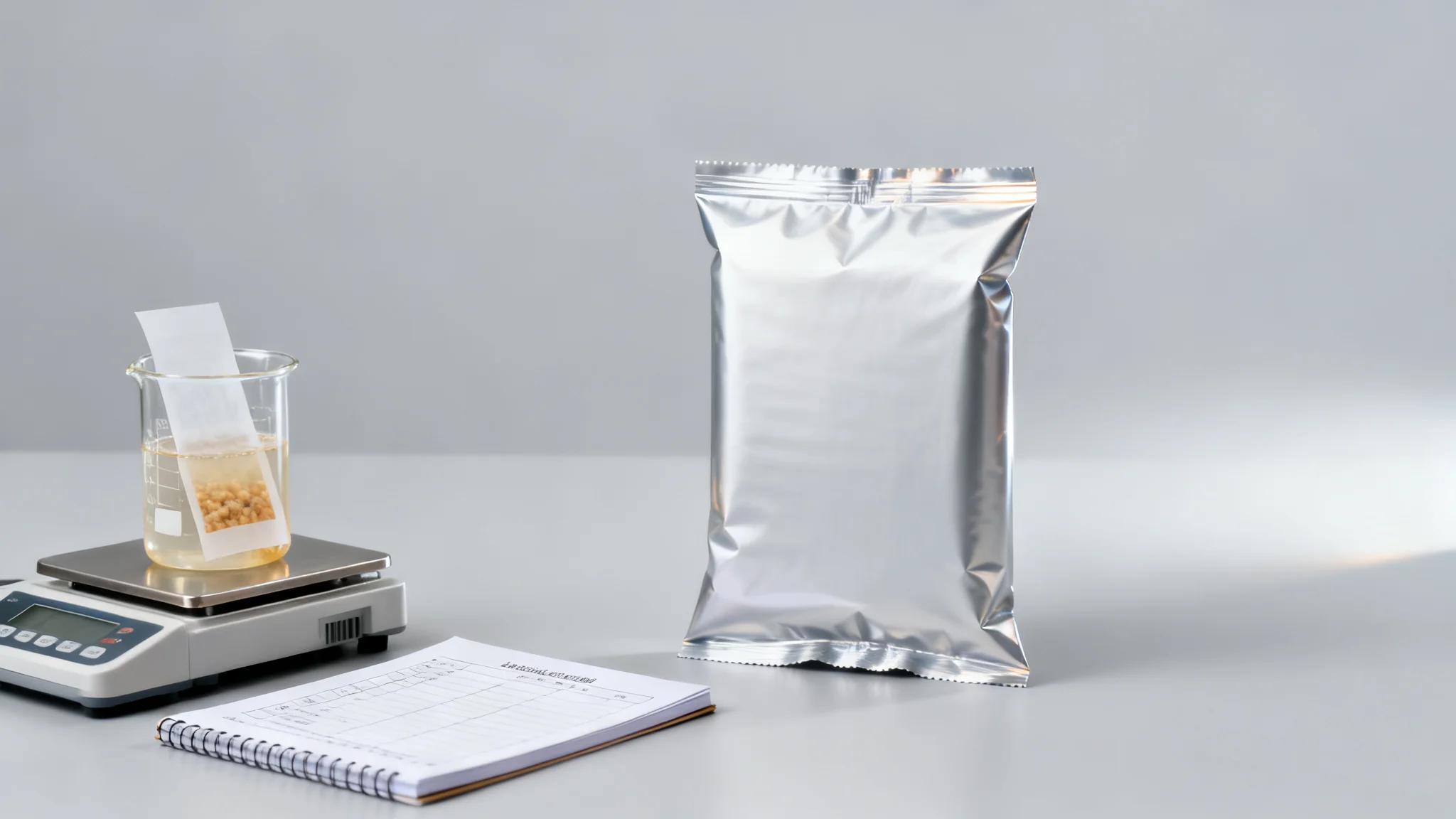
Qualification starts with exposure, not with datasheets. The standard reference is ASTM D543, the standard practice for evaluating the resistance of plastics to chemical reagents, which describes immersion-style exposure of plastic specimens so changes in weight, dimensions and mechanical properties can be measured over time. For a pouch film the practical adaptation is to expose both the laminate and pre-made seals to your formula, then re-test what actually matters: seal strength, visual clarity and layer bonding.
Two reading habits keep the results honest. First, compare against an unexposed control, because every film loses some seal strength in a hot warehouse and the question is the delta. Second, keep the exposure at realistic temperatures, since a seal that survives room-temperature contact can still soften where the formula pools during filling or storage. A structure that passes immersion with a small delta and passes a filled pouch held for a defined period is the one worth taking to a line trial.

Concept packaging visual generated for editorial use. Not a customer project, not a tested structure.
Transport Rules That Start at Your Loading Dock
Transport compliance is decided by the formula, not by the packaging format. If a car care liquid is classified as a dangerous good — flammable liquids are the common case for solvent-based cleaners — the shipper carries the responsibility for classification, packaging selection and documentation, and the packaging system must meet performance requirements before use. In the United States the framework sits in 49 CFR Part 173, which sets out shippers’ responsibilities for hazardous materials shipments; other markets run parallel systems, such as ADR in Europe and the corresponding Chinese standards for dangerous goods transport.
What this means for a pouch program is practical rather than legal. Ask the classification questions early: if your formula is regulated at all, which packing group it falls into, and what packaging performance documentation a carrier will ask for. Flexible pouches are used inside combination packaging in some programs, but if that route is open to your product depends on the classification and on the packaging approvals you can obtain — a question for your compliance adviser, not a promise a film supplier can make.
What Data a Shipper Needs Before a Packed Pouch Moves
Classification runs on chemistry data: the composition of the formula, its flash point, density and water content, plus the fill volume per unit and the number of units per carton. With those inputs a qualified person can determine if the product is regulated, and if so, which packaging instructions apply. Without them, carriers fall back on the most conservative reading, which usually means refused shipments and rebooked freight.
Where It Applies, and Where It Does Not
This compatibility-first approach applies to liquid car care products filled into flexible pouches or spouted pouches, from retail formats to refill sizes. It does not replace the shipper’s classification decision, and it does not cover aerosols, pressurized systems or products already governed by sector-specific rules. When a formula sits near the regulatory line, the transport decision belongs to your compliance adviser and the classification data, while the film decision stays with the compatibility testing described above.
How Closure Choice Changes the Day-to-Day Risk
The closure is where the formula, the user and transport vibration all meet. A spout with loose fitment tolerance weeps vapour and liquid into the cap area, which is exactly the zone where solvent attack shows first, and a cap that loosens under vibration turns a compliant carton into a claim. Closure components also meet the concentrated formula at the interface, so they belong in the same compatibility test as the film itself.
For products with aggressive solvent loads, many brands move to a nozzle-style spout with a tight sealing cap and keep the fill level well below the seal zone. For liquid products in general, the fitment families are laid out on our liquid detergent spout pouches product page, where the same closure logic serves home and garage applications.
A Qualification Sequence Before You Order
- Confirm the formula family and collect flash point and composition data for transport classification.
- Shortlist inner-layer candidates with your supplier based on the solvent character of the formula.
- Run immersion-style exposure on the laminate and pre-made seals, then retest seal strength and clarity.
- Fill trial pouches and hold them at realistic storage temperatures for a defined period.
- Run a carton-level transport test through your approved packaging if the product is regulated.
- Only then commit tooling and print cylinders.
Key Takeaways
- Solvent attack shows up as swelling, haze, seal-strength loss and delamination long before it shows up as a leak.
- The formula decides both compatibility testing and transport classification; the pouch format decides neither.
- Seals and closures need the same compatibility exposure as the body film, because attack starts at interfaces.
- Classification data — composition, flash point, density — should be collected before quoting, not after.
Conclusion
Treat the car care pouch as a chemical-contact product first and a print piece second. Qualify the inner layer and the seal zone against your actual formula, collect the transport classification data early, and keep closures inside the same test scope. Where the formula is water-based, standard structures remain in play; where solvents are present, the sequence above is the shortest route to a structure that survives its shelf life and its journey. If you are mapping liquid categories end to end, our home and personal care packaging solutions page is the entry point for the adjacent categories.
Frequently Asked Questions
Can a standard PE inner layer hold a solvent-based wheel cleaner?
Not reliably. Solvent-based wheel cleaners and similar formulas swell or soften standard polyethylene sealants over time, and the failure usually appears at the seal or the closure interface first rather than as a body-film leak. A car care pouch for this kind of formula needs an inner layer screened against the actual chemistry, confirmed by immersion-style exposure and a seal-strength retest before any volume order, with the closure components included in the same scope.
Do transport rules apply to water-based car shampoos?
Usually not in the same way. Classification follows the formula’s hazard profile — flammability, corrosivity, toxicity — rather than the packaging format, and most water-based shampoos fall outside dangerous-goods scope. The check still has to be made with real composition data, because fragrance carriers or solvent fractions can move a product toward the regulated side of the line. Ask once per formula revision, since a small change in the solvent carrier can flip the answer.
How do you test compatibility before committing to a film?
Exposure first, mechanics second. Laminate samples and pre-made seals are exposed to the actual formula at realistic temperatures, following immersion practices similar to ASTM D543, then retested for seal strength, clarity and layer bonding against an unexposed control. A filled pouch held through the same period closes the loop, because seal zones see pooled liquid in real packs that flat specimens never see, and stored seals fail differently than fresh ones.
What should you send a supplier before asking for a quote?
Four things move a quote from generic to usable. Send the formula family and its solvent character, the fill temperature at your line, the closure format you plan to use, and if the product is regulated in transport. Suppliers can shortlist inner layers against the chemistry and flag transport questions early, which prevents the common failure of a structure that tests fine but cannot ship as configured.