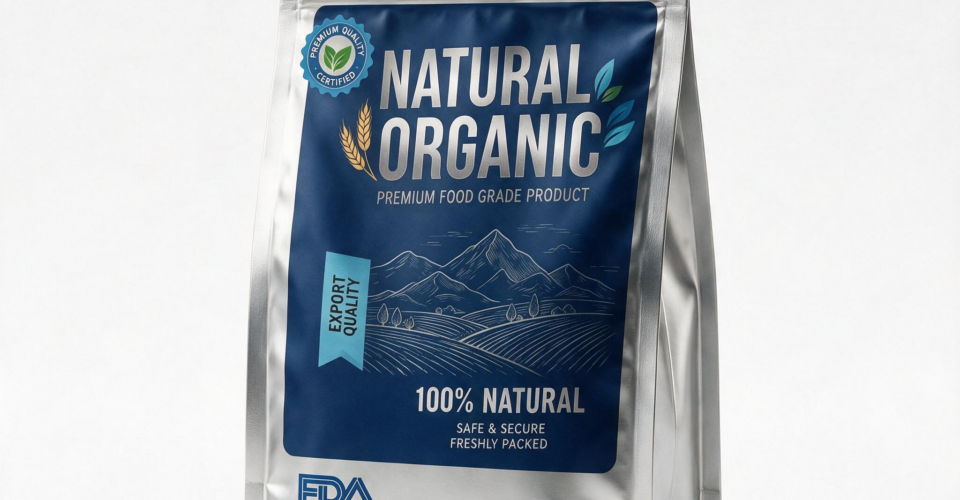
How to Choose Flexible Packaging Materials? One Chart to Understand the Applications of the 5 Major Materials

How to Choose Flexible Packaging Materials? One Chart to Understand the Applications of the 5 Major Materials

In food packaging customization, choosing flexible packaging materials is the first challenge buyers face. Common flexible packaging materials on the market include PE, PP, PET, PA (nylon) and foil, each with unique properties and suitable applications. This article details the characteristics of the 5 major flexible packaging materials to help you make wise packaging decisions.
The Complete Guide to Foil Pouches: Why They Are the First Choice for Premium Packaging

The Complete Guide to Foil Pouches: Why They Are the First Choice for Premium Packaging

Among packaging materials for food and home & personal care products, foil pouches have always been regarded as the hallmark of premium packaging. From specialty coffee beans to high-end health products, from baby food to medical supplies, foil pouches are everywhere. This article fully analyzes the core advantages, main types and buying points of foil pouches from both material science and practical application. For more packaging knowledge, visit the OMOPACK knowledge base.

Are Biodegradable Plastic Pouches Really Eco-Friendly? A Rational Analysis from a Factory Practitioner

Are Biodegradable Plastic Pouches Really Eco-Friendly? A Rational Analysis from a Factory Practitioner

In recent years, “biodegradable plastic pouches” have frequently appeared in news reports and e-commerce packaging options. As consumer environmental awareness rises, more brands are adopting biodegradable packaging. But as packaging industry practitioners, we are often asked: are biodegradable plastic pouches really eco-friendly? The answer is not as simple as the advertising suggests. This article rationally analyzes the environmental truth of biodegradable plastics from a packaging factory perspective.

OMOPACK Passes ISO 22000 Certification, Driving Food Safety Standards Up in the Flexible Packaging Industry

OMOPACK Passes ISO 22000 Certification, Driving Food Safety Standards Up in the Flexible Packaging Industry

In July 2026, OMOPACK officially announced that it had passed ISO 22000 food safety management system certification. This milestone not only marks a new level for OMOPACK in food safety management, but also drives the continuous upgrading of food safety standards in the flexible packaging industry, delivering higher-quality packaging solutions to food customers worldwide. As an internationally recognized food safety management standard, ISO 22000 imposes extremely strict requirements on every link of the food chain.

PET material explained: from beverage bottles to food packaging pouches

PET Materials Fully Explained: The Cross-Category Journey from Beverage Bottles to Food Pouches

In modern food packaging, PET is at once the most familiar and the most unfamiliar material. The bottled water bottle in your hand, the snack packaging on the supermarket shelf, even the tray you heat in the microwave — PET may be behind all of them. Yet few people truly understand PET’s properties, classifications and suitable scenarios. This article takes a full look at this “universal” packaging material, from chemical structure to factory application.

How to Identify Food-Grade Plastic? A Factory QC Inspector Shares 4 Practical Methods

How to Identify Food-Grade Plastic? A Factory QC Inspector Shares 4 Practical Methods

How to identify food-grade plastic is one of the most common questions for food packaging buyers. With so many plastic products on the market, how do you know which are truly food grade? OMOPACK’s QC inspectors share 4 practical identification methods from a factory perspective to help you avoid pitfalls in purchasing. Food-grade plastic is plastic that, under normal conditions of use, does not harm human health when in contact with food.

What Does Food Contact Material Mean? How Is It Different from Ordinary Plastic?

What Does Food Contact Material Mean? How Is It Different from Ordinary Plastic?

Food contact materials refer to materials and products that come into contact, or may come into contact, with food under normal conditions of use. This includes pouches, cling film, food containers and food processing equipment. Food contact materials differ fundamentally from ordinary plastics in regulatory oversight, raw material selection and performance requirements. OMOPACK, as a professional food packaging manufacturer, explains this key concept in depth.

Please enable JavaScript in your browser to complete this form.
=