
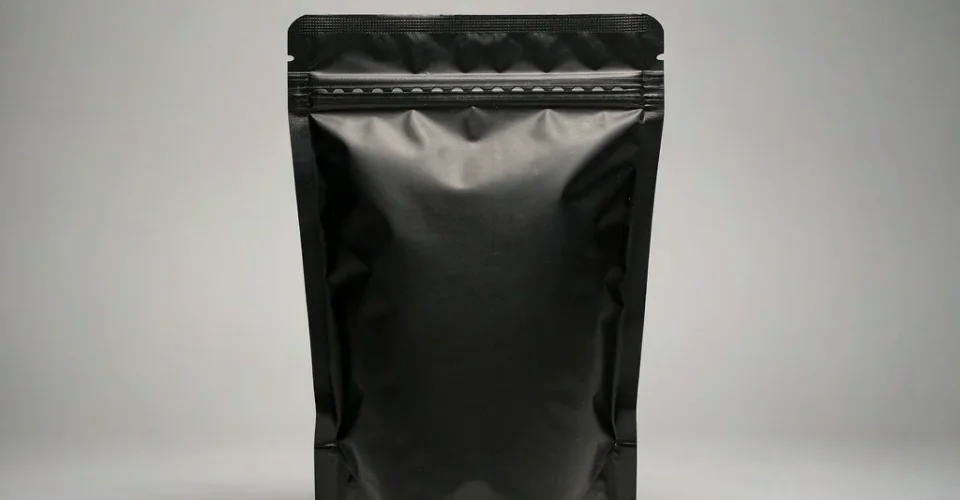
Tamper-evident food packaging is any package with a visible barrier or seal that shows whether the contents have been opened. For a small food brand, the practical baseline is three things: a tamper-evident feature at the opening, a closure that survives distribution, and a short “sealed for your protection” statement so the customer knows what an intact package looks like.
Why Tamper Evidence Exists: The Rule Behind the Requirement
The modern requirement traces back to the 1982 Chicago Tylenol tampering case, in which seven people died after cyanide was introduced into sealed over-the-counter bottles. Within a year, the US FDA issued 21 CFR 211.132, which requires tamper-evident packaging for most over-the-counter drug products and defines a tamper-evident package as one “having an indicator or barrier to entry which, if breached or missing, can reasonably be expected to provide visible evidence to consumers that tampering has occurred.”
That definition, written for drugs, is also the vocabulary that food buyers and retail QA teams use for food. Food law does not impose a universal tamper-evidence rule on every grocery SKU, but several categories are effectively forced into it by retailers, insurers or the nature of the product: ready-to-eat chilled meals, baby food, dairy drinks, single-serve snacks sold in vending, and anything sold on a marketplace where a returned item can be restocked by a third party. Amazon’s own policy on returned grocery items is a practical example — opened food cannot be resold, and tamper-evident construction is how a seller proves the difference.
For a small brand, the real question is not “is it legally mandatory?” but “what does my channel require, and what can my pouch actually do?”
The Five Tamper-Evident Features That Work on Flexible Pouches
Not every tamper-evident technology makes sense on a flexible pouch. These five cover almost all practical cases.
Induction heat seal under the cap or spout
For spouted pouches and pouches with closures, a foil induction liner heat-bonded to the container mouth is the strongest evidence of first opening. The liner cannot be reattached convincingly after removal, and it doubles as a moisture and oxygen barrier. At typical volumes it adds roughly half a cent to two cents per unit — usually the cheapest upgrade that changes the perceived quality of a pack.
Tear band and laser scoring across the film
On a standard three-side seal or stand-up pouch, a laser-scored tear strip between the top seal and the zipper gives a clean, obvious break line. Once torn, the score cannot be restored, and the jagged edge is visible evidence. The same score makes the pouch easy to open, so the feature costs almost nothing extra when designed in from the artwork stage — our easy-tear pouch design guide covers how tear force and seal strength balance on one score line.
Tamper-evident zipper profiles
Standard press-to-close zippers close again silently, which is a weakness for tamper evidence. Tamper-evident zipper profiles add an initial seal strip across the interlocking profiles that the user tears off on first opening, leaving visibly damaged profiles. They run on the same filling equipment as normal zippers and add a modest per-unit cost, hence their popularity in supplements, confectionery and premium pet treats.
Seal flaps and sticker closures
A pressure-sensitive seal flap over the opening — common on sachets, tea envelopes and sticks — is the simplest evidence system, and also the weakest physically. Treat it as a visibility feature on top of a heat seal, never as a replacement for one.
Visible heat seal with printed “sealed” graphics
Where no hardware is added, a full-width printed band across the seal area, with wording such as “seal intact until the perforation,” turns the heat seal itself into the indicator. This costs only print area, and it works because the consumer has been told what an intact pack looks like.
What Actually Fails: Test the Evidence Like a Seal, Not a Sticker
A tamper-evident feature only works if it survives the journey intact and then fails cleanly at first use. That is a distribution problem as much as a material problem. Two test methods carry most of the weight:
- ASTM F88/F88M measures seal strength of flexible barrier materials. Converters commonly validate pouch seals in a range of roughly 1.5 to 3.0 newtons per 15 mm width for snack-weight laminates, with heavier pet food and retort structures specified higher. If a tear band peels so strongly that the customer rips the whole gusset open instead, the evidence feature becomes a usability defect.
- ASTM F2096 is the gross leak bubble test — submerging a pressurized pouch and watching for a steady stream of bubbles. It is the cheapest way to find pinholes and weak seal lanes that would defeat the seal before the product even reaches the shelf.
A practical acceptance rule used by many QA teams: zero gross leaks in a 30-piece sample per production run, seal strength within the validated window, and a tear band that opens with a force between roughly 5 and 15 newtons for adult hands. Numbers vary by product; what matters is that the three values are written down and tested on every new film or new supplier.
What to Write on the Specification Sheet
When briefing a converter, tamper evidence should appear as named line items, not as a request to “make it tamper proof.” A workable table looks like this:
| Line item | What to specify | Typical decision |
|---|---|---|
| Opening seal | Induction liner / full-width seal / score band | By closure type and channel |
| Tear score | Position, residual tear force 5–15 N | Laser scoring preferred |
| Zipper | Standard or tamper-evident profile | By category risk |
| Statement wording | “Sealed for your protection — do not use if band is broken” | One sentence, print-checked |
| Verification | ASTM F88 seal strength, F2096 leak, 30-piece sample | Every new film and supplier |
If the change is happening alongside a move to a mono-material structure, validate the two separately: a recyclable film has a narrower seal window, and the tear band position may need to move with it — the mono-material PE switch guide from the PURESTPACK factory team covers what changes on the sealing side.
Three Mistakes Small Brands Keep Making
- Adding a sticker seal on top of a leaking seal. The visible feature works; the product spoils anyway. Seal integrity comes first — the evidence feature is only as good as the seal lane underneath it.
- Choosing a feature the customer cannot explain. If the pack needs an instruction video to prove it is intact, it is not evidence. Start from the zipper, easy-tear and spout pouch selection guide, not from a hardware vendor’s feature list.
- Copying a feature from a rigid bottle onto film. Shrink bands, breakaway caps and ring-pull tabs behave differently on flexible film. Ask the converter to confirm the feature has actually run on your pouch format, your film gauge and your filling speed.
FAQ
What is the difference between tamper-evident and tamper-proof packaging?
Tamper-evident packaging shows visible evidence that the package has been opened; tamper-proof implies the package cannot be opened at all, which no commercial food package can achieve. Regulations and retail standards use “tamper-evident” or “tamper-resistant” for exactly this reason.
Is tamper-evident packaging legally required for food in the US?
There is no blanket FDA rule requiring tamper evidence for all food. Requirements arise for specific categories, and most of the pressure on food brands comes from retailer standards, marketplace policies and category practice rather than a single federal rule. When in doubt, ask your retail customer for their written packaging requirements.
Which tamper-evident feature costs the least on a pouch?
A laser-scored tear band across the top seal adds almost no cost because it is part of the converting process and also improves openability. An induction liner is the next tier, typically adding well under two cents per unit at production volumes.
Can a zipper pouch be tamper-evident?
Yes. Tamper-evident zipper profiles include a thin seal strip across the zipper that must be torn away at first opening, leaving visible damage. The trade-off is a small added material cost and a first-opening force that should be validated for your target consumer.
How do I test whether my pouch is really tamper-evident?
Combine three checks: seal strength per ASTM F88, gross leak screening per ASTM F2096, and a first-opening trial with a small consumer panel to confirm the feature breaks visibly and does not damage the pack beyond use. Repeat all three whenever the film, supplier or seal temperature changes.
Does a tamper-evident feature change my shelf life?
Only if it adds barrier. An induction foil liner improves moisture and oxygen protection and can extend shelf life; a tear band or printed statement is only a visibility feature. Food-contact paperwork follows your normal food contact migration testing process.



