Who absorbs the eco-packaging cost premium is the first question a brand should answer before switching structures. Recyclable mono-material films, post-consumer resin and certified compostable substrates all make a pack look greener, yet they typically add 20% to 80% to the purchase price, and certification, testing and compliance work can push the total higher still. That premium does not vanish. It lands on the brand, the converter or the shopper. This article breaks down where the extra money goes, who ends up paying it, and which levers actually reduce it.
Where the Premium Comes From
The first layer is material. Compostable resins such as PLA and PBAT trade well above commodity PE and PP, and their density and processing windows differ, so a pouch of the same thickness can consume more resin per unit. Post-consumer recycled (PCR) film may look cheaper per kilogram, but batch-to-batch variation forces converters to raise grammage or add inline inspection to keep print and seal quality inside specification.
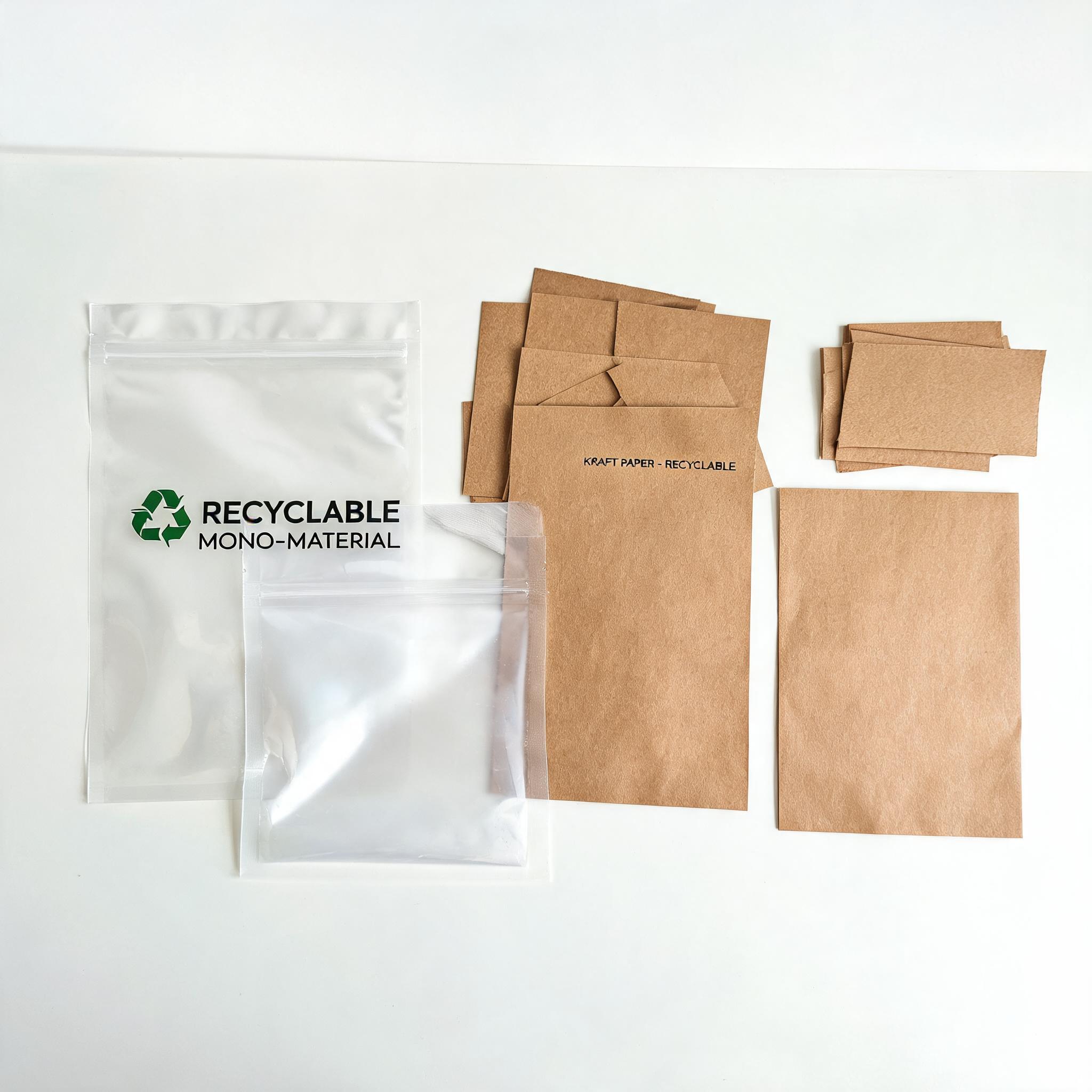
The second layer is structure and process. To match the barrier of a conventional laminate with an all-PE or all-PP build, converters need thin barrier coatings or additional coextruded layers, which means more passes, lower yields and more scrap. Compostable films also have a narrow tension window, so rotogravure lines must run slower and energy cost per meter rises.
The third layer is certification and compliance. Compostability certificates, PCR content verification, extended producer responsibility (EPR) registration and reporting each carry test fees, annual fees and internal labour. These costs barely scale with order volume, which makes them painful on short runs.
How the Cost Is Split Between Brand, Converter and Shopper
Brands usually carry the largest share. To earn an on-pack claim and credible ESG reporting data, most brands accept a 15% to 30% packaging cost increase and book it as marketing spend rather than procurement cost. Converters absorb the invisible part: dedicated short runs, purging lines, higher start-up scrap and lower overall equipment effectiveness, all of which erode margin compared with a standard repeat order. Shoppers carry the smallest share but react fastest. A retail price rise under 5% is broadly tolerated; beyond 10% it measurably dents repeat purchase.
The common mistake is demanding that the converter “absorb” the premium. A converter can only recover what process optimisation releases. The resin differential itself cannot be engineered away, and squeezing price usually shows up as reduced grammage or relaxed inspection, which quietly damages barrier performance. For typical price ranges by substrate, see our guide to biodegradable packaging cost versus conventional film.
What Shoppers Will Actually Pay For
Consumer research across markets converges on a narrow band. When a pack carries a specific, recognisable claim such as “widely recyclable” or “industrially compostable”, willingness to pay rises by roughly 5% to 10%. When the pack only says “eco-friendly” with no verifiable label, that willingness collapses to about 2%. The lesson is that the shopper funds the premium only when the claim is specific and credible, and that vague green wording now carries regulatory risk in several markets.
Label design is therefore part of cost control, not decoration. Which mark to print, where the disposal instruction sits and how many languages are required all affect artwork, plate count and press set-up. Our breakdown of recyclable packaging labels and how to mark packs correctly covers the practical rules.
Four Ways to Shrink the Premium
First, downgauge and simplify. Cutting grammage without losing barrier is the fastest lever and often offsets more than half of the material premium. Second, increase batch size so certification and set-up costs spread across more units, and consolidate several SKUs onto one substrate family. Third, replace multi-material laminates with mono-material structures, which reduces both converting passes and future EPR fees. Fourth, model EPR and packaging tax exposure before choosing a structure, so the decision still holds when reporting obligations tighten in two or three years.
Frequently Asked Questions
Is eco-packaging always more expensive?
No. A downgauged mono-material PE structure, or a consolidated high-volume order, often lands at or below the price of a conventional laminate. The premium concentrates in short runs, many SKUs and multi-certificate projects.
Should the premium sit in procurement or marketing budget?
Split it. The substrate differential belongs in procurement cost; certification, artwork and reporting belong in marketing or compliance. Keeping the two separate makes converter quotes comparable and prevents a routine structure change from being read as a price increase.
Where should a small brand start?
Start with downgauging and mono-material, then consider compostables. The first two add no material cost, while compostable film demands controlled storage and fast turnover, which makes small volumes proportionally expensive.
If you are sizing the premium for a specific product, send us your current structure, annual volume and target markets. OMOpack will return a substrate substitution plan with a cost model that separates what structure optimisation can remove from what the material itself costs. Contact OMOpack for an eco-packaging cost review, or browse our flexible packaging capabilities at OMOpack.com.