Gravure printing is the workhorse of high-volume flexible packaging. Walk into any supermarket and the crispiest, richest colors on snack bags, coffee pouches, and detergent refill packs are almost always printed by rotogravure. But gravure is also the most misunderstood process: high plate costs scare off newcomers, while long production runs make it unbeatable. This guide explains how gravure printing works, why it dominates mass production, what it really costs, and how to pick a capable gravure printer.
How Gravure Printing Works: Cells and Doctor Blades
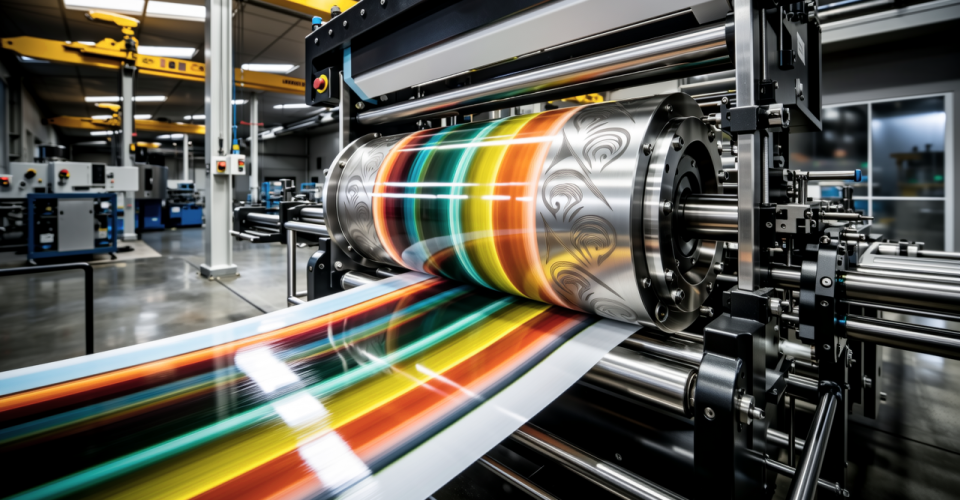
Gravure printing is built on a simple idea: tiny recessed cells carved into a chrome-plated cylinder carry the ink. The cylinder rotates through an ink fountain, a doctor blade wipes the surface clean so ink remains only inside the cells, and then the cylinder presses against the film, transferring the ink to create the image. Deeper cells hold more ink and print darker; shallower cells print lighter.
Because the image is physically engraved into the cylinder, gravure delivers exceptionally fine detail and smooth tonal transitions. Gradients, skin tones, metallic effects, and photographic images reproduce with a depth that flexography struggles to match. For brands that live or die by shelf appeal, that color fidelity is the single biggest reason to choose gravure printing.
Why High-Volume Packaging Chooses Rotogravure
Three advantages make gravure printing the default for mass production. First, color saturation: gravure transfers a thicker ink layer than flexo or digital, producing dense, vivid color that stands out on crowded shelves. Second, speed: modern rotogravure presses run at 150 to 300 meters per minute, which keeps unit costs low on long runs. Third, consistency: once a cylinder is engraved, the image does not drift. The same cylinder can print the same design for months or years, making gravure ideal for products that reorder the same artwork again and again.
This stability matters more than most buyers realize. Flexo plates stretch and wear; digital output can vary between machines. A gravure cylinder, by contrast, prints the same dots for millions of meters. For a snack brand that orders the same pouch design four times a year, that repeatability protects both quality and brand identity.
The Real Cost Structure: Expensive Up Front, Cheap at Scale
Gravure printing has the opposite cost curve of most processes: high setup costs, low per-unit costs. Each color needs its own engraved cylinder, and cylinder engraving runs from a few hundred to several thousand dollars apiece. A six-color design can easily require five figures in plate costs before a single meter is printed. That is why gravure only makes sense once an order reaches a meaningful volume, typically tens of thousands of meters per design.
Beyond that threshold, the economics flip. Cylinders last for millions of impressions, press speeds amortize labor and overhead, and ink transfer efficiency is excellent. Divide the plate cost by total volume and gravure often ends up cheaper per unit than any alternative. If you are not sure whether your volume justifies gravure or digital, our comparison of digital printing vs traditional printing breaks down the crossover point in detail.
What Gravure Is Good For, and What It Is Not
Gravure printing shines for four categories: high-volume food packaging such as noodle, chip, and biscuit pouches; home and personal care packaging where saturated color drives shelf presence; laminated rollstock for automatic filling lines, where gravure pairs naturally with dry and solvent-free lamination; and premium designs that need fine gradients, like specialty coffee and tea packaging.
Gravure is a poor fit when volumes are small, when artwork changes frequently, or when turnaround is urgent, because cylinder engraving takes time and plate costs cannot be amortized. Export orders with strict environmental requirements also need care: most gravure still runs solvent-based inks, although water-based gravure inks are improving rapidly for mainstream applications.
How to Evaluate a Gravure Printing Supplier
When assessing a gravure printer, look at three things. First, cylinder capability: does the supplier own engraving facilities or outsource them? In-house engraving gives tighter control over color reproduction. Second, press condition: check press age, automatic register control, and inline inspection systems, because these determine consistency on long runs. Third, color management: ask whether the plant uses spectrophotometers and standardized color workflows, and request past proofing records and color-difference data.
Print quality also depends on the whole converting chain. A well-run gravure press feeding into a disciplined solvent-free lamination process produces pouches that look great and perform reliably. Ask suppliers how they control lamination and sealing quality, not just printing.
Summary
Gravure printing remains the first choice for high-volume packaging because it combines unmatched color quality, high speed, and long-run consistency at a competitive unit cost. The key is knowing your volumes: below the crossover point, digital or flexo wins; above it, gravure printing pays for itself quickly. Choose a supplier with strong cylinder capability, modern presses, and disciplined color management, and gravure will reward you with packaging that sells.
Planning a packaging project and want expert advice on the right printing process? Contact OMOpack for a free process evaluation and sample testing.
Visit OMOpack.com for more packaging knowledge and industry insights.