If you have compared flexible packaging quotations recently, you have probably met two acronyms that look almost identical: PIR vs PCR. Both describe recycled plastic, both can be listed on a specification sheet as recycled content, yet they come from completely different waste streams and behave very differently on a converting line. Choosing one when the other is required can inflate your cost, weaken pouch performance, or leave you unable to support the recycled-content claim your customer is asking for.
This guide explains where each material comes from, how they differ in stability, traceability and price, and how to decide which one belongs in your structure.
What PIR and PCR Actually Mean
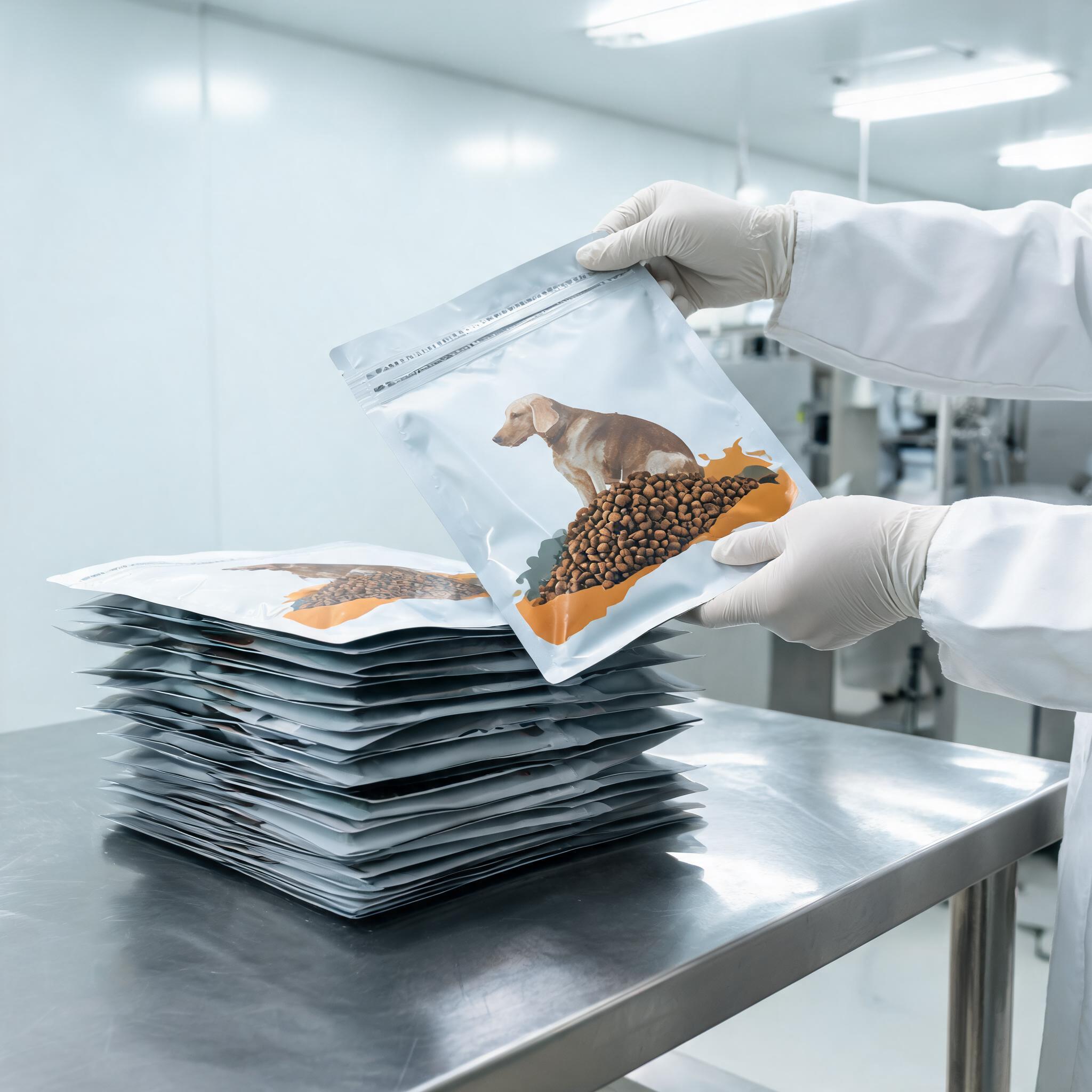
PIR stands for post-industrial recycled. It covers scrap generated before a product ever reaches a consumer: edge trim from film production, start-up material, off-spec rolls, and rejected printed webs. Because it never leaves the factory, it is clean, consistent and usually recycled in a closed loop by the converter that produced it.
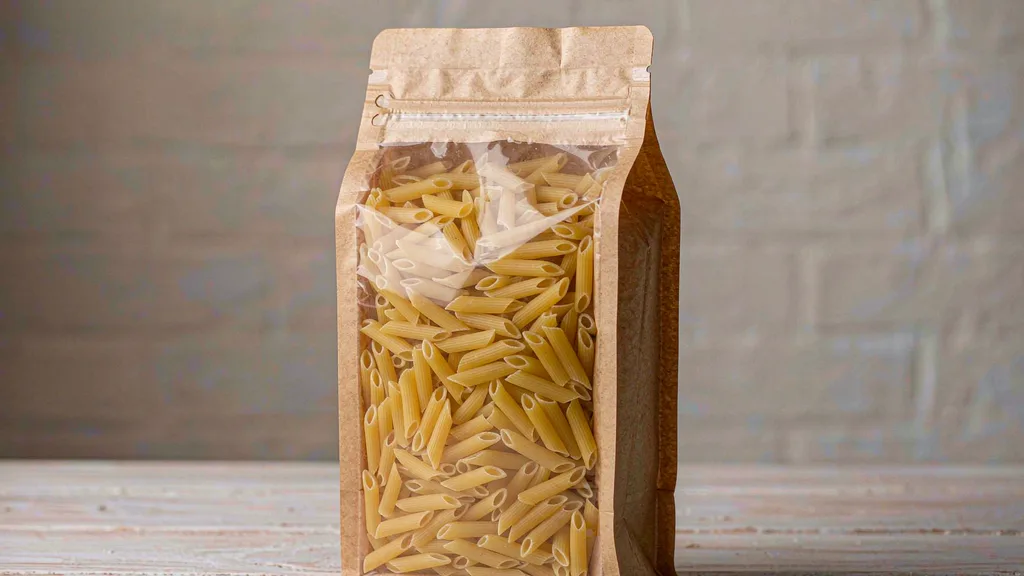
PCR stands for post-consumer recycled. It comes from material that a household or business has already used and discarded, such as beverage bottles, detergent containers and e-commerce mailers. That stream must be collected, sorted, washed, shredded and pelletised before it can be extruded again.
The shortest way to remember the difference: PIR has never left the factory gate, while PCR comes back from the waste bin. Everything else follows from that single fact.
Why PIR Is Usually the Easier Starting Point
PIR has been through fewer heat histories and fewer mechanical cycles, so its molecular weight is closer to virgin resin. Melt index varies little between batches, colour and odour are predictable, and existing extrusion and lamination settings usually need only minor adjustment. On processes that are sensitive to gauge uniformity, such as blown film and adhesive lamination, the yield risk is noticeably lower.
PCR has completed a full service life and been reprocessed at least once. Molecular weight drops further, and gel particles, mineral contamination and odour are common. It usually needs a compatibiliser or a downgauged application, and food-contact use requires an additional safety assessment that many suppliers cannot support.
That is why most converters phase recycled content in through PIR first, stabilise the process, and then raise the PCR ratio step by step. It is the lowest-risk route and the easiest to pass a customer’s first-article approval.
Traceability and Certification: Where PCR Gets Hard
PIR traceability is comparatively simple. A converter can show an internal log that follows trim from collection through pelletising to finished roll, and the chain is short enough to audit in an afternoon.
PCR requires recycler qualifications, batch-level origin records and, in most export markets, third-party certification before a recycled-content percentage can be printed on a pack. Brand owners rarely accept a general statement that a pouch “contains recycled material”; they want a verifiable figure backed by documents.
Ask what evidence your supplier can provide before you specify the material, not after the artwork is approved. A resin that cannot be documented is a resin that cannot be claimed.
Price, Supply and the Real Cost per Pouch
PIR typically trades at or slightly below virgin resin. Availability depends on the converter’s own output, so volume can be lumpy even though quality is steady. PCR pricing follows the recovered bottle and flake market and can overtake virgin resin in a tight season, with wider swings in supply.
Comparing price per tonne is not enough. Build yield, print rework, odour complaints and reject rates into the calculation. A cheaper recycled resin that runs five percent slower and generates more waste is often the more expensive option per thousand pouches. Our analysis of who pays the eco packaging cost premium walks through that arithmetic.
How to Choose for Your Product
For food, pharmaceutical and infant-nutrition applications, PIR is usually the safer first move because the safety assessment path is clearer and contamination risk is lower. For home care, household goods and industrial packaging, PCR is a reasonable choice and pairs well with mono-material structures that keep the pack recyclable.
Where marketing value matters, PCR tells a stronger story, provided the claim is documented. Where cost and volume dominate, PIR is more pragmatic. The two can also be combined in one structure, with PIR in the core and PCR in a non-contact layer, to balance recycled content against cost.
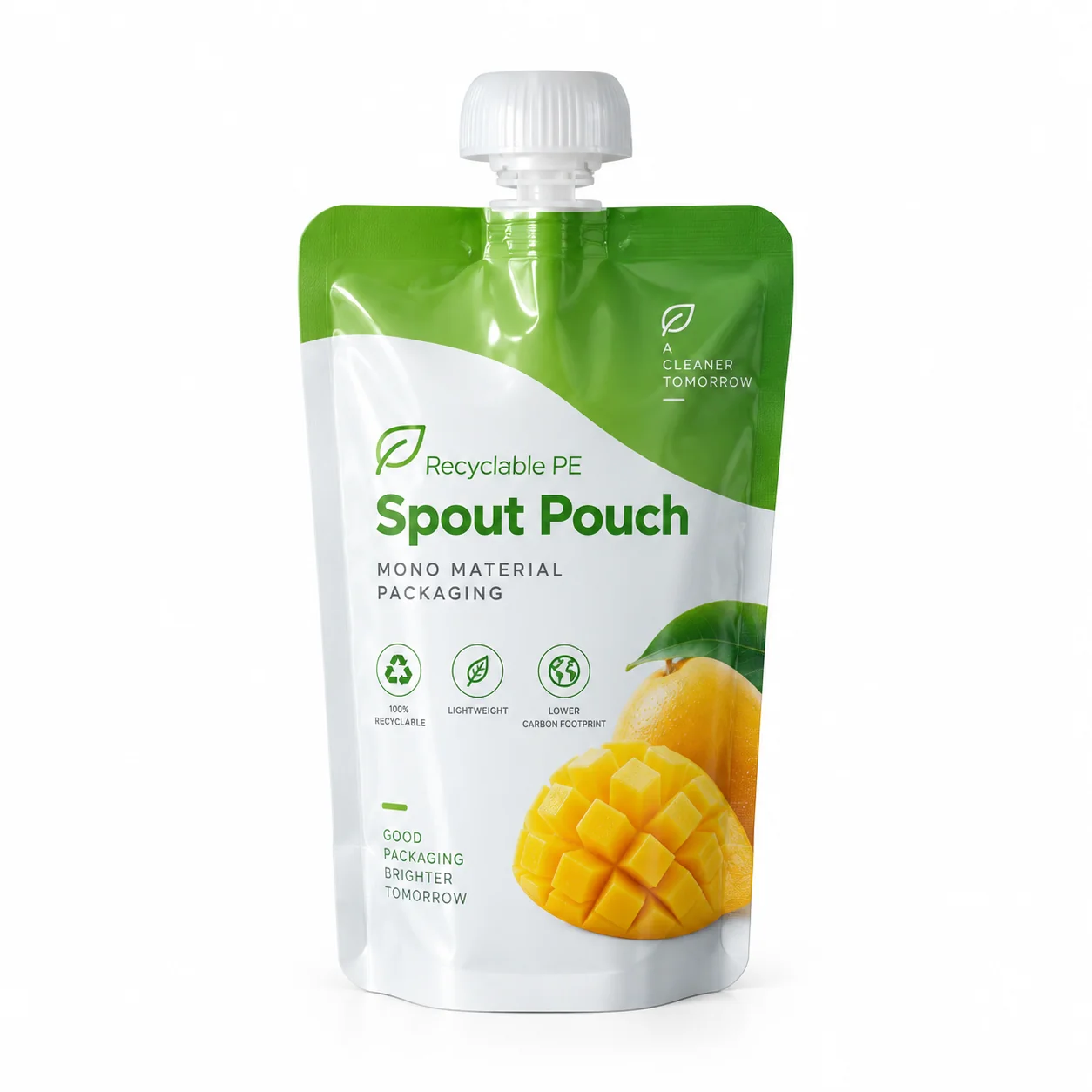
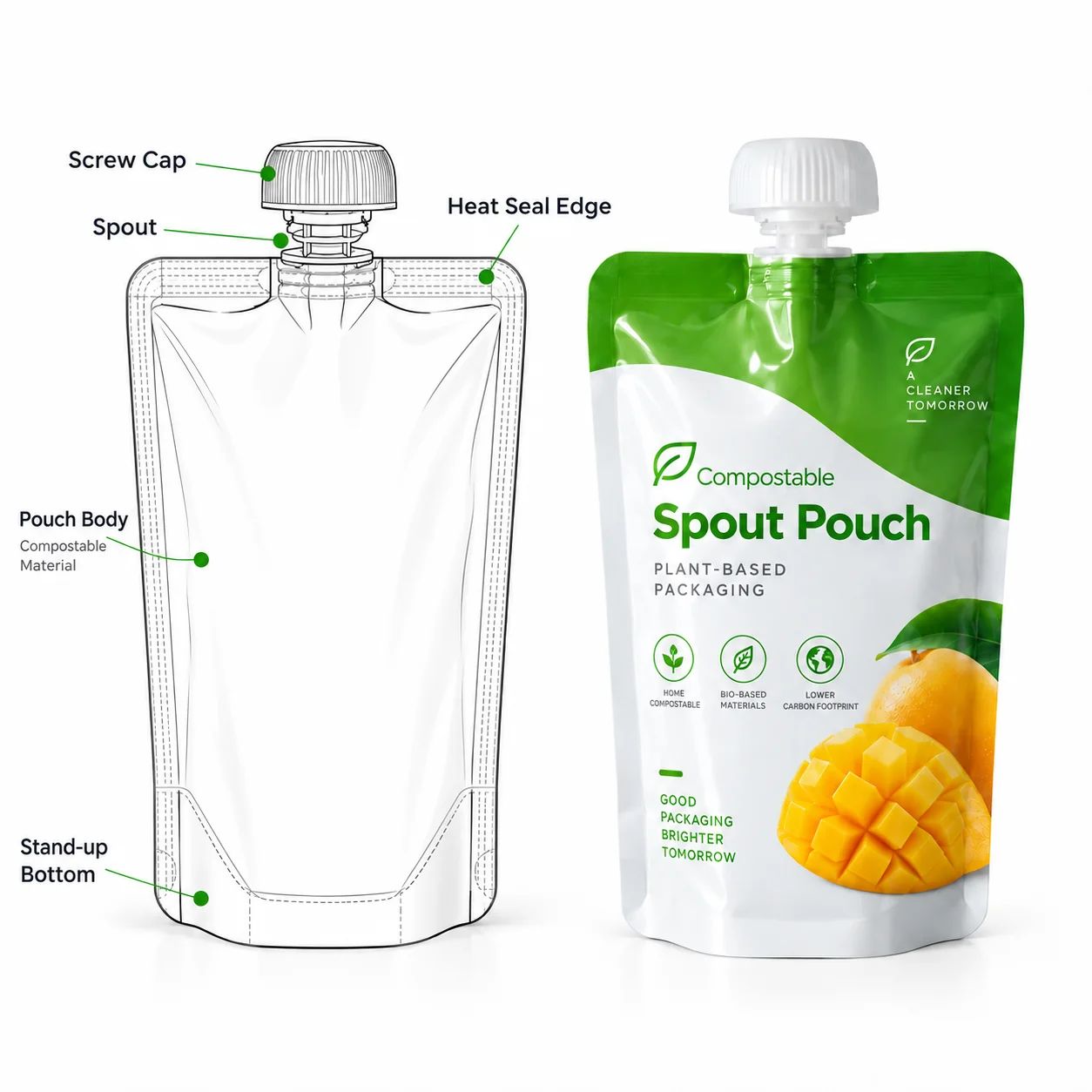
Structure decisions matter as much as resin choice. A mono-material pouch with a spout, for example, keeps the pack in one recycling stream, as shown in this freeze-dried fruit packaging case study where barrier and recyclability had to be solved together.
Common Mistakes in Tender Documents
The first is describing PIR as PCR, which falls apart the moment a customer audits the supply chain. The second is specifying a recycled percentage without stating which layer it sits in, leaving the converter to interpret it. The third is ignoring odour: recycled resin in a food pack is a frequent source of consumer complaints even when every mechanical test passes.
A specification that names the waste stream, the layer, the percentage and the required documentation removes most of that ambiguity before production starts.
Next Step
Decide three things first: whether the pack touches food, what recycled content your customer requires, and which documents you can supply. Once those are fixed, the PIR versus PCR question usually answers itself.
If you want a structure and cost comparison for your own product, contact the OMOpack technical team with your current specification and annual volume. For additional reference material and product ranges, visit our sister site OMOpack.com.