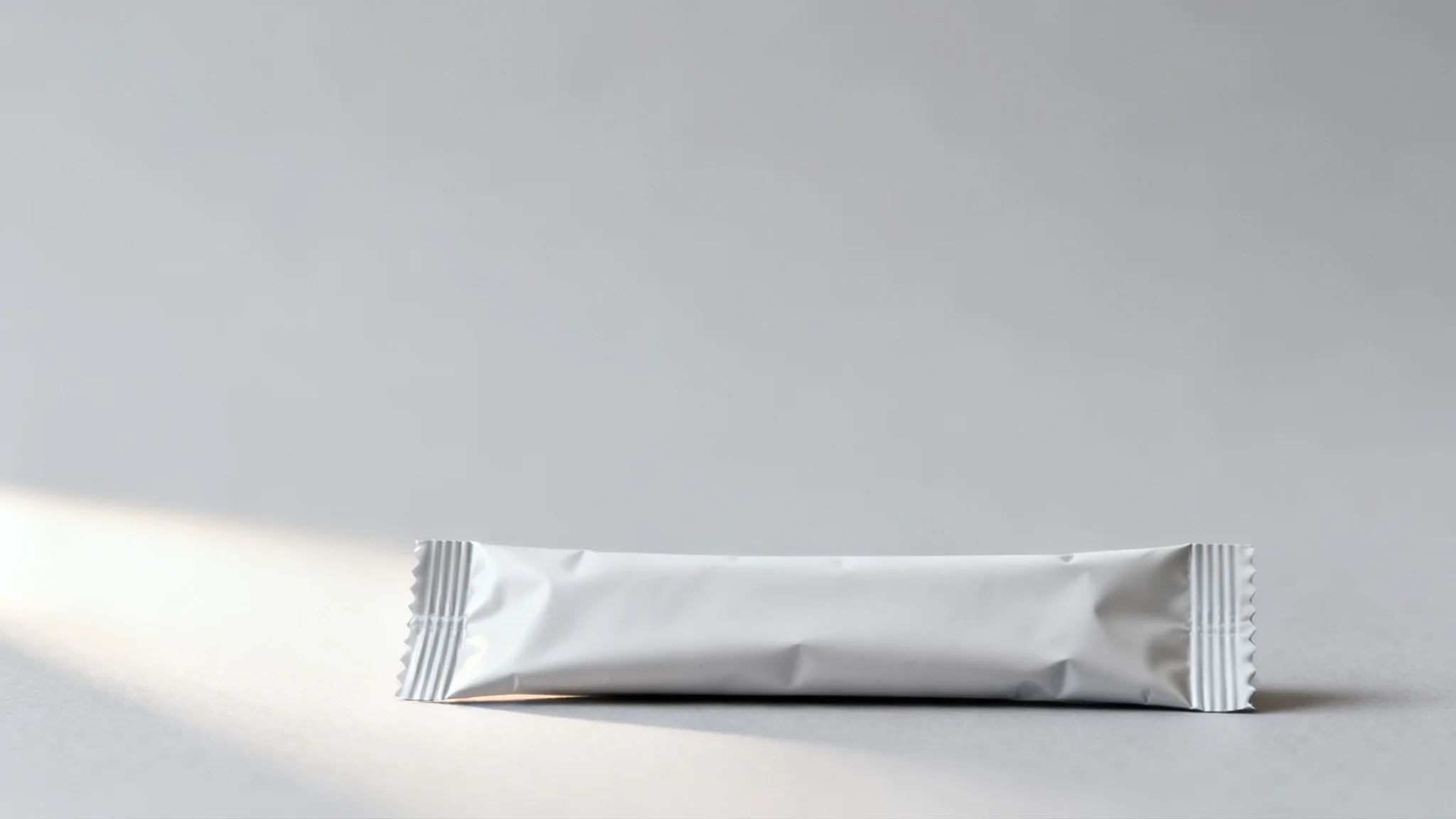
An instant coffee stick pack is decided by its film before any coffee is filled into it. The format is a narrow single-serve sachet with a large seal area and a small product volume, so the coffee loses aroma to oxygen and picks up moisture through every square centimeter of the laminate. When the barrier is wrong, the last stick on the shelf tastes flat; when the stiffness or the seals are wrong, the roll never runs cleanly on the filling machine. This article explains how oxygen and moisture requirements push the film structure decision, and what to confirm before you commit.
What Makes the Stick Pack Format Unforgiving?
Three format features work against coffee freshness. First, a stick pack holds a single dose with no resealable closure, so the entire shelf life has to be built into the film and the seals. Second, the sachet is narrow, which means the seal area is large relative to the coffee volume; every centimeter of seal edge is a potential leak path. Third, instant coffee is hygroscopic and aromatic at the same time: it absorbs moisture from humid air and loses volatile aroma to any oxygen that gets in. A format that works for sugar sachets does not automatically protect coffee.
How Much Oxygen Protection Does the Coffee Need?
The answer depends on the shelf-life target and how the coffee was processed, not on a fixed industry number. Roast-and-grind coffee degasses and needs valves; instant coffee does not degas, so its main enemies after filling are oxygen-driven aroma loss and staling. Films are compared by their oxygen transmission rate, tested under standard conditions such as the ASTM D3985 method, and a stick pack for a twelve-month program generally points toward a foil-containing or high-barrier laminate rather than plain transparent film. When the program is shorter, or the brand wants a window to show the product, a transparent high-barrier structure can be a candidate, but that trade has to be verified with real barrier data instead of assumed from a datasheet.
What Does Moisture Do During Distribution?
Moisture damage rarely shows up at the packing plant. It shows up in a warehouse in a humid coastal city, or in a container crossing the equator, as caking and hardening of the powder. The film’s water vapor transmission rate, measured with methods such as ASTM F1249, decides how fast that happens. Aluminum foil layers are effectively opaque to water vapor; metallized and clear high-barrier films sit lower. Distribution climate matters as much as the laminate: a structure adequate for a dry inland market may struggle on a tropical route, so the route profile belongs in the specification conversation with your supplier.
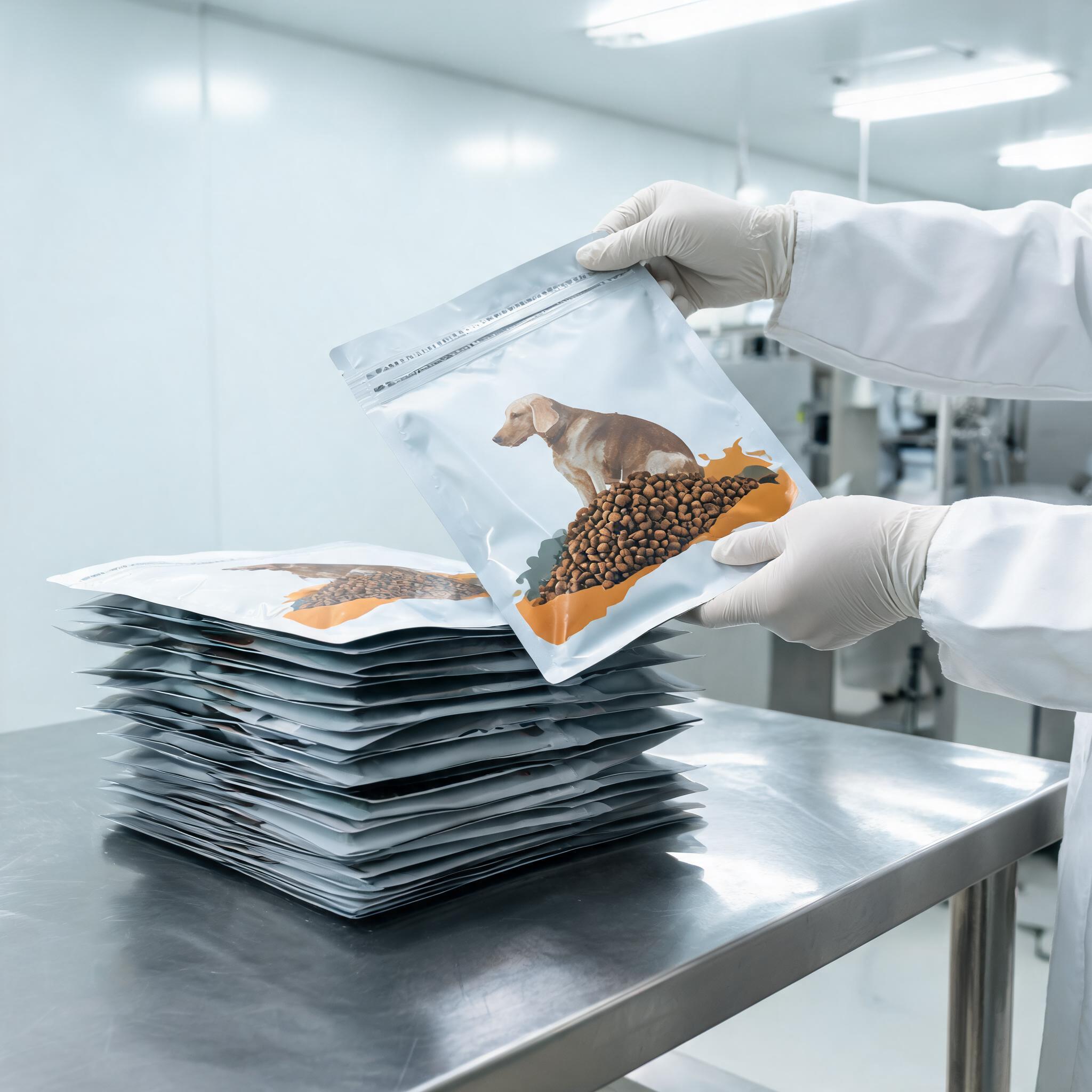
Concept packaging visual generated for editorial use. Not a customer project, not a tested structure.
Film Structures Commonly Considered
Most instant coffee stick programs evaluate candidates from three families. The table below summarizes them as evaluation directions rather than recommendations; the right choice depends on shelf-life target, cost ceiling and equipment.
| Structure family | Typical build | Strengths | Watch points |
|---|---|---|---|
| Foil laminate | PET / AL / PE | Highest oxygen and moisture barrier; proven for long programs | Opaque; stiffer feel; check crease behavior on narrow seals |
| Metallized laminate | PET / VMPET / PE | Strong barrier at moderate cost | Barrier depends on coating quality; verify by test, not by datasheet |
| Transparent high barrier | PET / clear EVOH-based / PE | Product visibility; shelf impact | Lower barrier than foil; suits shorter shelf-life targets |
Sealant choice sits underneath all three families. The sealant layer decides hot-tack, sealing temperature and how forgiving the film is when powder dust reaches the seal zone, which is why the sealant should be discussed together with the filling machine, not after it.
Who Is This Format For — and Where Does It Fall Short?
This applies to brands selling single-serve coffee portions where dose accuracy, hygiene and shelf life matter more than resealability: hotel and food-service sticks, e-commerce sampling programs, and premium retail multipacks. It fits programs that can commit to a defined shelf-life target and a stable filling line. It falls short where the product needs a resealable pack, where the fill weight varies widely in one program, or where the brand requires a transparent window and a long shelf life at the same time. In those cases a stand-up pouch or a stick with a different sealant system deserves a look before forcing the stick format to do a job it was not built for.
How Do You Verify the Film Before Committing?
- Fix the shelf-life target and the distribution climate in writing, because both drive the barrier requirement.
- Agree on the test language: oxygen transmission by a method such as ASTM D3985, water vapor by ASTM F1249, and seal strength on the actual sealant pair.
- Run a trial roll on your own filling machine, or on a line matched to its speed and jaw design, and keep sealed samples from every speed step.
- Send retained samples through the intended distribution route, then open and taste at intervals instead of relying on the calendar alone.
A structure that passes a lab datasheet can still fail the machine trial. The verification sequence exists to catch that gap before a full buy.
Key Takeaways
- Shelf life of an instant coffee stick pack is set by the film barrier and the seal quality, not by the filling date.
- Oxygen and moisture requirements should be written down as targets and verified with named test methods.
- Foil, metallized and transparent high-barrier structures are evaluation candidates with different trade-offs, not a ranked list.
- Machine trials on the real filler are the final gate; datasheets are only the entry ticket.
Conclusion
Choose the film for an instant coffee stick pack by working backward from the shelf-life target and the distribution climate, then forward through the machine. Write the barrier targets down, pick candidate structures against them, and verify with named test methods and a trial on the actual filling line. If the program needs product visibility or resealability that a stick pack cannot deliver, treat that as a format decision and revisit it early rather than after tooling. Brands that want a second opinion on structure or a sample program can start from our coffee and tea packaging projects page and compare structures side by side, or review a dedicated product build such as our custom coffee bean packaging bags to see how barrier layers are specified in practice.
Frequently Asked Questions
Does an instant coffee stick pack always need an aluminum foil layer?
Not always. For an instant coffee stick pack, a foil layer is the safest route for long shelf-life targets, but metallized or transparent high-barrier laminates can be candidates when the program is shorter or visibility matters more than maximum barrier. The decision should come from the oxygen and moisture targets written for the product and from transmission testing on the actual laminate, not from habit. If the target and the test results agree on a non-foil structure, the foil layer is optional cost.
Should stick packs of coffee be nitrogen-flushed?
Usually yes when aroma retention over months matters, because replacing headspace oxygen with nitrogen slows staling even inside a good barrier film. The condition is the filling line: the dosing system must support gas flushing without destabilizing the powder dose, and the seal must hold the gas through handling. Our overview of nitrogen flush packaging for coffee explains when flushing changes the outcome and when it adds little. If the line cannot flush, compensate with a higher-barrier film and a tighter seal verification.
What shelf life can I expect from a stick pack format?
Shelf life rests on three variables: the film’s tested transmission data, the residual oxygen after filling, and the climate the pack travels through. A dry domestic route and a tropical export route can produce different outcomes from the same laminate, so ask for a retention testing plan instead of a single number from a datasheet. Suppliers who quote a fixed month count without asking about your distribution climate are guessing on your behalf.
What should I prepare before requesting a stick pack trial?
Prepare four items before anything else: the dose weight range, the shelf-life and climate targets, and the filling machine type and speed. Add any packaging line constraints such as jaw width or sealing method. With these, a supplier can propose two or three candidate structures and predict which seals will survive your line. Without them, the trial turns into guesswork and the quotes you receive will not be comparable.