Pillow pouch packaging is one of the most common formats in flexible packaging, yet few buyers can explain the difference between its two classic variants. A pillow pouch with a center seal and one with a back seal look almost identical on a shelf, but they are formed differently, print differently and suit different production lines. This guide explains how center seal and back seal pouches are made, where each format works best, and what to check before ordering pillow pouch packaging for your product.
Center Seal Pouches: The Classic Pillow Pouch Format
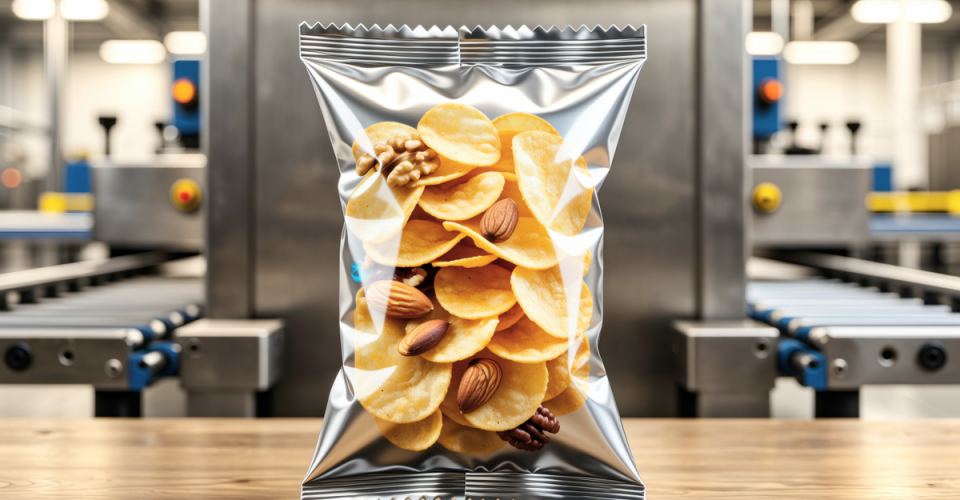
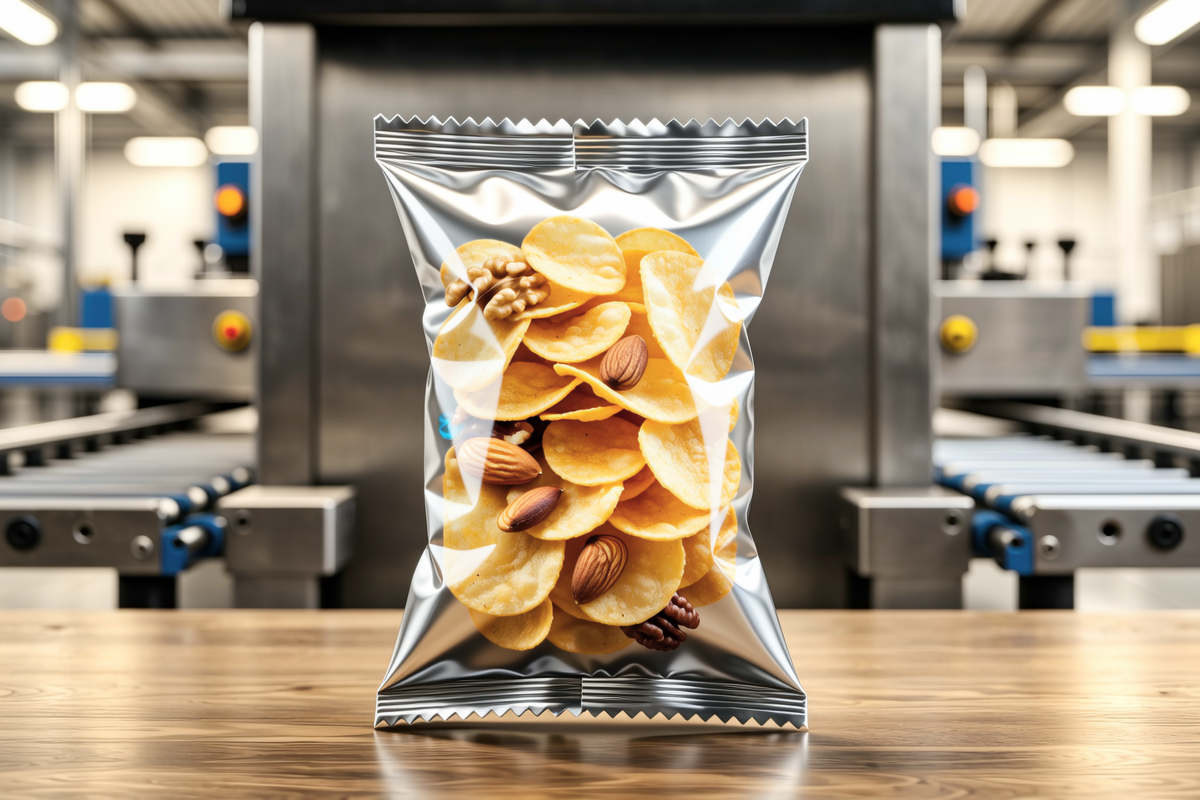
A center seal pouch, also known as a pillow pouch, is formed by folding a flat film into a tube and sealing it along the center of the back panel. The ends are then crimp-sealed to create the classic pillow shape used for chips, biscuits, bread and many other snacks. Because the longitudinal seal runs down the middle of the back, the front panel stays completely clean and uninterrupted, which gives brand artwork a large, unobstructed canvas. This format is a favorite of high-speed form-fill-seal machines: roll film is formed, filled and sealed in one continuous motion, and modern lines can run at dozens of bags per minute. For high-volume snack brands, the combination of printing quality, machine efficiency and low unit cost makes the center seal pillow pouch the default choice.
Back Seal Pouches: Fin Seal and Lap Seal Explained
A back seal pouch differs from a center seal pouch in the position of the longitudinal seal. Instead of a seal down the middle of the back panel, the back seal pouch joins the two edges of the film at one side, creating a narrow seal fin or a flat lap. Two techniques are common. In a fin seal, the inner surfaces of the film are sealed together and the seal sticks out as a small fin; in a lap seal, the inner surface of one edge is sealed onto the outer surface of the other edge, producing a flatter profile. Back seal pouches are often chosen for medium-speed lines and hand-filling operations, and they are widely used for tea, dried snacks and powdered products. Because the seal occupies one side of the back panel, the design must leave a clear zone for the seal area if important information needs to be printed there.
Printing and Shelf Appearance: What Brands Should Know
The most visible difference between the two formats is how they present printed graphics. A center seal pouch offers a completely clean front panel, ideal for large brand visuals, appetizing product photography and strong shelf impact. The back seal pouch also keeps the front face clear, but its side seal creates a slightly less uniform silhouette. Printing quality itself depends more on the process than the format: gravure printing delivers rich color for long runs, while flexo printing offers a more economical route for shorter quantities. One technical detail deserves attention at the design stage: the seal area must be kept free of ink. If the longitudinal seal passes over heavy print coverage, sealing strength can drop and the pouch may leak. A professional supplier will mark the seal allowance on the design file and confirm that critical text and logos stay clear of both the back seal and the end seals.
Center Seal or Back Seal: How to Choose
Three practical rules make the decision easier. First, consider your production speed. If you run an automated filling line at high volume, the center seal pillow pouch is the natural fit because it is fully compatible with fast form-fill-seal equipment and keeps cost per bag low. If you fill by hand or on a simple semi-automatic machine, a back seal pouch offers more flexibility and lower minimum order quantities. Second, think about display requirements. Snack foods that sell on appetite appeal benefit from the full front-panel graphics of a center seal pouch; for functional products such as tea or powder where the label does most of the work, a back seal pouch is the more economical choice. Third, match the format to the product shape. A wide-bodied pillow pouch gives a satisfying, full look on the shelf, while a flat back seal pouch is easier to stack in boxes and displays. For more help matching a format to your product, see our food packaging bag selection guide, or read how pillow pouches are used across the range of bakery packaging bags.
Custom Pillow Pouch Packaging: Four Checks Before Sampling
Once you have chosen a center seal or back seal pouch, four points should be confirmed before sampling. First, seal allowances: the design file must reserve clean space for the longitudinal seal and both end seals, and the supplier should confirm these zones before plates are engraved. Second, the heat seal window: different films seal at different temperatures, and the balance between seal strength and machine speed must be validated on the actual film structure. Third, easy-open features: a laser score line or a pre-cut notch can be added so consumers can open the pouch without scissors, a detail that noticeably improves the eating experience. Fourth, dimensional tolerances: center seal pouches are sensitive to width tolerance, because even a small deviation shifts the seal position on high-speed lines. Resolving these four points at the sampling stage prevents most production rework later. If your product also needs a resealable option or a stand-up format, tell your supplier early, because zipper application and gusset design change the pouch structure from the start.
OMOPACK is a flexible packaging manufacturer with dedicated lines for pillow pouch packaging, back seal pouches, zipper pouches and stand-up pouches. We support food-grade materials, gravure and flexo printing, and complete sampling before mass production. Looking for a reliable partner for your next packaging project? Contact OMOPACK for a free pouch structure recommendation and sample testing, or visit OMOpack.com for more flexible packaging guides.