Bakery packaging bags do far more than hold a loaf or a cookie. The right structure keeps bread soft, protects a decorated cake in transit, and stops biscuits from going stale or absorbing humidity. The wrong one shortens shelf life, hurts the look of the product and quietly damages repeat sales. Whether you run an artisan bakery moving into retail or a large commercial bakery supplying supermarkets, this guide explains how to choose bakery packaging bags for bread, cake and biscuits.
Bread Packaging Bags: Moisture Control Comes First
Bread stales when moisture escapes and starch recrystallizes, turning the crumb dry and hard. The primary job of a bread bag is therefore moisture management. Short-shelf-life bread, with a life of three to seven days, is usually packed in OPP or CPP bags with moderate water vapor transmission, closed with a clip or resealable zipper so the loaf does not dry out too quickly. Longer-life bread needs a high-barrier structure such as metallized film or an EVOH laminate, often combined with oxygen absorbers or nitrogen flushing. One rule every bakery knows: never seal hot bread. Loaves must be fully cooled first, or condensation inside the bag will feed mold instead of preserving freshness.
Cake Packaging Bags: Protection and Presentation in Balance
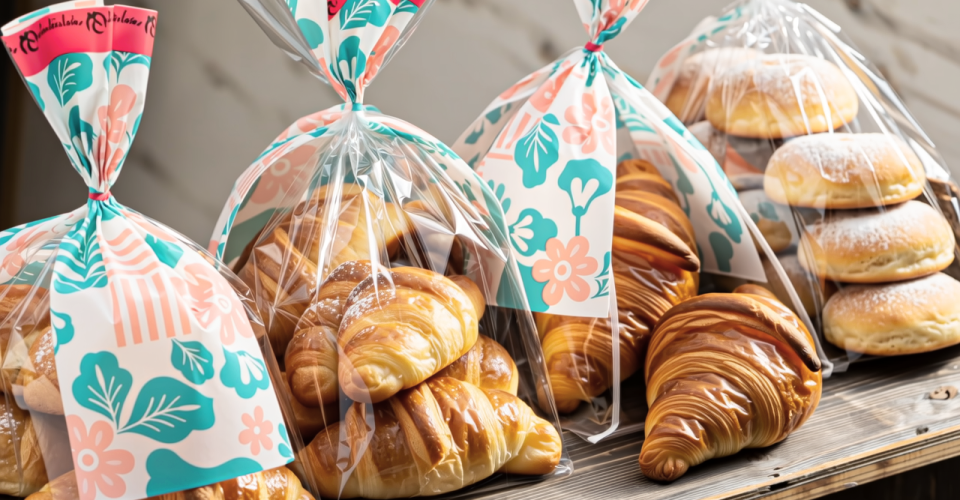
Cake is high in moisture, soft in structure and expensive to damage. Packaging must first protect: cakes deform easily under stacking and transport vibration, so bags are paired with trays or cardboard supports that carry the load. Second, cake sells with the eyes, so the film must be crystal clear with low haze to show off color and decoration. Sliced cake is commonly packed in three-side-seal bags or easy-tear flat pouches, while whole mousse cakes and Swiss rolls go into rigid trays overwrapped with film or into stand-up pouches. Because cake has a short life, clear date printing and good stock rotation at the point of sale matter as much as the film itself.
Biscuit Packaging Bags: Barrier and Crunch Protection
Biscuits have the opposite problem from bread. Their crunch depends on very low moisture, so the bag must keep humidity out, and the fats in cookies and crackers must be shielded from oxygen to prevent rancidity. That is why biscuit packaging usually relies on foil or metallized laminates such as PET/AL/PE or PET/metallized CPP, which keep both water vapor and oxygen transmission to a minimum. Individual cookies and crackers are often wrapped in pillow-style flow packs, while premium or bulk lines use stand-up pouches with zippers so the product stays crunchy after opening. For crumbly products, consider inner trays or two-by-two packing to reduce breakage in the supply chain.
Matching Film Structure to Shelf Life
Across all three categories, structure selection follows a simple ladder. Short-life products tolerate clear mono-material films such as OPP or PE. Medium-life products benefit from metallized film, which adds a barrier at a modest cost. Long-life or high-fat products need foil laminates or EVOH-based high-barrier structures, frequently with oxygen absorbers or nitrogen flushing. If you are still working through the basics of material selection, our guide on how to choose food packaging bags walks through the whole framework, and our moisture-proof packaging article explains how barrier films stop humidity problems in detail.
Custom Bakery Packaging: What to Decide Before Ordering
When you move to custom bakery packaging bags, four decisions should be settled before sampling. First, define the real distribution environment: ambient shelf, chilled short-haul or long export transit each demand a different barrier level. Second, confirm the filling method: hand packing and automatic form-fill-seal lines place very different demands on pouch dimensions and tolerance. Third, review printing and ink safety: inks on the food-contact layer must be food grade, and residual solvent must be controlled. Fourth, budget time for shelf-life testing under warm, humid conditions so packaging problems surface before the product launch, not after. A capable supplier will help you work through each of these steps rather than simply quoting a price.
OMOpack is a flexible packaging manufacturer with long experience serving bakeries, snack brands and food exporters. We help customers choose the right film structure, design the pouch, and move from sample to volume production with consistent quality. Planning a bakery packaging project and want a free structure recommendation and sample testing? Contact OMOpack today. Visit OMOpack.com for more food packaging guides and industry insights.