Pet Food Packaging Solutions
Our pet food packaging solutions are designed for dry kibble, freeze-dried foods, treats and wet products that need reliable barrier protection, puncture resistance, dependable seals and practical handling throughout storage and distribution. Printed flexible films and pouch structures keep contents protected while supporting clear on-shelf presentation.
Key Packaging Challenges for Pet Food
Larger kibble bags and bulk formats need films and base structures that provide the handling strength and stacking stability required during warehousing and transport.
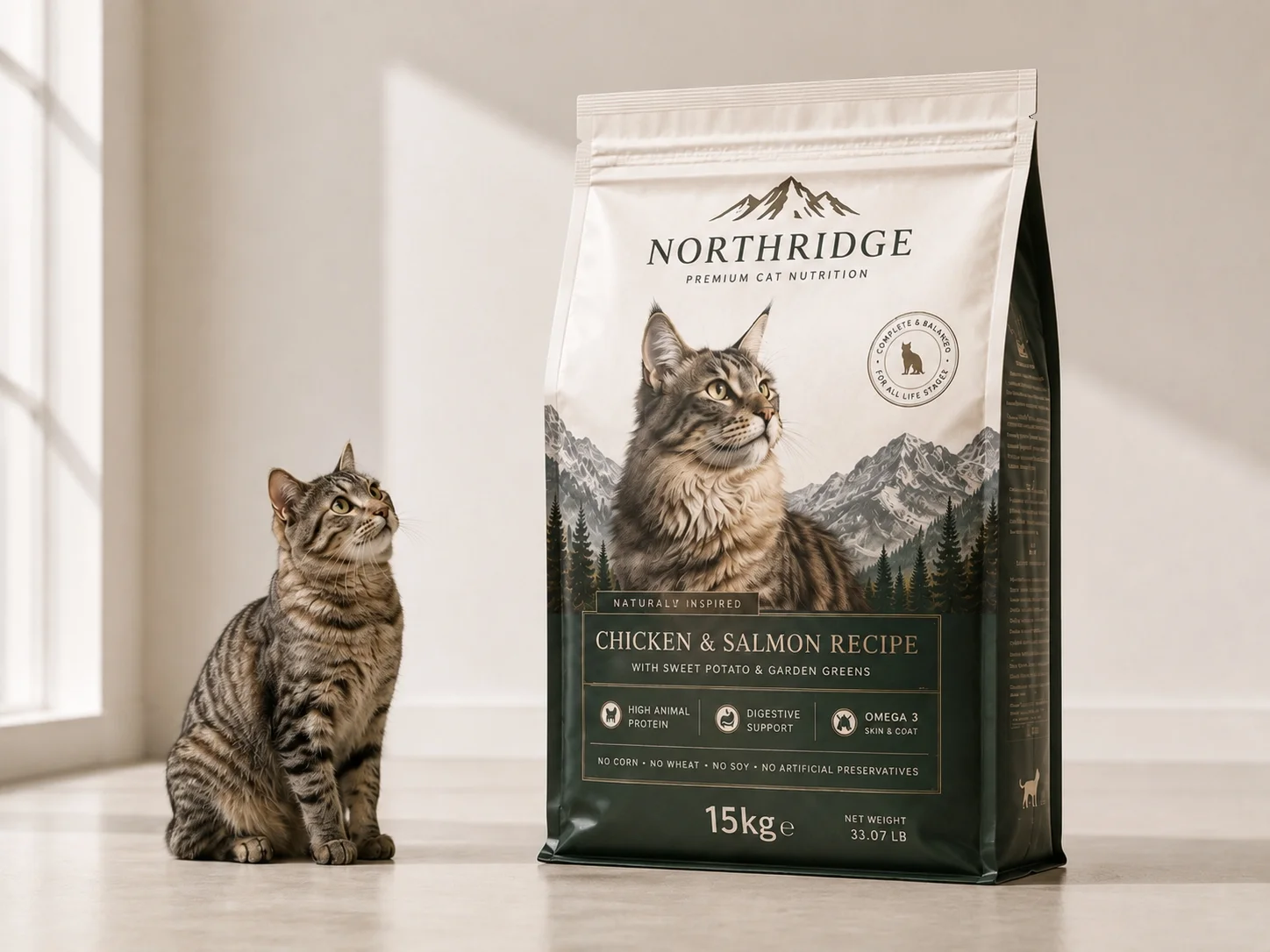
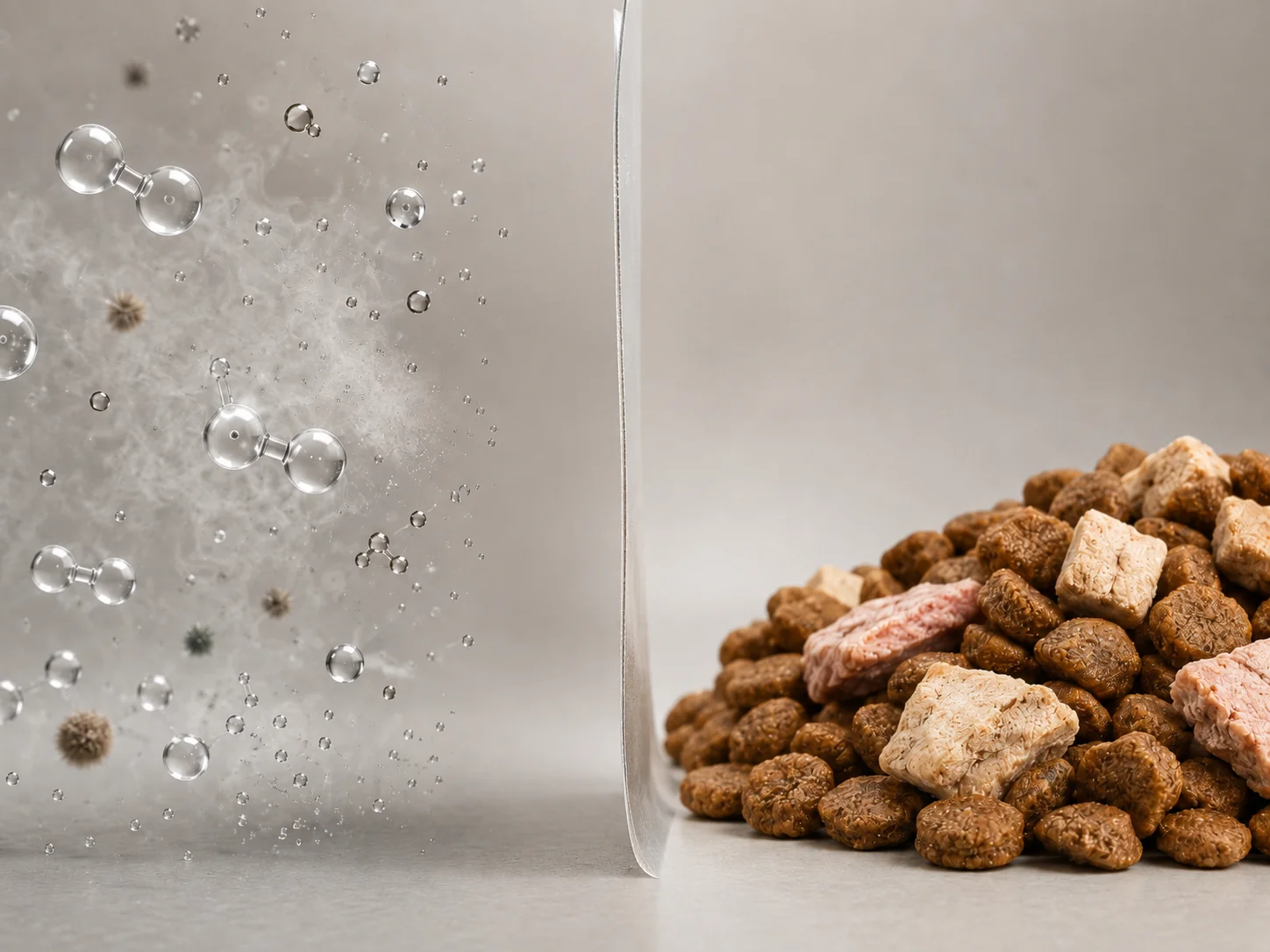
Kibble, freeze-dried treats and high-fat formulas can be sensitive to moisture, oxygen and odors. Barrier film structures help reduce oxygen exposure and protect aroma during storage and use.
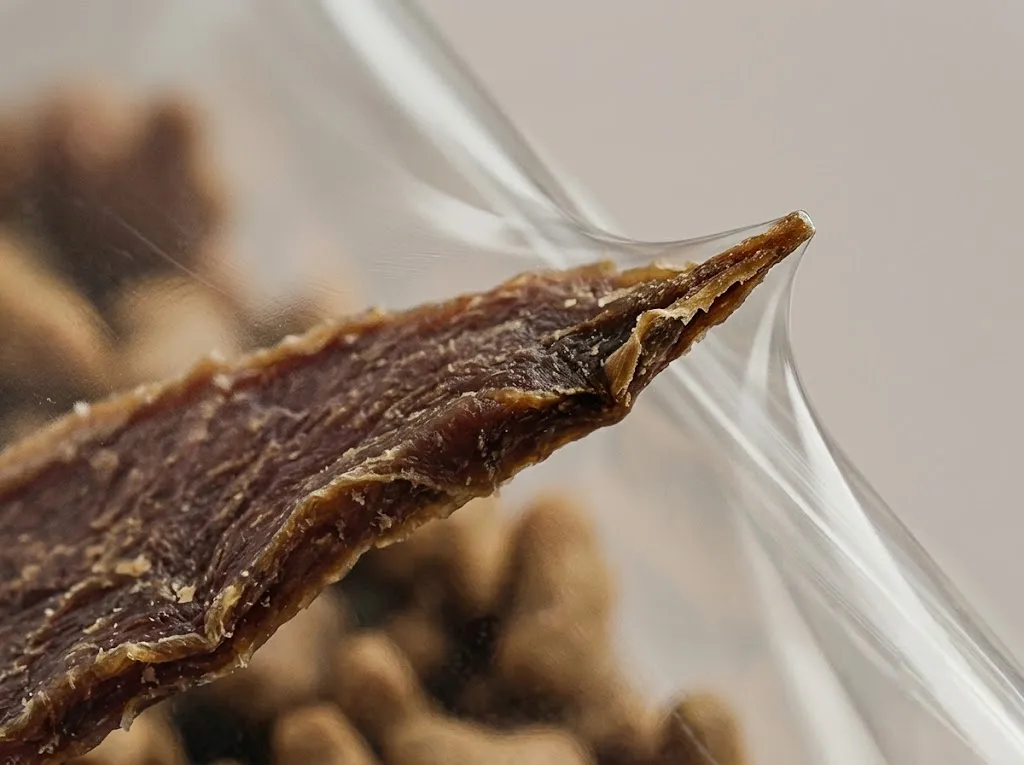
Hard chews and bone treats can put strain on films during packing, handling and shipping. Film structures with suitable puncture resistance and heat-seal strength help reduce the risk of package damage and leakage during distribution.
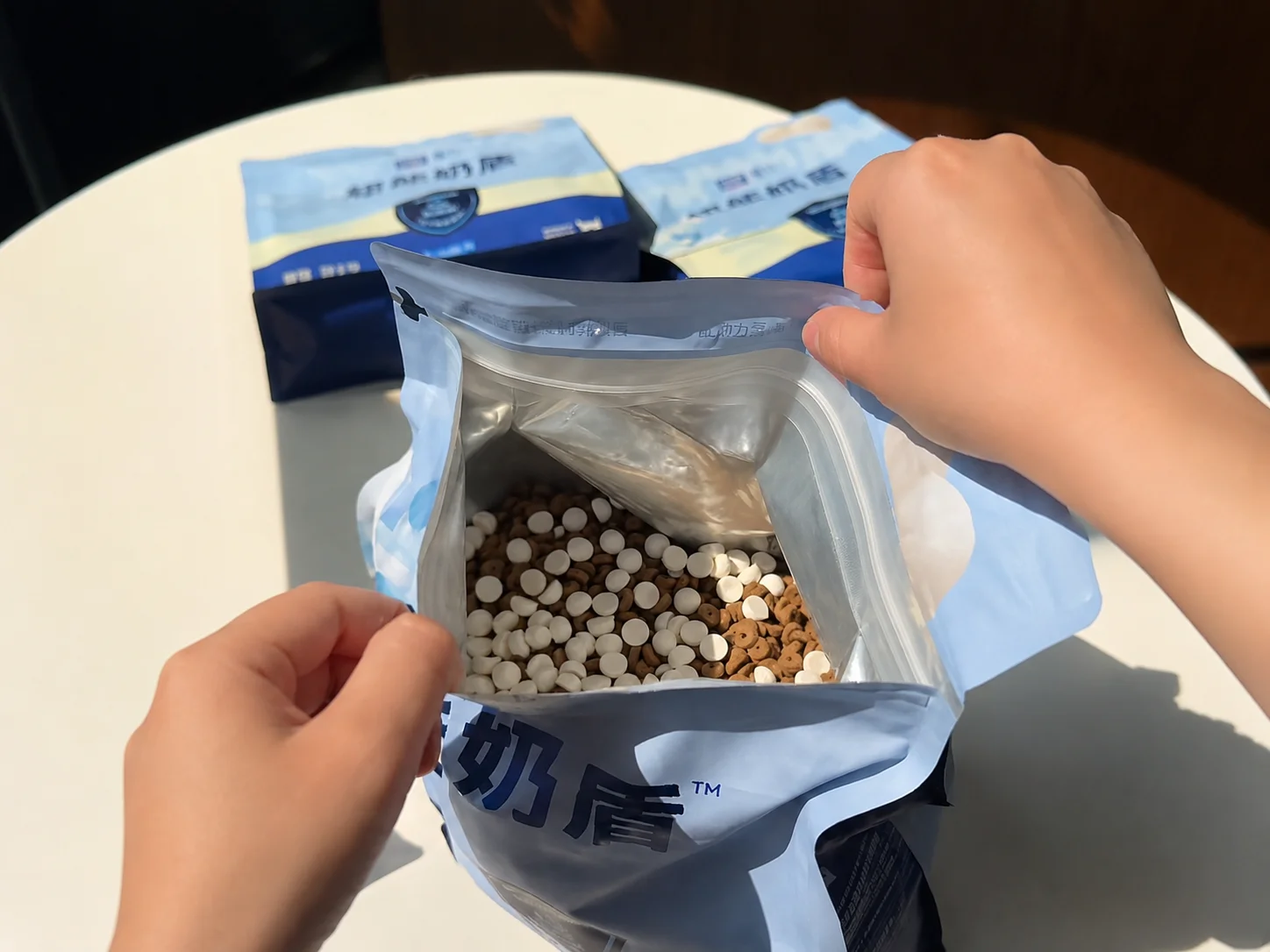
Many pet food products are opened and served over multiple feedings. Resealable closures and easy-open tear notches support convenient opening and secure reclosure between feedings.
Recommended Packaging Structures
We recommend pet food packaging structures based on the product, filling method, handling requirements, and target shelf life, balancing barrier performance, heat sealing, and mechanical strength.
| Product Type | Recommended Material Structure | Key Packaging Benefits |
| Dry kibble / dry food | PET / PE, PET / VMPET / PE | Moisture and Oxygen Barrier Protection, Handling Strength for Larger Packs, Puncture Resistance |
| Freeze-dried food / high-protein treats | PET / AL / PE, PET / VMPET / PE | High-Barrier and Light Protection, Aroma Protection, Moisture and Oxygen Barrier Protection |
| Jerky / chew sticks / strip treats | BOPP / CPP, PET / PE | Reliable Heat Sealing, Compatible with Automated Packing Equipment When Specified |
| Cat sticks / meat paste / wet treats | PET / PE, PET / RCPP | Seal Integrity for Wet and Semi-Moist Products, Moisture and Oxygen Barrier Protection |
| Wet food / retort food | PET / AL / RCPP, PET / RCPP | Retort-Compatible Structures Selected and Validated for the Actual Process, Reliable Heat Sealing |
| Powders / supplements / small portions | PET / AL / PE, BOPP / PE | Moisture Protection for Powders, Reliable Heat Sealing for Individual Portions |
Barrier requirements, heat-seal performance, and mechanical strength should be evaluated for each product and packing process.
Packaging Features for Pet Food
Resealable Zipper
For dry kibble, freeze-dried treats, and other products opened and served over multiple feedings, a resealable zipper helps protect the remaining contents from moisture and odor exposure between feedings.
Carry Handle
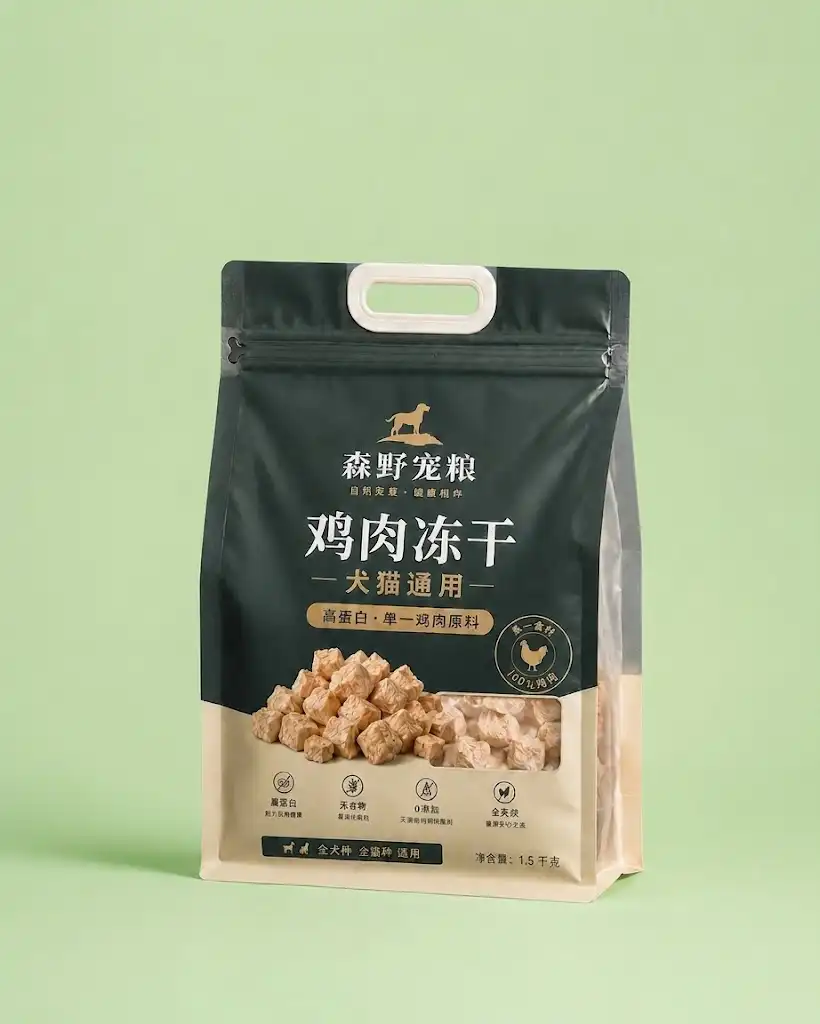
For larger kibble bags, a molded or die-cut carry handle makes the package easier to lift and carry during distribution and household use.
Easy-Open Tear Notch
An easy-open tear notch provides quick, tool-free first opening, helping the bag open cleanly along the intended line.
Clear Product Window
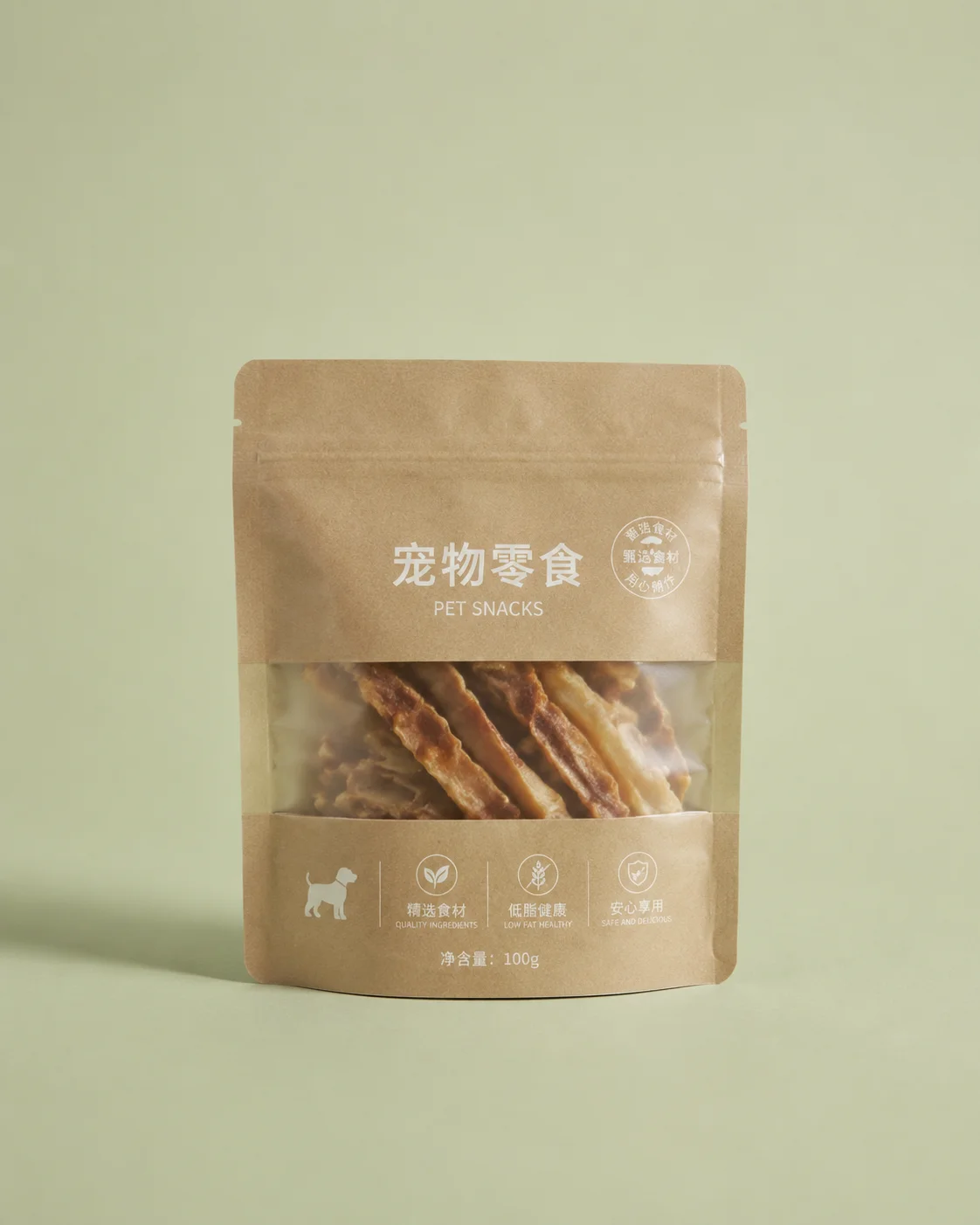
A clear product window lets consumers view kibble or treat size and appearance. Window size and clear-film barrier performance should be evaluated against the product’s sensitivity to light and oxygen.
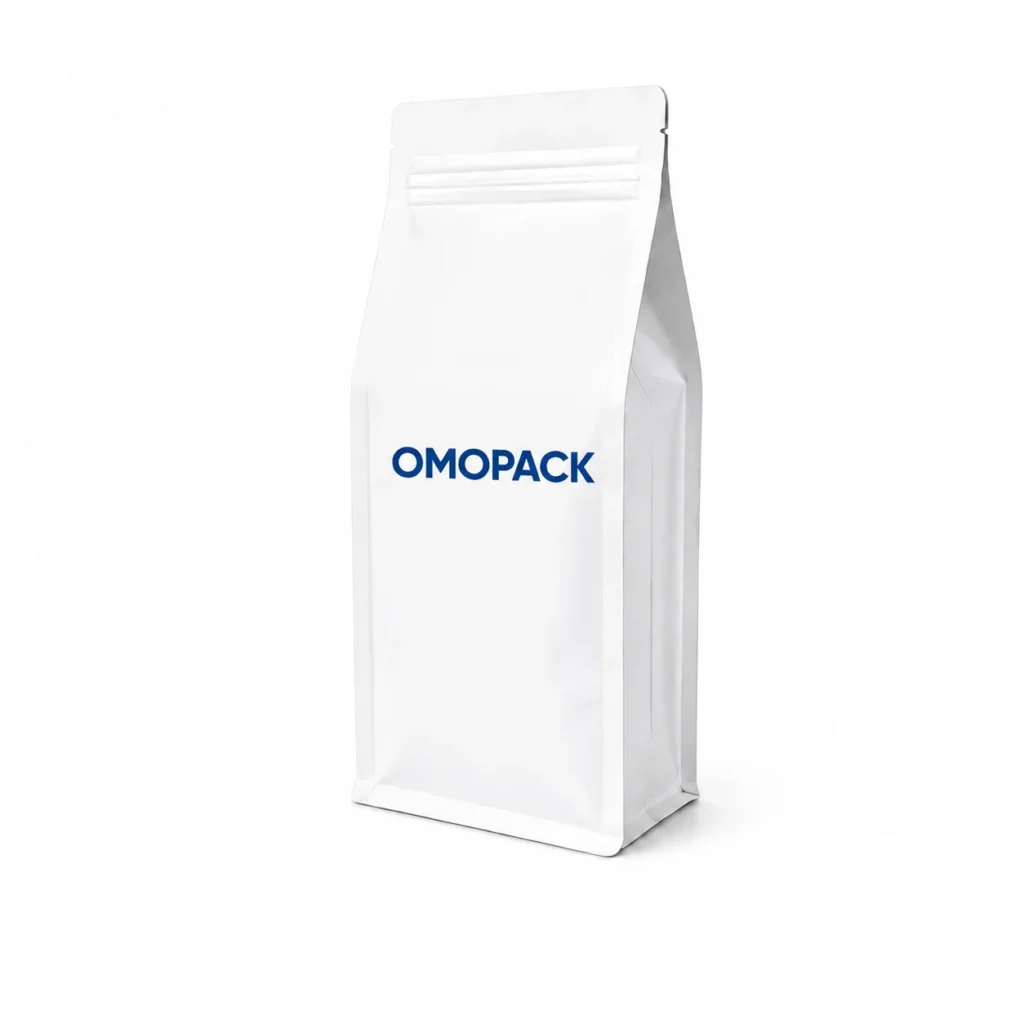
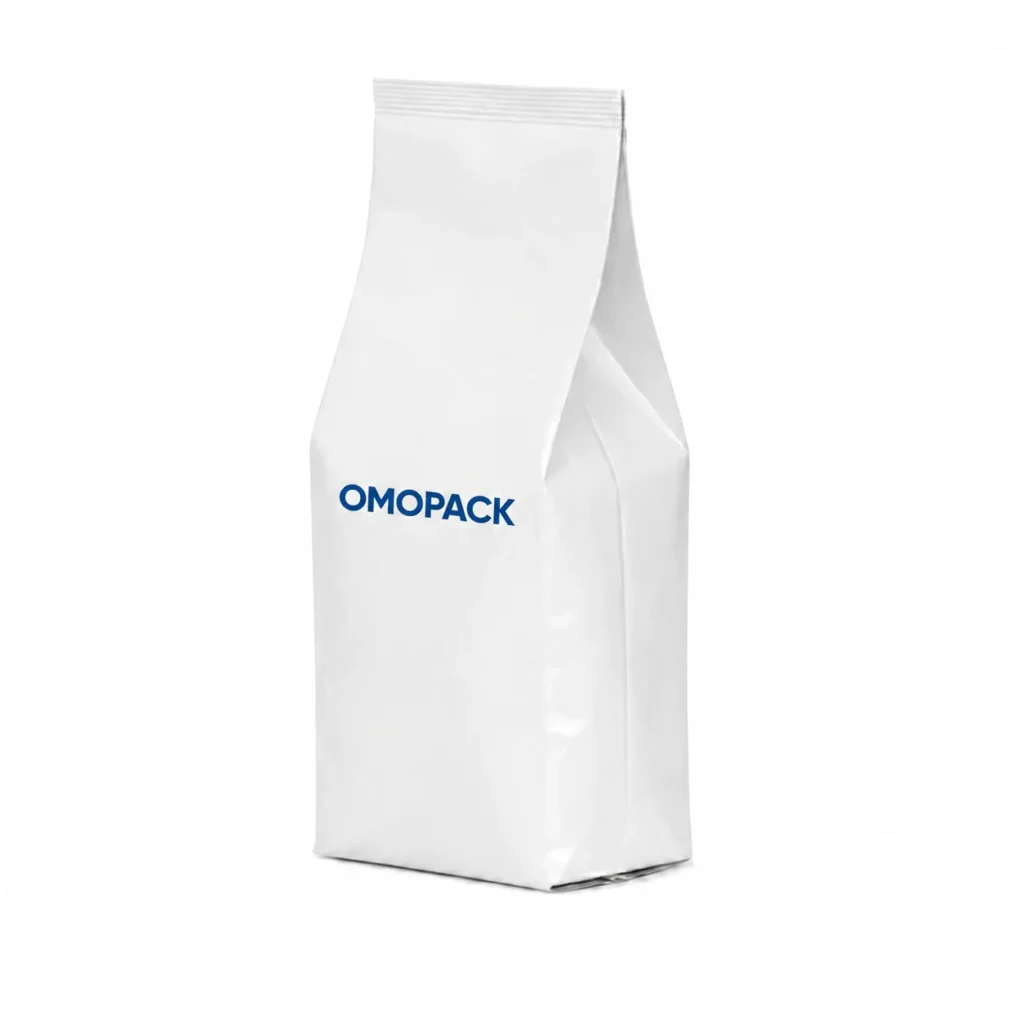
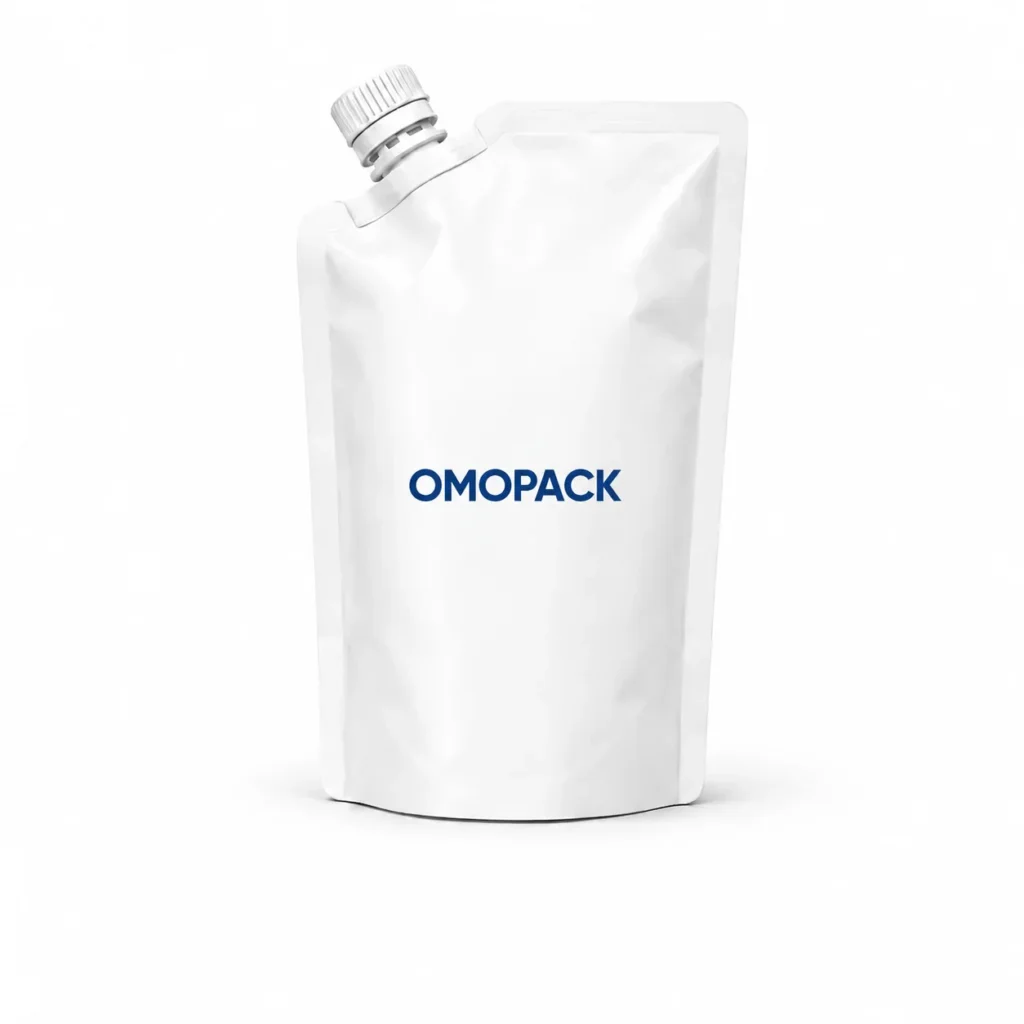
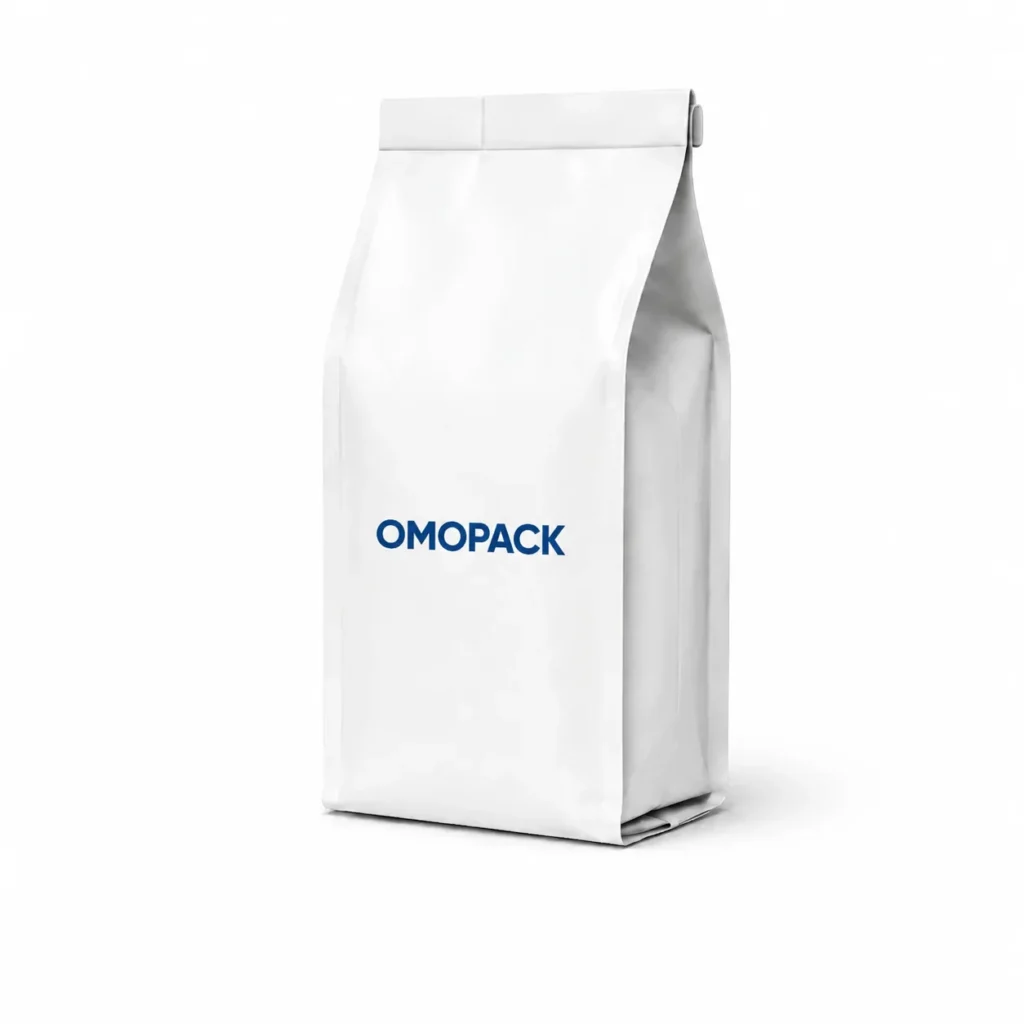
Recommended Pouch Formats for Pet Food
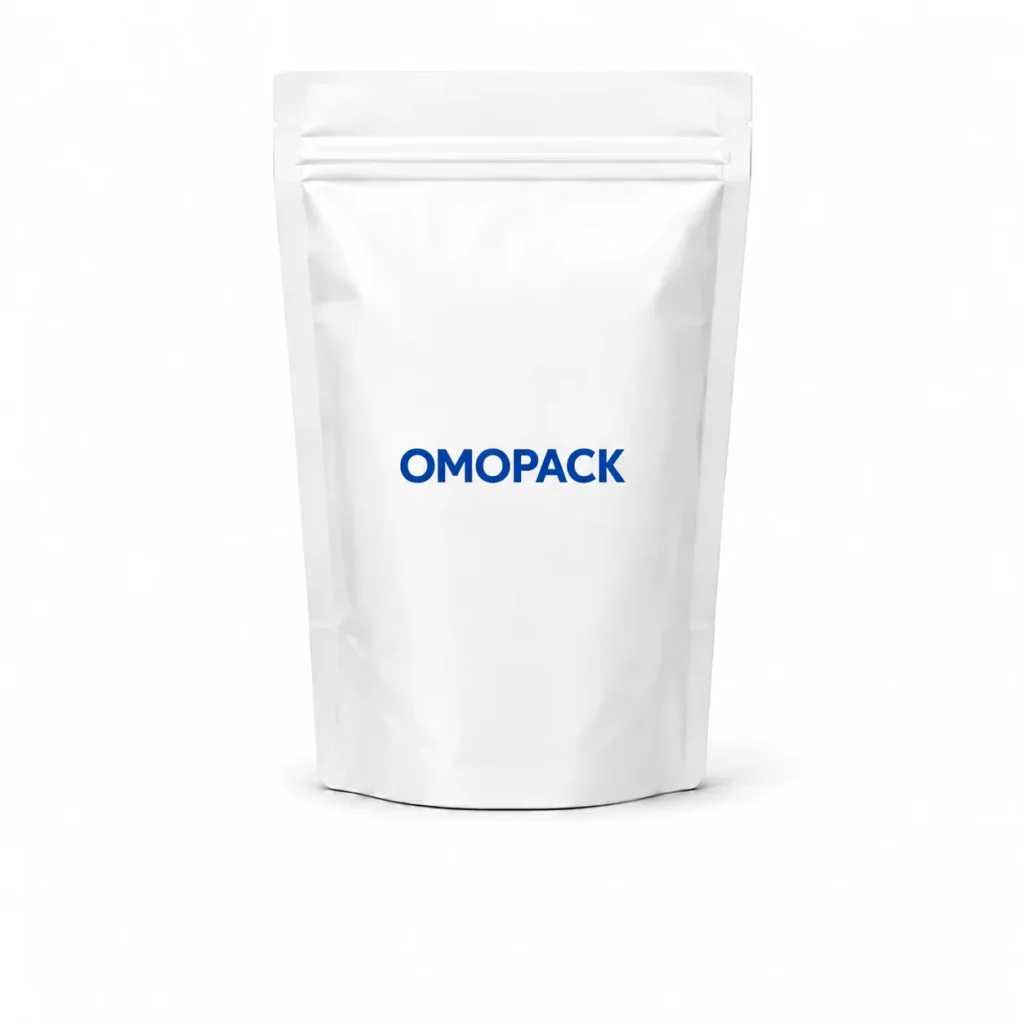
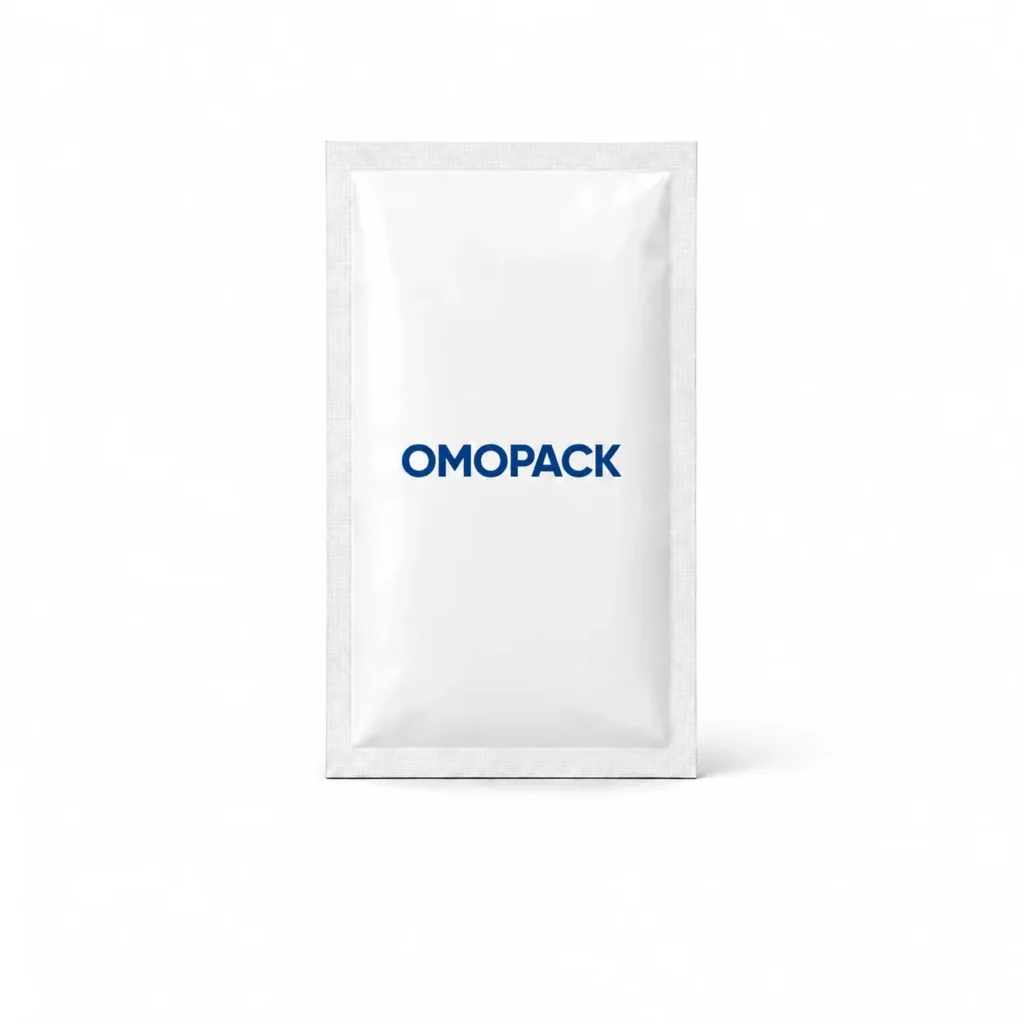
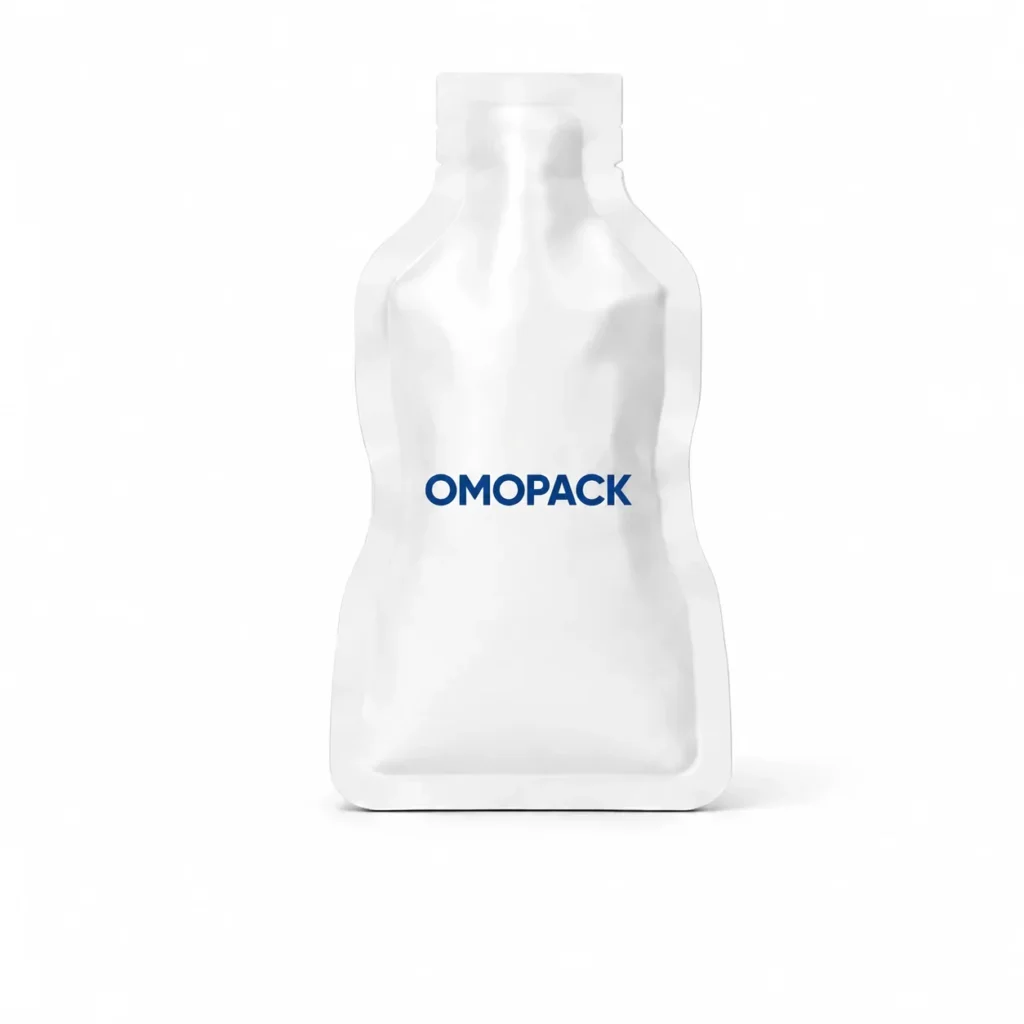
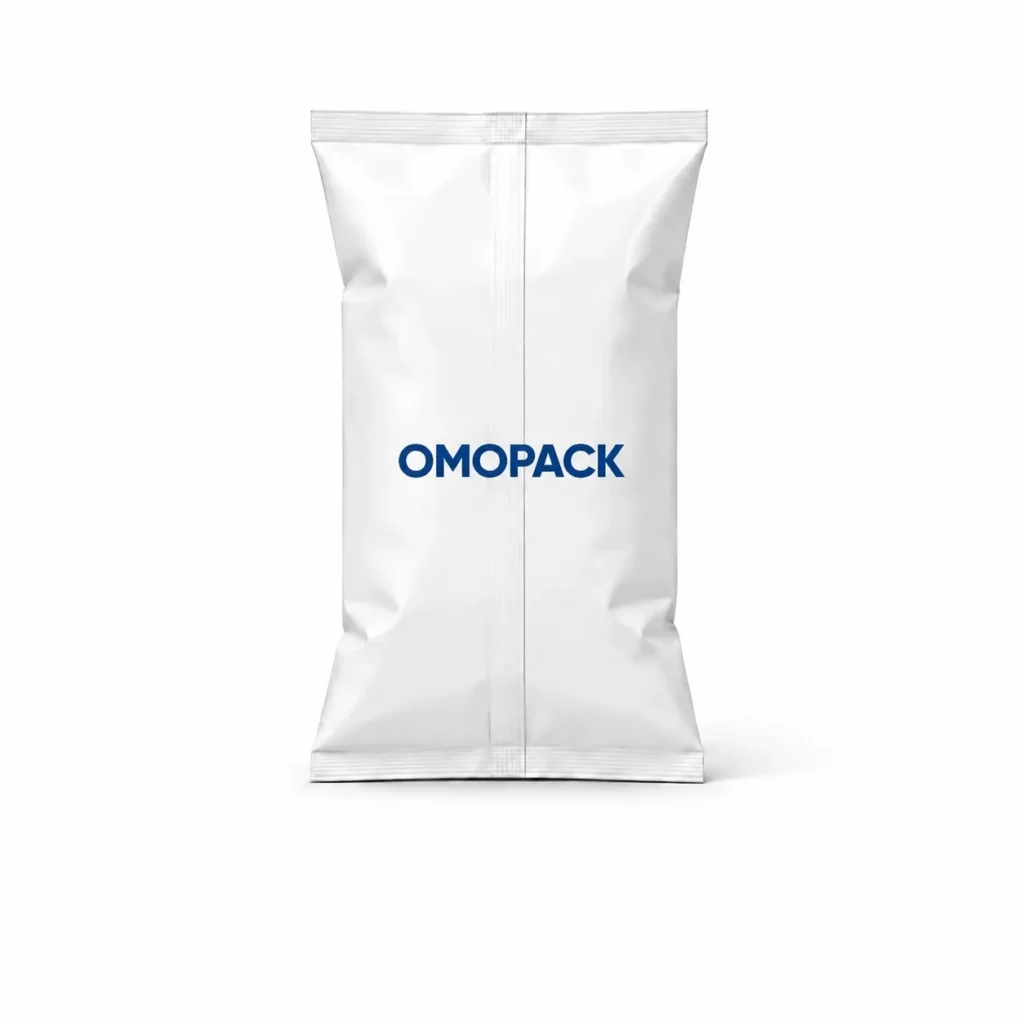
Choose the pouch format that best fits your product, filling process and retail requirements.
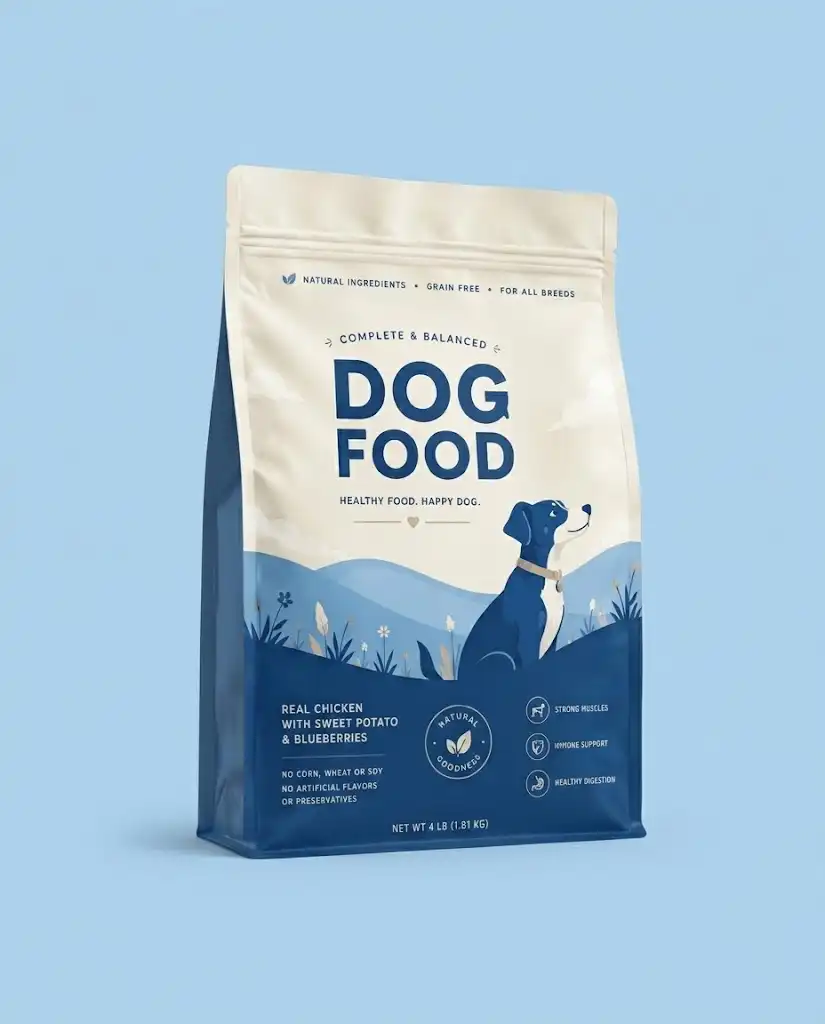
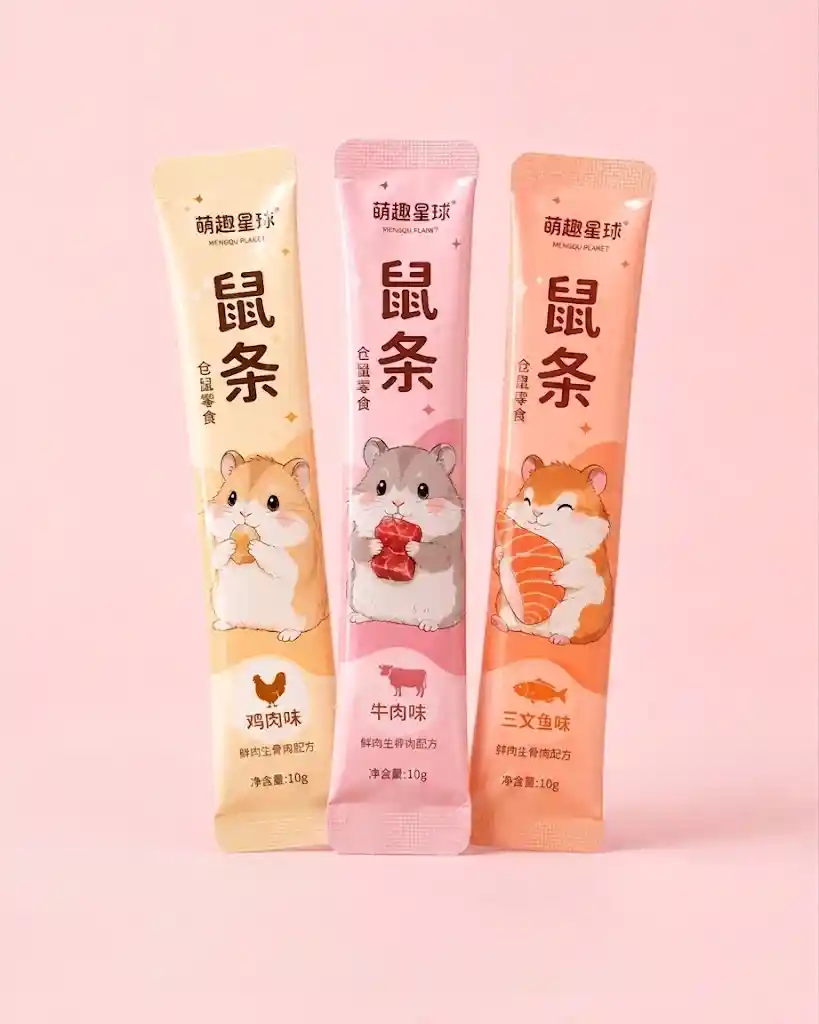
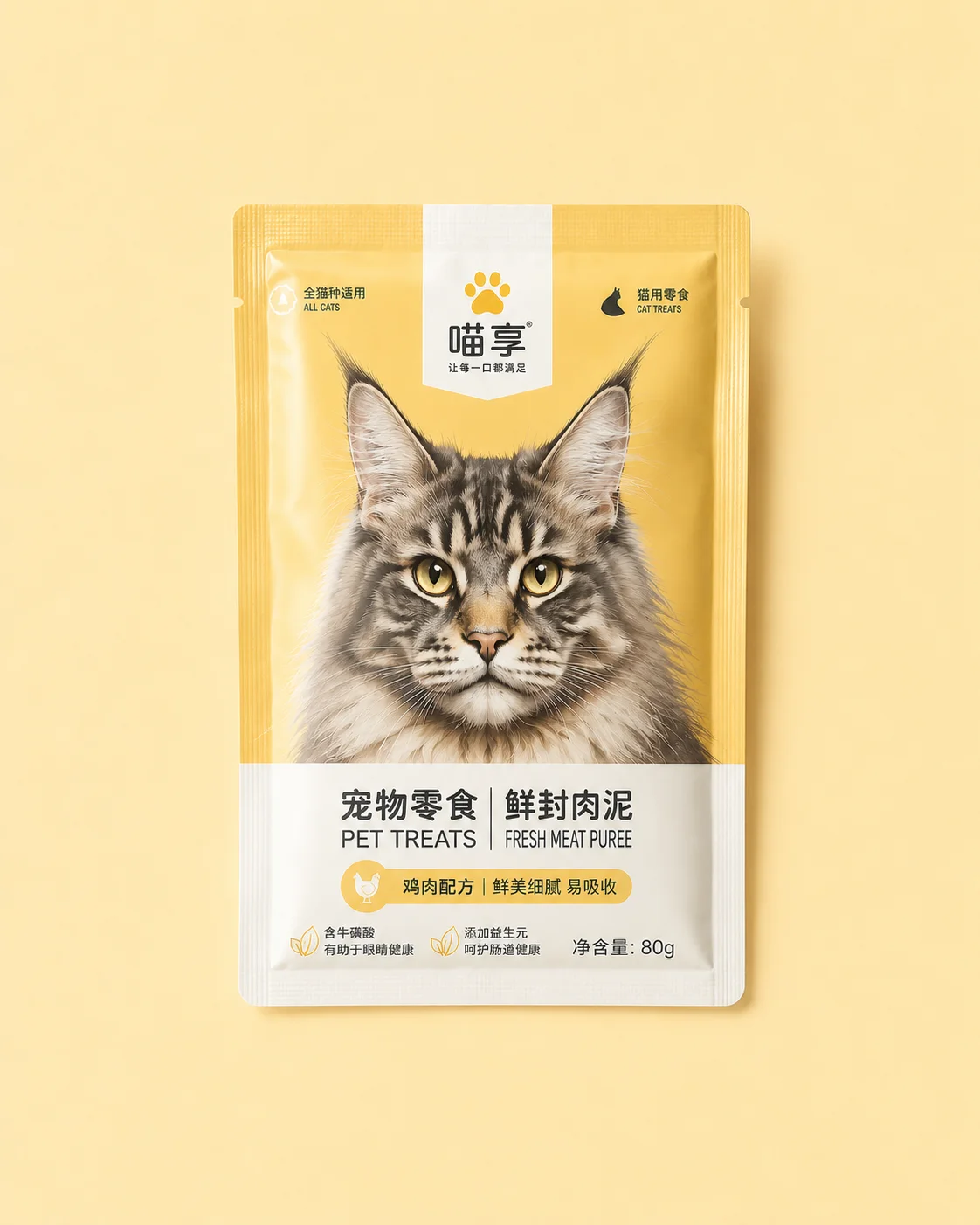
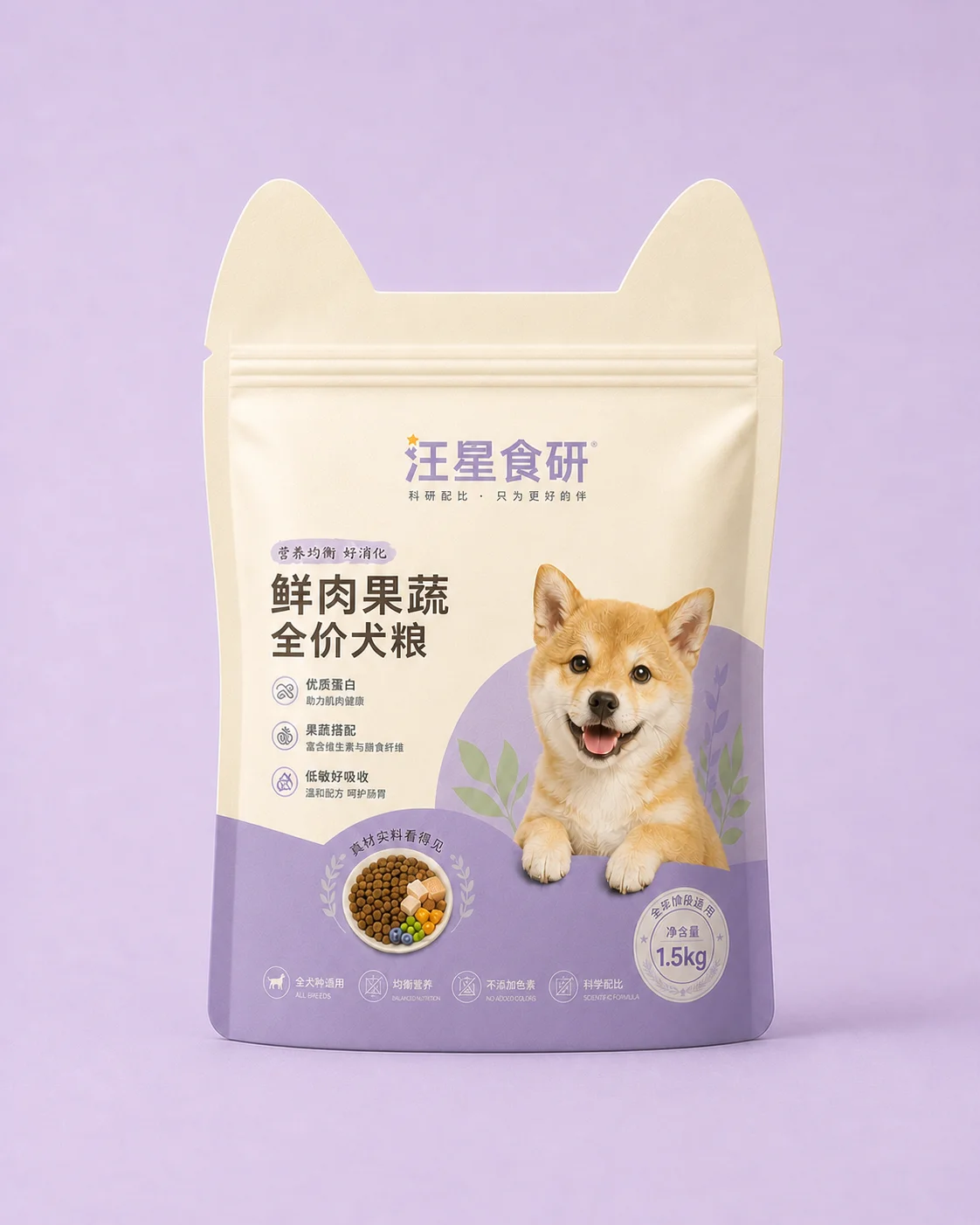
Pet Food Packaging Examples
Pet Food Packaging FAQs
Can metallized pouches be used for freeze-dried food?
Both foil and metallized films can be used, depending on the product. Foil blocks light and provides strong barrier protection, while metallized films are usually more flexible and weigh less. The right choice depends on the fat and moisture sensitivity of the product, the target shelf life, the filling method, transport and validation testing.
Do windowed clear pouches affect shelf life?
A clear window increases light exposure, while oxygen-barrier performance depends on the selected clear film structure. Window size, film type, and barrier design should be evaluated together with the product’s sensitivity and target shelf life.
What materials are used for frozen raw meat and bone packaging?
Films for frozen products are selected for their strength and low-temperature performance. Suitability for frozen storage depends on the film, adhesive and seal structure, and should be validated for the specific product and process.
Which materials are suitable for more sustainable pet food pouches?
Sustainability options depend on local recycling and composting infrastructure and on applicable certifications. Mono-material structures may be evaluated where suitable collection and recycling systems are available. Certified compostable structures should be considered separately and only where the required certification and industrial composting infrastructure are available. Final suitability depends on the product, its barrier requirements, and its end-of-life route.
How can packaging costs be controlled across multiple sizes and SKUs?
Standardizing pouch sizes and print layouts across SKUs can help streamline production, and grouped orders may help reduce setup costs where order volumes support it. Options such as digital or short trial runs should be discussed with your supplier, as their suitability depends on order volume and pouch specifications.
Custom Packaging Solutions for Your Products
We are a custom flexible packaging manufacturer serving the food, beverage, home & personal care, beauty and pet industries. From structural design and material selection to printing and finishing, we work with brands to deliver packaging that protects their products and presents them well in the market.
Mobile:
Whatsapp:
176-0225-9808
139-3270-8858
Company Address:
Yuqiao Town Economic Development Zone, Dongguang County, Cangzhou City, Hebei Province, China
Business Email:
service@omopack.com