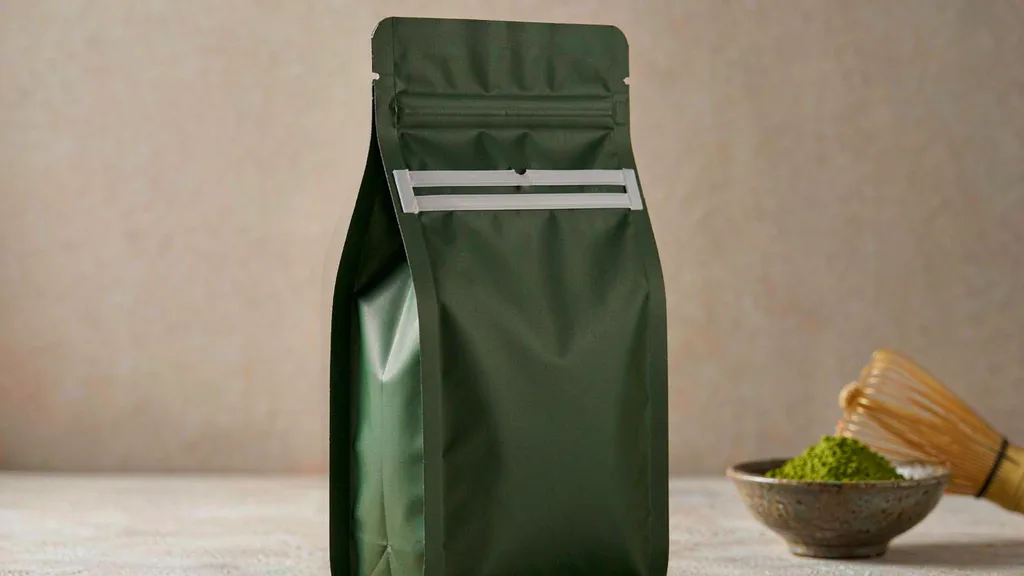
Matcha packaging needs three things at once: an oxygen barrier near 1 cc/m²/day, a fully light-proof layer, and a structure that handles a 5–10 micron powder without caking, static cling or seal contamination. A standard kraft paper pouch fails all three, which is why most quality matcha ships in foil-laminated stand-up pouches.
What Makes Matcha Different From Other Teas?
Matcha is not a leaf tea in a bag. It is stone-ground into a powder where most particles sit between 5 and 10 microns, giving it an enormous reactive surface area. Every quality problem in matcha packaging traces back to that fact.
Loose-leaf sencha exposes only its outer surface to air. Ground matcha exposes nearly everything. Oxygen, light, heat and moisture attack it faster by orders of magnitude, and the damage is visible: the vivid jade green shifts to a dull olive-brown, the umami flattens, and the powder picks up a hay-like off-note. Ceremonial-grade matcha is judged heavily on color, so a faded pouch is a commercial loss, not just a sensory one.
There is also a physical problem that leaf tea never has. A fine powder flows badly. It clings to sealing surfaces, bridges in hoppers, and generates static that spreads dust across the pouch interior and the zipper track. Packaging that works perfectly for whole beans can fail on matcha in the first hour of production.
The four enemies, ranked
- Oxygen. Oxidizes catechins and degrades chlorophyll. Head-space oxygen in a sealed pouch should be flushed down below roughly 2%, and ideally near 1%, before the seal closes.
- Light. Photodegradation bleaches color and breaks down aroma compounds even at room temperature and even with the oxygen removed. This is where transparent windows and kraft paper quietly fail.
- Heat. Storage above roughly 25°C accelerates both of the above; industry practice in Japanese tea regions is to hold bulk matcha refrigerated or frozen and let the retail pouch do the last-mile protection.
- Moisture. Matcha is hygroscopic. Once it picks up enough moisture it cakes into hard clumps and, in a resealable pouch that gets opened in a humid kitchen, this becomes the most common consumer complaint.
What Barrier Level Does Matcha Packaging Actually Need?
The safe answer for premium matcha is a foil-containing laminate. A typical structure is PET / aluminum foil / PE, or PET / metallized PET / PE where cost or full recyclability matters more than maximum shelf life. Both stop light almost completely; foil also holds oxygen transmission near zero, while a good metallized layer sits around 0.3–1 cc/m²/day — adequate for a 6–12 month ambient shelf life.
| Structure | OTR (approx.) | Light block | Best for |
|---|---|---|---|
| PET / AL foil / PE | < 0.1 cc/m²/day | ~100% | Ceremonial grade, 12+ months |
| PET / VMPET / PE | 0.3–1 cc/m²/day | ~99% | Premium retail, 6–12 months |
| PET / EVOH-PE (clear) | 1–3 cc/m²/day | none | Culinary grade sold fast, cold chain |
| Paper / PLA kraft | > 10 cc/m²/day | partial | Short-run gifting only, not storage |
The light column matters more than buyers expect. A clear high-barrier pouch that shows off the bright green powder is marketing-logical and chemistry-wrong: the same visible spectrum that makes matcha photogenic also degrades it on a lit retail shelf. EU food-contact rules under Regulation (EU) No 10/2011 apply to the laminate as normal, but the shelf-life decision is a barrier and light decision, not a compliance one.
For coffee, roasters accept some oxygen ingress because beans degas slowly through a valve. Matcha has no degassing and no valve. What you seal in is what the customer gets, which makes the initial nitrogen flush the single most valuable step in the line.
How Should a Brand Choose Pouch Format and Size?
Three formats cover almost every matcha product.
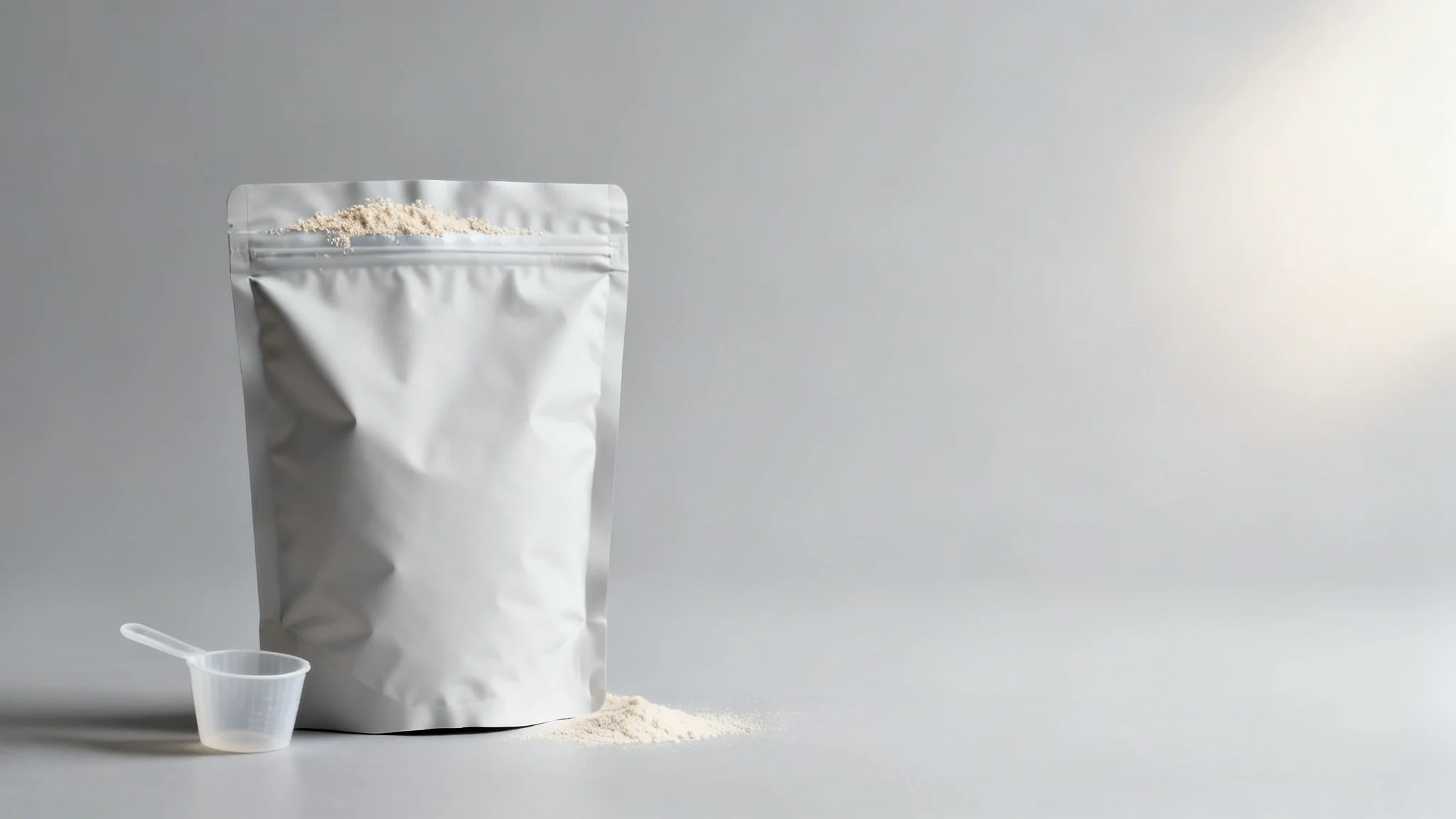
- 30–100 g resealable stand-up pouch with a flat press-to-close zipper. This is the default for direct-to-consumer and cafe retail. The zipper is not optional: matcha users dip a spoon repeatedly, so every opening is a moisture and aroma event. A narrow top seal with a tear notch, a flat zipper below it and a gusseted base is the standard construction.
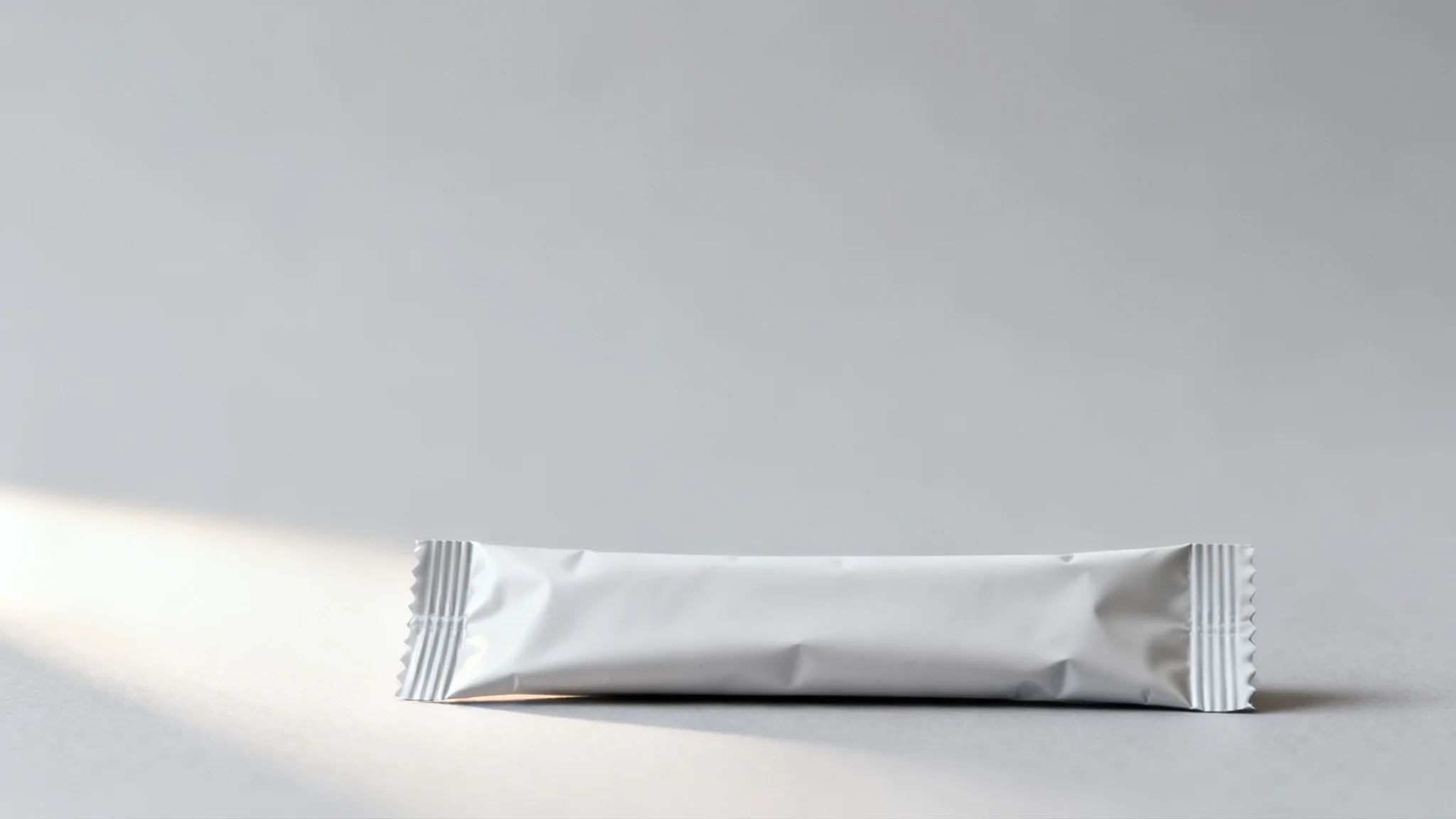
- Single-serve sticks (1–2 g). For RTD lattes, office pantry and travel retail. Sticks trade resealability for dose control; the film must still be light-proof, and stiffness matters for high-speed stick lines. Our instant coffee stick pack guide covers the line-side requirements in detail.
- 500 g–1 kg foodservice pouch. For cafes and bakeries. Here the zipper can be dropped in favor of a wider heat seal, because the pouch lives in a refrigerator and empties in days.
The most common sizing error is a 100 g pouch filled with 30 g of powder: matcha’s low bulk density makes the pouch look half-empty on shelf.
What Changes at the Filling Line With a 5–10 Micron Powder?
Three failure modes show up on matcha lines that never appear with leaf tea.
Static cling and dust migration. Fine powder carries charge easily and deposits on the inside of the pouch above the fill level, and on the zipper track. When the seal closes on dusty film, seal strength drops. The practical controls are an ionizing air blower at the fill station, grounded filling equipment, and a fill weight and vibration profile that limits dust lift-off.
Seal contamination. Powder on the inner sealing face creates channels. If your line runs hot-fill or nitrogen flush, verify seal integrity on the first pieces after each changeover; the bubble-emission method described in our seal integrity comparison is the standard quick check.
Caking before it reaches the consumer. If the powder enters the pouch warm or humid, it cakes inside the sealed pouch with no oxygen present at all. Filling-room humidity below roughly 50% RH and powder equilibrated to room temperature are line conditions, not packaging features — but the packaging gets blamed.
Does matcha need a degassing valve?
No. Roasted coffee releases CO₂ for days; matcha does not. A valve adds cost and, worse, a light and oxygen path through a layer that should be perfect. If a supplier offers you a valved matcha pouch, they are reusing a coffee structure. Our guide on coffee bag valves explains why valves exist and what they cannot fix — and matcha is squarely in the “cannot help” column.
The Smithers flexible packaging outlooks keep documenting the same trend across food: shorter runs, more SKUs, more premium powders moving from tins to pouches. Matcha brands feel all three at once — seasonal harvests, multiple grades, and a consumer base that expects resealability without a tin.
FAQ
What is the best packaging for matcha powder?
A light-proof foil or metallized stand-up pouch with a flat press-to-close zipper and a nitrogen flush before sealing. The structure should hold oxygen transmission at or below about 1 cc/m²/day and block essentially all visible light, because matcha’s color and aroma degrade through both oxygen and light exposure.
Does matcha packaging need a one-way degassing valve?
No. Matcha is a ground powder that does not release carbon dioxide after grinding, so a valve provides no function. A valve only adds a weak point in the light and oxygen barrier, which is exactly what matcha packaging needs to protect.
Can matcha be packaged in clear or kraft paper pouches?
Only for very short sell-through periods. Clear films expose matcha to photodegradation, and kraft paper laminates pass both oxygen and moisture at rates far above what a 5–10 micron powder tolerates. For anything beyond a few weeks on a lit shelf, an opaque foil-containing laminate is the safer choice.
How long does matcha last in a resealable pouch?
Unopened and nitrogen-flushed, premium matcha typically carries a 6–12 month ambient shelf life, longer when refrigerated. After opening, quality fades within weeks because every opening exchanges air. The zipper, a cool dark cupboard and a pressed-out pouch close the gap as far as packaging can.
Is nitrogen flushing worth it for small matcha brands?
Yes, because it is one of the cheapest shelf-life extenders available. A basic nitrogen flush on a small vertical fill-seal line adds seconds per pouch and no material cost, while cutting head-space oxygen from roughly 20% to under 2%. For an oxidation-sensitive powder, that change alone can double the realistic shelf life.
At 欧姆包装 (OMOPACK), we build matcha and fine-powder programs around the barrier decision first and the artwork second, because a beautiful pouch that fades on the shelf only discounts the brand once.
More reading on this site: tea packaging bags, whole bean coffee packaging, instant coffee stick pack film and active packaging with oxygen scavengers. For the factory-side view of film specification and line testing, see MAP packaging film specification and seal integrity testing methods.