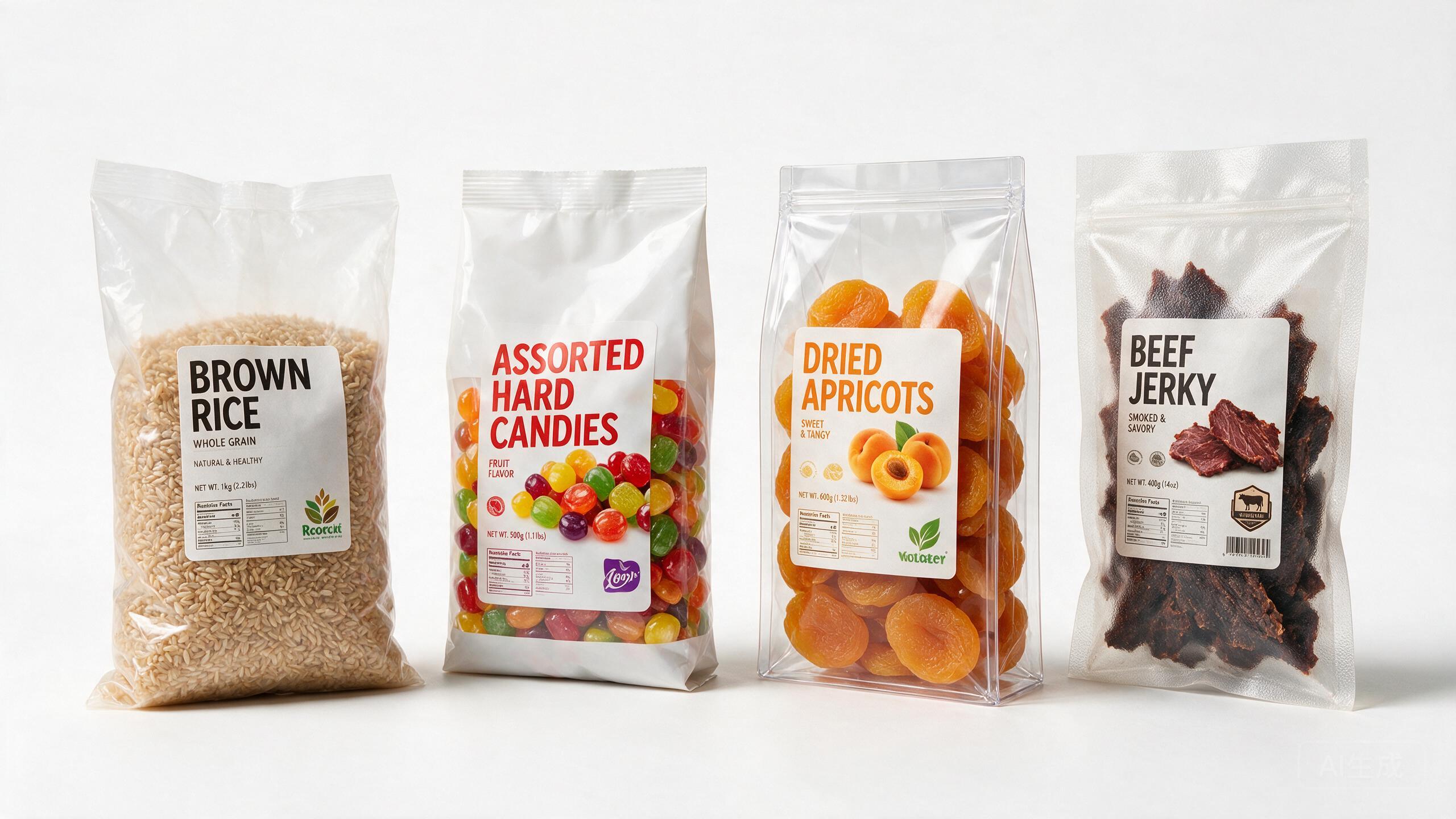
Why Choosing the Right Packaging Material Matters
One of the first and most confusing challenges in packaging procurement is selecting the right material. PE, PP, PET, PA (Nylon) — these technical terms sound similar, but their performance characteristics are vastly different. Choose wrong, and you may end up with bags that tear easily, fail to protect your product from moisture or oxygen, or cost more than necessary. This guide breaks down the most common plastic packaging materials and their ideal applications.
PE (Polyethylene) — The Universal Workhorse
Polyethylene is the most widely produced plastic, commonly available in two variants: LDPE (Low-Density Polyethylene) and HDPE (High-Density Polyethylene).
LDPE: Soft, Transparent, Ideal for Light Packaging
LDPE feels soft to the touch, offers excellent transparency, and seals well at low temperatures. Common uses include garment bags, food storage bags, and everyday product wraps. Its downsides are lower tensile strength and poor heat resistance — not suitable for heavy items or high-temperature environments.
HDPE: Rigid and Durable for Heavy-Duty Use
HDPE is stiffer and more abrasion-resistant than LDPE. It’s commonly used for shopping bags, trash bags, and shampoo bottles. With a translucent appearance and crisp feel, HDPE offers excellent tear strength at a low cost, making it the go-to choice for heavy-load packaging.
PP (Polypropylene) — High Heat Resistance and Clarity
Polypropylene’s standout advantage is heat tolerance, with a melting point above 160°C (320°F), making it suitable for hot-fill and retort sterilization. It also offers excellent clarity and gloss, widely used in food packaging.
BOPP (Biaxially Oriented Polypropylene) is a stretched PP film with exceptional transparency, commonly used as the outer layer in snack bags, candy wrappers, and laminated films. Note that PP becomes brittle at low temperatures and has poor impact resistance in cold conditions.
PET (Polyester) — High Barrier and Strength
PET offers outstanding mechanical strength and barrier properties, significantly outperforming PE and PP in oxygen and moisture barrier. It’s highly transparent, chemically resistant, and widely used in beverage bottles, food packaging laminates, and electronics packaging.
In laminated structures, PET typically serves as the outer layer, providing mechanical support and printability, while inner PE or CPP layers provide heat sealing. Metallized PET (VMPET) also offers excellent light-blocking and moisture-proof performance.
PA (Nylon) — Superior Puncture and Oil Resistance
Nylon film excels in puncture resistance, making it ideal for packaging products with sharp edges (bones, frozen seafood). It also offers excellent oil resistance, commonly used for oily foods like nuts, cured meats, and fried snacks.
Common grades are PA6 and PA66. Nylon is more expensive than other materials, so it’s typically used as a middle layer in laminates where puncture resistance is critical.
Common Laminate Structures Quick Reference
In practice, single materials are rarely used alone. Laminates combine the strengths of multiple layers:
- PET/PE: General food packaging — good barrier + sealability
- BOPP/CPP: Snack foods — high clarity, low cost
- PA/PE: Frozen foods, oily foods — puncture and oil resistant
- PET/AL/PE: Vacuum packs, retort pouches — aluminum foil for ultimate barrier
- PE/EVOH/PE: High-barrier fresh packaging — EVOH for extreme oxygen barrier
How to Choose the Right Packaging Material
Ask yourself four questions when selecting materials:
- Does your product have sharp edges? → Consider PA-containing laminates
- Does it need high-temperature sterilization? → Choose PP or PET-based heat-resistant structures
- Is oxygen or moisture a concern? → Go with PET/AL/EVOH laminates
- On a tight budget? → PE or BOPP/CPP offer the best value
For detailed information on material safety and certification standards, read our Food Packaging Materials and Sanitary Standards guide. When in doubt, consult an experienced packaging manufacturer. A professional supplier can recommend the optimal material combination based on your product characteristics, storage conditions, and distribution requirements.
Summary
Understanding the properties of different plastic packaging materials is the first step to successful packaging design. PE offers the best value, PP excels in heat resistance, PET provides superior barrier properties, and PA delivers unmatched puncture resistance. By combining them in laminates, you can achieve performance that no single material can provide alone.
Need help selecting the right packaging materials? Contact OMOPACK for end-to-end solutions from material selection to finished production.